
Table of Contents
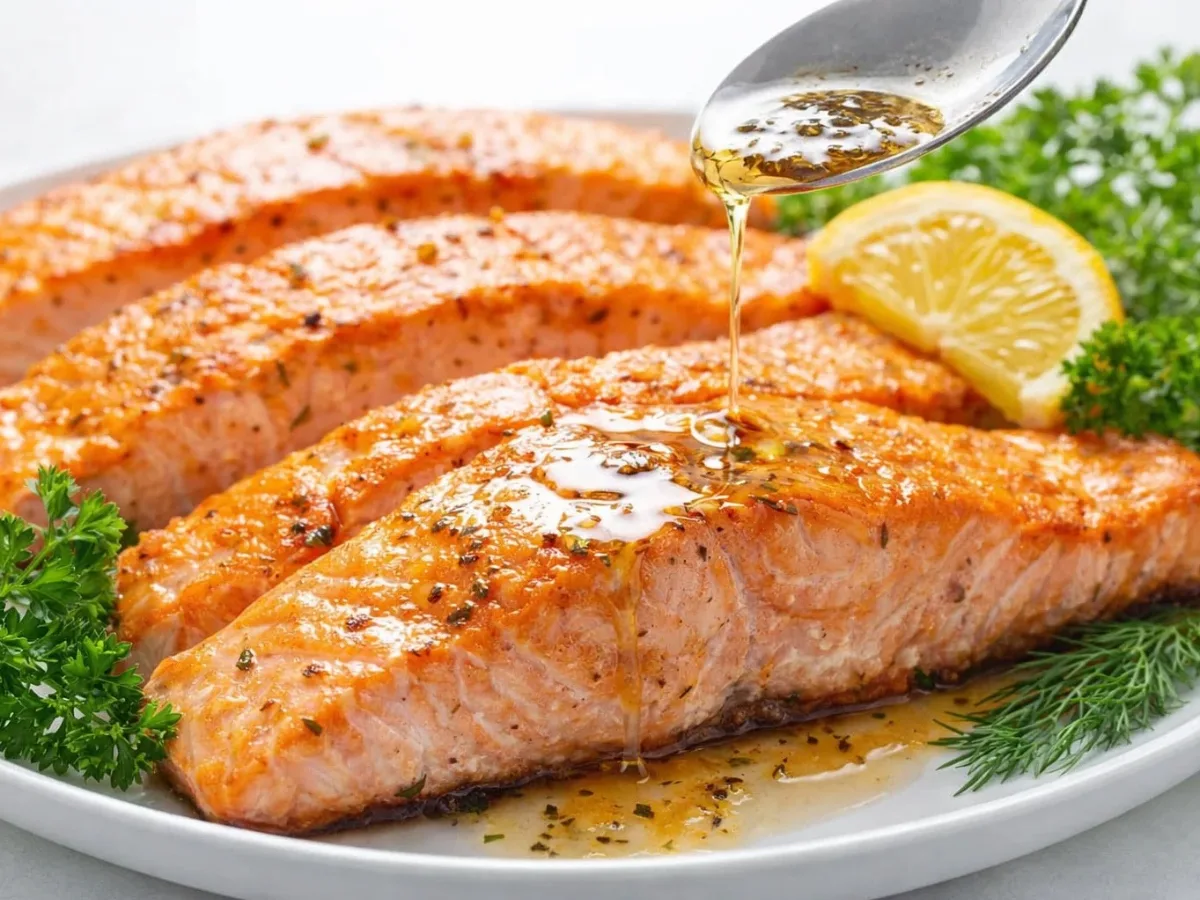
Pan seared salmon with garlic herb butter delivers beautifully crispy skin, tender fish, and a rich lemon garlic sauce in one skillet. The salmon develops a golden crust as it cooks, while fresh dill, parsley, and minced garlic bring bright, savory flavor to the melted butter.
This easy pan seared salmon recipe uses simple ingredients and a straightforward cooking technique that makes an impressive dinner without complicated preparation. The secret is drying the fillets thoroughly, starting with a properly heated skillet, and adding the garlic herb butter near the end. Serve it with roasted vegetables, rice, or potatoes for a satisfying seafood dinner.
Why This Pan Seared Salmon Recipe Works
A hot skillet creates the contrast that makes restaurant-style pan seared salmon so appealing: crisp skin on the outside and moist, flaky fish inside.
Cooking the salmon skin-side down for most of the cooking time allows the skin to develop a golden crust while protecting the delicate flesh from direct heat.
The garlic herb butter adds another layer of flavor. Salted butter melts together with fresh garlic, lemon juice, dill, and parsley, creating a fragrant sauce that complements the salmon without overpowering it.
Because the sauce comes together directly in the skillet, there’s no need to prepare a separate pan of dressing or glaze.
Ingredients for Pan Seared Salmon
This recipe combines fresh salmon fillets with a handful of pantry staples and herbs.
Salmon Fillets
You’ll need four 6-ounce salmon fillets, preferably skin-on and approximately 1 inch thick.
Skin-on salmon works particularly well because the skin becomes crispy during searing and helps the fillets hold together when flipped.
Choose fillets with firm flesh, a fresh smell, and relatively even thickness. Similar-sized pieces cook more consistently.
Seasonings and Olive Oil
Sea salt and black pepper provide simple seasoning that allows the salmon’s natural flavor to stand out.
Olive oil helps transfer heat between the skillet and fish, encouraging even browning.
Garlic Herb Butter
The homemade butter mixture includes:
- Salted butter for richness.
- Fresh lemon juice for brightness.
- Minced garlic for savory flavor.
- Fresh dill for a classic seafood pairing.
- Fresh parsley for a clean herbal finish.
Softened butter makes combining these ingredients easier before cooking.
For a slightly different flavor, fresh chives can replace parsley. Unsalted butter also works, although the finished sauce may need additional seasoning.
How to Make Pan Seared Salmon
The most important part of making crispy pan seared salmon is controlling moisture and heat.
1. Prepare the Garlic Herb Butter
Combine softened butter, lemon juice, minced garlic, chopped dill, and parsley in a small bowl.
Mash everything together until the ingredients are evenly distributed.
Set the mixture aside while preparing the fish.
2. Dry and Season the Salmon
Use paper towels to thoroughly dry both sides of each salmon fillet.
Excess surface moisture creates steam, which interferes with browning and prevents the skin from becoming crispy.
Heat olive oil in a heavy-bottomed skillet over medium-high heat for approximately two minutes, until hot and shimmering.
Season the salmon with sea salt and black pepper immediately before cooking.
3. Sear the Salmon Skin-Side Down
Carefully place the fillets in the skillet, skin-side down, without overlapping.
Gently press each fillet with a fish spatula for the first 10 seconds to prevent the skin from curling.
Leave the salmon undisturbed for five to six minutes.
As it cooks, the flesh will gradually change from translucent to opaque. Most of the fillet should appear cooked before flipping.
4. Finish with Garlic Herb Butter
Flip the salmon carefully using a fish spatula.
Immediately add the prepared garlic herb butter beside the fillets.
Cook for approximately one additional minute, gently stirring the butter as it melts around the fish.
Use an instant-read thermometer to check doneness. The original recipe describes lower temperatures for preferred texture, but the USDA recommends cooking fish to 145°F for food safety.
Flip the fillets once more, spoon the melted lemon garlic butter over the top, and transfer them immediately to serving plates.
Tips for Perfect Pan Seared Salmon
A few small details make a noticeable difference when cooking salmon in a skillet.
Start with dry salmon. Moisture is the biggest obstacle to achieving crispy skin. Pat the fillets thoroughly before seasoning.
Use a heavy-bottomed skillet. Cast iron or a sturdy stainless steel skillet distributes heat effectively and helps maintain a consistent cooking temperature.
Avoid overcrowding. Leave space between fillets so moisture can escape. Cook in batches if your skillet cannot comfortably accommodate all four pieces.
Resist moving the fish. Allowing the salmon to cook undisturbed encourages browning and helps the skin release more easily.
Watch the garlic butter. Add it near the end of cooking rather than at the beginning. This reduces the risk of burning the minced garlic.
Use a thermometer. Fillet thickness varies, so temperature provides a more reliable indication of doneness than cooking time alone.
What to Serve with Pan Seared Salmon
The buttery lemon sauce pairs beautifully with simple side dishes.
Roasted asparagus, steamed broccoli, sautéed green beans, and roasted Brussels sprouts complement the richness of the fish.
For a heartier dinner, serve the salmon alongside garlic mashed potatoes, fluffy rice, or roasted baby potatoes.
A fresh cucumber salad or mixed green salad adds a refreshing contrast to the warm garlic butter.
Spoon any remaining skillet sauce over the vegetables or potatoes for additional flavor.
How to Store and Reheat Leftovers
Allow leftover salmon to cool briefly, then transfer it to an airtight container.
Refrigerate promptly and consume within three to four days, following the USDA’s leftover storage recommendations.
For reheating, place the salmon in a covered skillet over low heat until thoroughly heated. Add a small amount of water if needed to prevent drying.
Previously cooked leftovers should reach 165°F when reheated.
Freezing cooked salmon is possible, although its texture may become softer after thawing.
Frequently Asked Questions
How do you get crispy skin on pan seared salmon?
Dry the salmon thoroughly, heat the skillet before adding the fish, and cook skin-side down without moving it. Avoid overcrowding, which traps moisture and encourages steaming.
Should you flip salmon when pan searing?
Yes. Cook the salmon skin-side down for most of the cooking time, then flip briefly to finish cooking the flesh. This approach helps develop crispy skin without repeatedly disturbing the fillets.
How do you know when salmon is fully cooked?
Use an instant-read thermometer inserted into the thickest part of the fillet. For food safety, the USDA recommends an internal temperature of 145°F. Properly cooked salmon should also separate easily into flakes.
Can you make pan seared salmon without skin?
Yes. Skinless salmon can be cooked using the same general skillet technique, but it won’t develop crispy skin. Handle the fillets carefully because skinless pieces can break more easily.
Can garlic herb butter be made ahead?
Yes. Prepare the garlic herb butter in advance and refrigerate it in an airtight container. Let it soften slightly before cooking so it melts evenly around the salmon.

Pan Seared Salmon with Garlic Herb Butter
Pan seared salmon with crispy skin, tender flaky fish, and a rich garlic herb butter sauce made with fresh lemon juice, dill, parsley, and garlic. A flavorful skillet salmon dinner made with simple ingredients.
- Cook Time: 7 minutes
- Total Time: 7 minutes
- Yield: 4 servings
- Category: Main Course
- Method: Pan Searing
- Cuisine: American
- Diet: Gluten Free
Ingredients
Salmon:
4 salmon fillets (6 oz each, skin on, about 1 inch thick)
1 tsp sea salt
1/4 tsp black pepper
1 tbsp olive oil
Garlic Herb Butter:
6 tbsp salted butter (softened)
1 1/2 tbsp lemon juice
4 cloves garlic (minced)
1 tbsp fresh dill (chopped)
1 tbsp fresh parsley (chopped)
Instructions
1. In a small bowl, mash together the softened butter, lemon juice, minced garlic, chopped dill, and parsley. Set aside.
2. Pat the salmon fillets thoroughly dry with paper towels to help develop crispy skin and a golden crust.
3. Heat olive oil in a large, heavy-bottomed skillet over medium-high heat for approximately 2 minutes, until hot and shimmering.
4. Immediately before cooking, season both sides of the salmon with sea salt and black pepper.
5. Place the salmon fillets in the skillet in a single layer, skin-side down. Gently press each fillet with a fish spatula for the first 10 seconds to prevent curling.
6. Sear without moving for 5–6 minutes, until the salmon is approximately 80–90% opaque and only the top remains slightly translucent.
7. Carefully flip the fillets. Immediately add the garlic herb butter to the skillet beside the salmon, rather than directly on top. Cook for approximately 1 minute, gently stirring the melting butter around the fish without moving the fillets. Check the internal temperature with an instant-read thermometer. The original recipe suggests 125°F for medium-rare, 130°F for medium, or 140°F for well done; however, the USDA recommends 145°F for food safety. Continue cooking as needed to reach 145°F.
8. Flip the salmon once more, spoon the melted lemon garlic herb butter over the fillets, and remove from the skillet immediately. Serve warm.
Notes
For the crispiest skin, thoroughly dry the salmon before seasoning and searing.
Use a heavy-bottomed skillet, such as cast iron or stainless steel, for consistent heat distribution.
Avoid overcrowding the skillet. Cook in batches if necessary.
Do not move the salmon during the initial sear. This helps develop a golden crust and crispy skin.
Add the garlic herb butter near the end of cooking to reduce the risk of burning the garlic.
The original recipe lists 125°F for medium-rare, 130°F for medium, and 140°F for well done. These temperatures are below the USDA-recommended safe minimum internal temperature of 145°F for fish.
Cooking time may vary depending on salmon thickness and skillet temperature.
Refrigerate leftovers promptly in an airtight container for up to 3–4 days. Reheat leftovers to 165°F.
Serve with roasted vegetables, rice, mashed potatoes, or a fresh green salad.