
Table of Contents
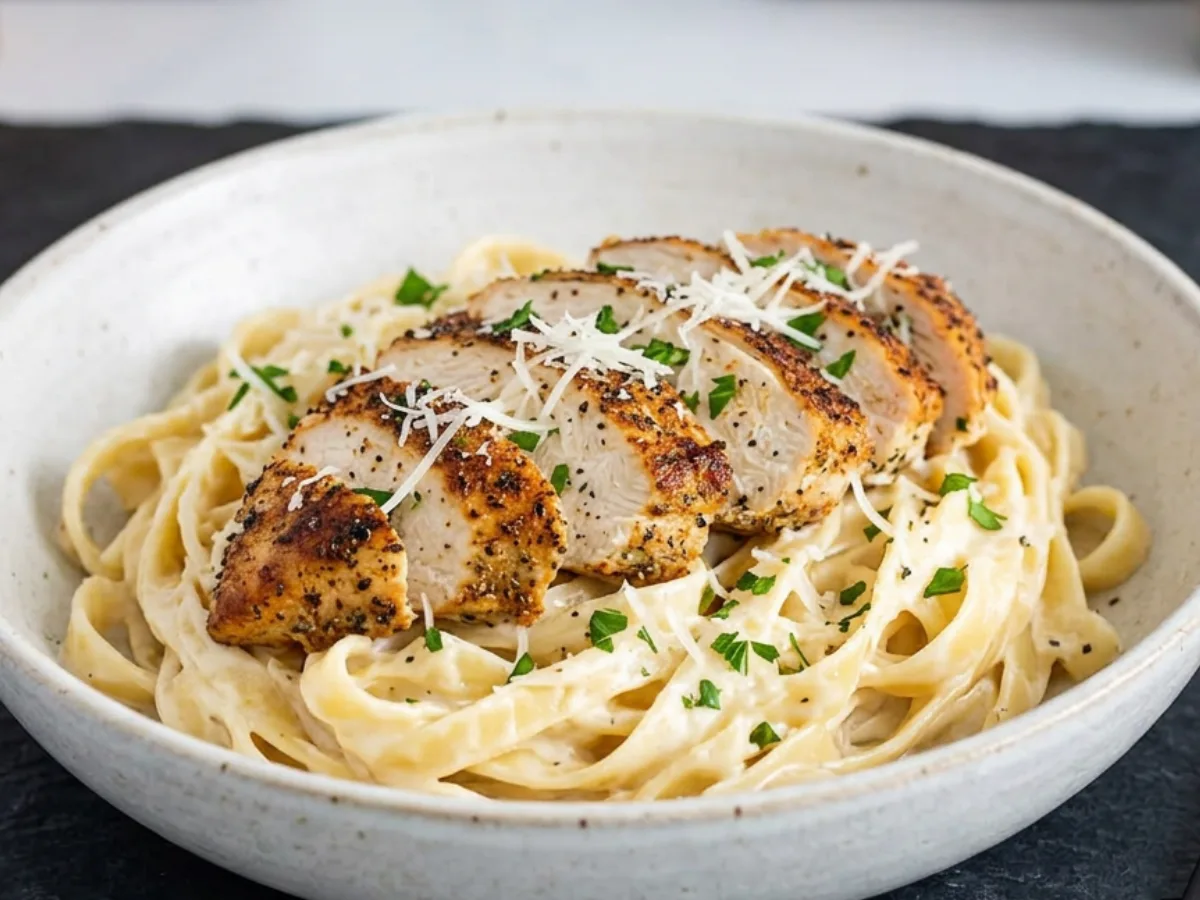
A good Chicken Alfredo recipe is all about contrast: juicy, golden chicken, tender fettuccine, and a rich Parmesan sauce that clings to every strand of pasta. This version builds all three from scratch without making the process unnecessarily complicated.
The chicken is seasoned with Italian herbs and seared until browned, while the Alfredo sauce comes together in the same skillet with butter, heavy cream, garlic, and freshly grated Parmesan. A little reserved pasta water gives you control over the final consistency, so the sauce stays creamy rather than heavy or pasty.
It is a satisfying chicken Alfredo pasta recipe for a family dinner or a cozy weekend meal, yet straightforward enough to make when you want restaurant-style pasta at home.
Why This Chicken Alfredo Works
Traditional Alfredo can be remarkably simple, but this chicken version uses heavy cream to create a stable, generous sauce that coats a full pound of fettuccine. Garlic and Italian seasoning add another layer of savory flavor without overpowering the Parmesan.
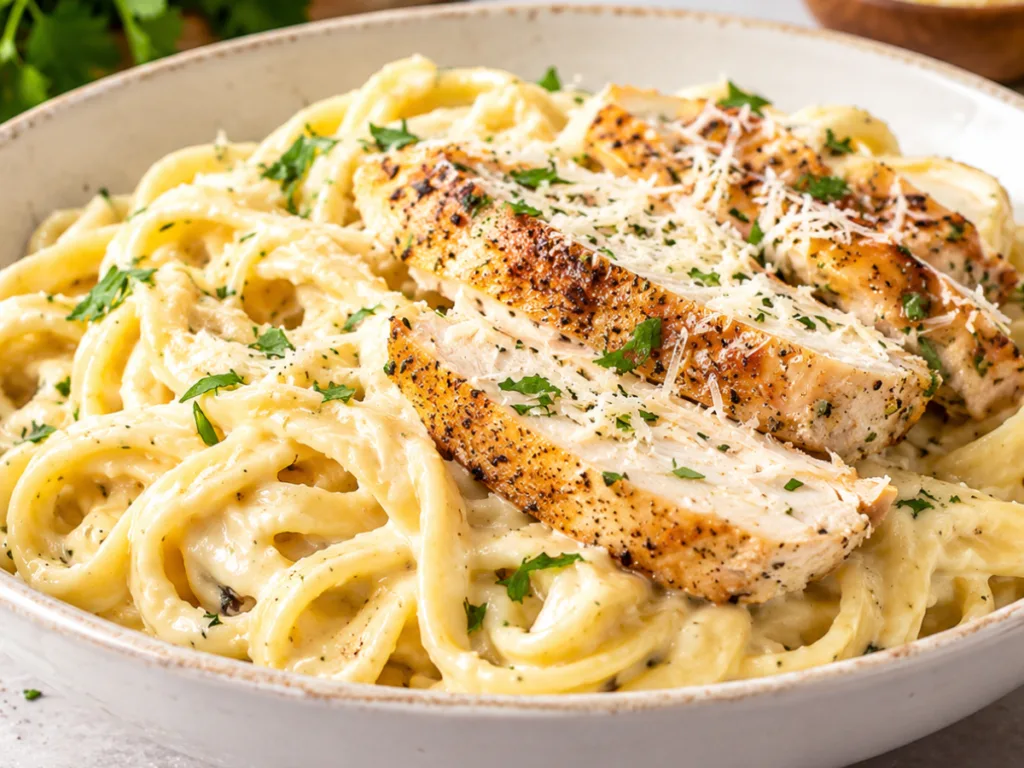
Cooking the seasoned chicken in the skillet before making the sauce also gives it a nicely browned exterior. Once it has rested and been sliced, you can arrange it over the creamy chicken fettuccine Alfredo rather than stirring it into the sauce. That keeps the chicken juicy and makes each serving easy to portion.
Perhaps most importantly, the recipe uses freshly grated Parmesan. Pre-shredded cheeses often contain anti-caking ingredients and may not melt as smoothly. Grating Parmesan just before adding it to the pan produces a more cohesive sauce.
Ingredients for Homemade Chicken Alfredo From Scratch
Fettuccine is a natural match for Alfredo because its broad, flat strands provide plenty of surface area for the cream sauce. Cook the 16 ounces of dry pasta just until al dente. Before draining it, reserve about 1/2 cup of the starchy cooking water.
For the chicken, you will need 1 pound of boneless, skinless chicken breasts. Italian seasoning, kosher salt, and black pepper provide a simple savory coating. Olive oil helps the chicken brown, while a tablespoon of butter added after flipping brings extra richness.
The creamy garlic chicken Alfredo sauce is made with 1/2 cup butter, 2 cups heavy whipping cream, a minced garlic clove, garlic powder, Italian seasoning, salt, pepper, and 2 cups freshly grated Parmesan.
Using both fresh garlic and garlic powder is intentional. Fresh garlic supplies its characteristic aromatic flavor, while a small amount of garlic powder distributes evenly throughout the cream sauce.
Why Reserve Pasta Water?
Pasta cooking water contains starch released by the fettuccine. If your finished Alfredo becomes thicker than you want, adding the reserved water a few tablespoons at a time loosens the sauce without simply diluting its flavor.
Do not automatically add the entire half cup. Start with a small splash and stop when the sauce coats the pasta smoothly.
How to Make Chicken Alfredo
Cook the Fettuccine
Bring a large pot of well-salted water to a boil and cook the fettuccine according to its package directions until al dente, generally around 10 minutes.
Before draining, scoop out 1/2 cup of pasta water and set it aside. Drain the noodles well, but do not rinse them. The starch remaining on their surface helps the Alfredo sauce cling to the pasta.
Sear the Chicken
Season the chicken breasts evenly with Italian seasoning, kosher salt, and pepper.
Heat 2 tablespoons of extra-virgin olive oil in a large nonstick skillet over medium-high heat. When the oil is hot and shimmering, add the chicken. Leave it undisturbed for 5 to 7 minutes so the first side has time to develop a golden crust.
Flip the breasts, add 1 tablespoon butter, and gently swirl the skillet to distribute the melted butter. Cook another 5 to 7 minutes, adjusting the time as necessary depending on the thickness of the breasts.
Chicken should reach 165°F internally for food safety; the USDA safe minimum internal temperature guidelines recommend checking poultry with a food thermometer.
Transfer the chicken to a cutting board and rest it for about 3 minutes before cutting it into roughly 1/2-inch slices.
Make the Creamy Parmesan Sauce
Reduce the skillet to medium-low heat. Add 1/2 cup butter and the heavy whipping cream, whisking until the butter has completely melted into the cream.
Add the minced garlic, garlic powder, Italian seasoning, salt, and pepper. Bring the mixture to a gentle simmer rather than a rolling boil. Whisk frequently for 3 to 4 minutes while it begins to thicken.
Stir in the freshly grated Parmesan just until the cheese has melted and the sauce looks smooth. Avoid aggressively boiling the sauce after adding the cheese. Excessive heat can make a cheese-based sauce oily or grainy.
Toss and Serve
Remove the skillet from the heat and immediately add the drained fettuccine. Toss until the noodles are thoroughly coated.
If the Alfredo has thickened too much, stir in reserved pasta water a few tablespoons at a time. Keep in mind that Alfredo sauce continues to thicken slightly as it sits.
Divide the pasta among bowls and arrange sliced chicken over each serving. Fresh parsley, extra Parmesan, and freshly cracked black pepper make simple optional garnishes.
Tips for the Best Chicken Alfredo Recipe
Use freshly grated Parmesan whenever possible. Besides melting better than many packaged shredded cheeses, it gives you better control over the texture of the finished sauce.
Keep the cream at a gentle simmer. Alfredo does not need vigorous boiling to thicken. Moderate heat and frequent whisking encourage a smooth consistency.
Watch the chicken by temperature rather than relying exclusively on cooking time. Breast thickness varies considerably, which means two pieces can take different amounts of time to reach a safe temperature.
Give the chicken a few minutes to rest before slicing. Cutting immediately lets more juices escape onto the cutting board instead of remaining in the meat.
Finally, have the pasta ready when your sauce is finished. Creamy Alfredo is best immediately after cooking, when the Parmesan sauce is silky and fluid.
Substitutions and Easy Variations
You can substitute boneless, skinless chicken thighs for breasts, although their cooking time will vary. As with chicken breasts, use an instant-read thermometer to confirm doneness.
Other long pasta shapes can replace fettuccine. Linguine works particularly well, while spaghetti is also an option. The finished dish will feel slightly different, but the sauce technique remains the same.
For additional vegetables, serve the pasta with steamed or roasted broccoli, asparagus, mushrooms, or peas. Broccoli is especially good at balancing a rich cream sauce. If that combination appeals to you, this simple creamy chicken broccoli pasta is another useful chicken pasta dinner to try.
Parmesan is central to the flavor and structure of the sauce, so this is one ingredient that is better not replaced with a mild melting cheese such as mozzarella.
How to Keep Alfredo Sauce Smooth
Temperature matters more than complicated technique. Once the cream has gently thickened, add the Parmesan without allowing the sauce to boil hard.
Finely grated Parmesan also melts faster than large shreds. Add it while stirring rather than dumping a tightly packed block of cheese into one spot.
If your sauce is smooth but simply too thick, that is easily corrected with pasta water. If it seems thin at first, give the cheese time to melt and coat the noodles before adding anything else.
Remember that the sauce becomes thicker as it cools. Aim for Alfredo that looks a little looser in the skillet than you ultimately want on the plate.
What to Serve With Chicken Alfredo
Because creamy chicken fettuccine Alfredo is already rich and substantial, simple sides work best. A crisp green salad with an acidic vinaigrette creates a useful contrast, while roasted asparagus, green beans, or broccoli add color and freshness.
Garlic bread is a natural choice when you want a full comfort-food dinner. For a lighter accompaniment, serve the pasta with tomatoes and greens dressed simply with olive oil and lemon juice or vinegar.
Storing and Reheating Leftover Chicken Alfredo
Transfer leftovers to a covered container and refrigerate them promptly. The USDA advises using most cooked leftovers within 3 to 4 days; its guidance for handling leftovers safely also covers safe cooling and reheating practices.
Cream sauces can separate when reheated too aggressively. For the best texture, warm leftover Chicken Alfredo gently in a skillet over low heat. Add a small splash of milk or cream and stir as it warms.
A microwave also works. Heat individual portions in short intervals, stirring between each one rather than microwaving continuously at full power.
Freezing is less ideal for this particular dish. Although it can be frozen, cream-and-Parmesan sauces may separate and pasta can soften after thawing. Refrigerating and reheating within a few days provides a better texture.
Frequently Asked Questions
Why is my Alfredo sauce too thick?
Alfredo naturally thickens as the Parmesan melts and continues thickening as it cools. Add some reserved pasta water, a few tablespoons at a time, and toss until the sauce coats the fettuccine smoothly.
Can I use pre-shredded Parmesan?
Freshly grated Parmesan is preferable. Some packaged shredded or grated cheeses contain additives that can interfere with smooth melting. For a homemade chicken Alfredo from scratch, grating the cheese yourself produces more reliable results.
Can I make Chicken Alfredo ahead of time?
You can cook the chicken in advance, but the Alfredo sauce and pasta have their best texture immediately after they are combined. If possible, prepare the sauce shortly before serving rather than assembling the entire dish far in advance.
How do I stop Alfredo sauce from becoming grainy?
Use moderate heat, keep the sauce at a gentle simmer rather than a hard boil, and stir the freshly grated Parmesan in just until melted. Excessive heat is one of the main reasons a cheese sauce can lose its smooth texture.
What pasta is best for chicken Alfredo?
Fettuccine is the classic choice for this version because the broad strands carry the creamy sauce well. Linguine or spaghetti can also be used if that is what you have available.
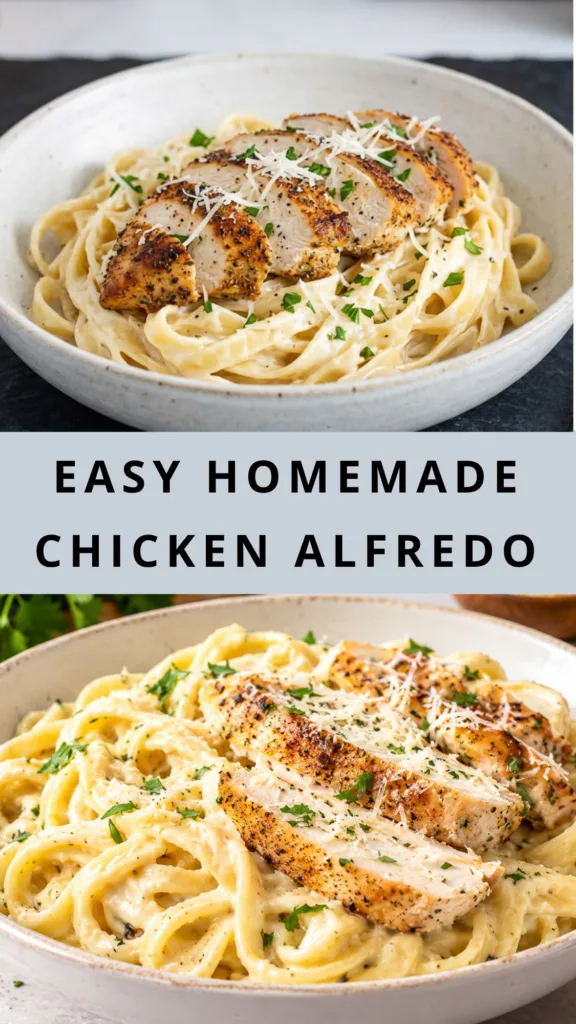
Creamy Chicken Alfredo Recipe With Fettuccine
Golden seasoned chicken and tender fettuccine tossed in a rich homemade Parmesan, cream, and garlic Alfredo sauce.
- Prep Time: 10 minutes
- Cook Time: 30 minutes
- Total Time: 40 minutes
- Yield: 6 servings
- Category: Dinner
- Method: Stovetop
- Cuisine: Italian-American
Ingredients
For the Noodles
16 ounces dry fettuccine pasta
For the Chicken
1 pound boneless, skinless chicken breasts
1 teaspoon Italian seasoning
3/4 teaspoon kosher salt
1/4 teaspoon black pepper
2 tablespoons extra-virgin olive oil
1 tablespoon butter
For the Sauce
1/2 cup butter
2 cups heavy whipping cream
1 clove garlic, minced
3/4 teaspoon garlic powder
3/4 teaspoon Italian seasoning
1/4 teaspoon salt
1/4 teaspoon black pepper
2 cups freshly grated Parmesan cheese
Instructions
1. Cook fettuccine until al dente; reserve 1/2 cup pasta water and drain.
2. Season chicken with Italian seasoning, salt, and pepper.
3. Sear chicken in olive oil 5–7 minutes per side, adding butter after flipping; cook to 165°F.
4. Rest chicken 3 minutes, then slice.
5. Melt sauce butter with cream over medium-low heat.
6. Whisk in garlic and seasonings; gently simmer 3–4 minutes.
7. Stir in Parmesan until smooth.
8. Toss sauce with fettuccine, adding reserved pasta water as needed.
9. Top with sliced chicken and serve.
Notes
Use freshly grated Parmesan for the smoothest sauce.
Keep the sauce at a gentle simmer and do not boil after adding Parmesan.
Refrigerate leftovers promptly and use within 3–4 days.
Reheat gently with a splash of milk or cream.