
Table of Contents
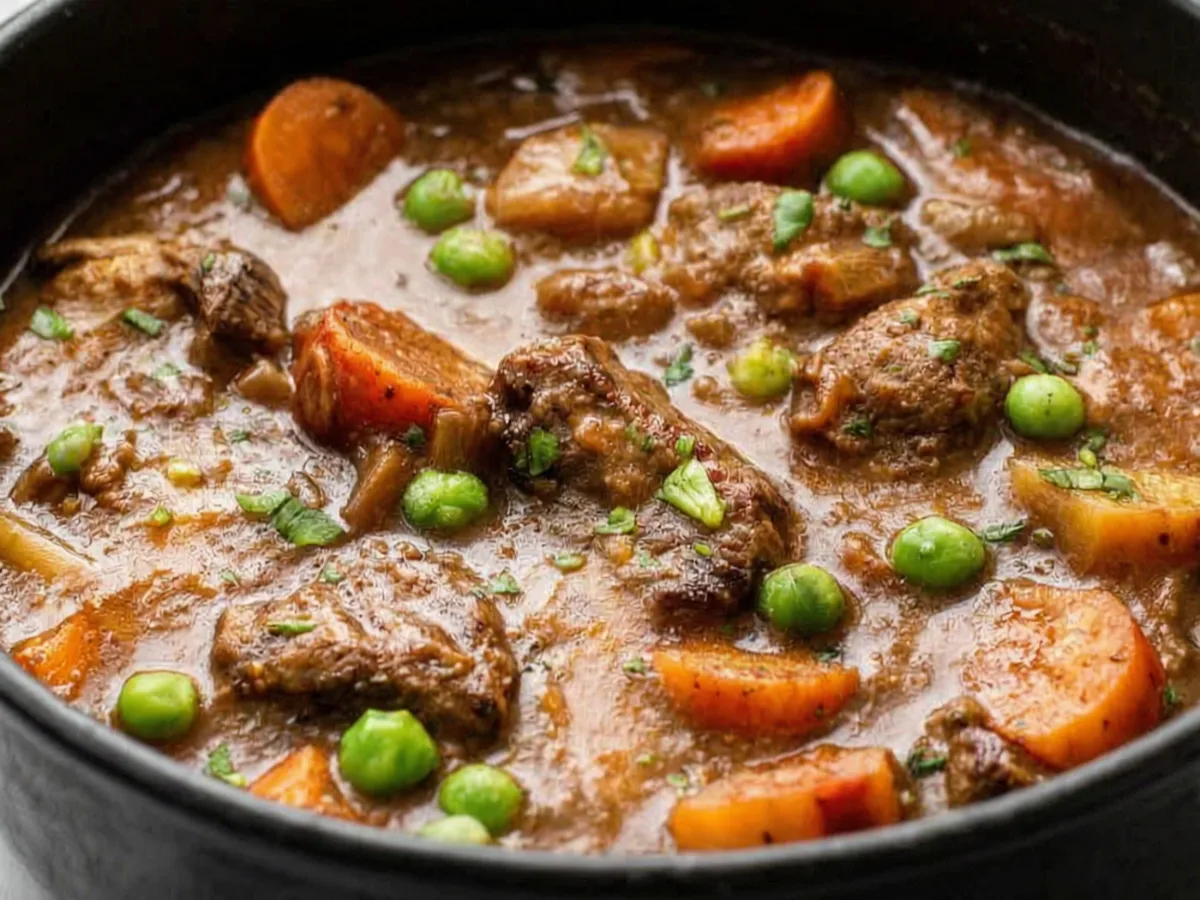
This classic beef stew recipe combines tender chunks of beef with Yukon Gold potatoes, carrots, celery, and peas in a rich, savory broth. Beef chuck cooks low and slow until fork-tender, while tomato paste, garlic, Worcestershire sauce, and aromatics give the broth plenty of depth.
The method is straightforward but rewards patience. Browning the beef first creates a flavorful foundation, and adding the potatoes and carrots later keeps the vegetables from becoming overly soft while the meat tenderizes. A light coating of flour also helps the broth develop a satisfying consistency as it simmers. Serve this hearty beef stew straight from the Dutch oven with crusty bread for a cozy family dinner, or make a batch ahead for convenient leftovers throughout the week.
What Makes This Beef Stew So Flavorful?
Great homemade beef stew depends less on complicated ingredients and more on using each ingredient well.
The beef gets browned in batches rather than simply simmered from the beginning. That searing develops a flavorful crust and leaves browned bits on the bottom of the Dutch oven. When the broth is added, those concentrated flavors become part of the stew.
There is also plenty of time for the beef to become tender. Chuck benefits from slow, moist cooking, so keeping the pot at a gentle simmer is important.
Finally, the potatoes and carrots aren’t added until the beef has already cooked for an hour. This allows the meat to get a head start while preventing the vegetables from spending unnecessary time in the pot.
Ingredients You’ll Need
Beef chuck
Two pounds of cubed beef chuck make a hearty base for this easy beef stew recipe. Chuck contains connective tissue that softens during extended cooking, resulting in tender pieces of beef.
Beef sold as stewing meat can also be used.
Flour and olive oil
A light coating of flour encourages browning and helps give the finished broth more body. You don’t need a heavy coating; shake off the excess before the beef goes into the Dutch oven.
Olive oil provides the cooking fat for searing. Add a little more as needed if the bottom of the pot becomes dry.
Onion, celery, and garlic
Chopped onion and celery provide the aromatic foundation. Six cloves of garlic add plenty of savory character without requiring a complicated seasoning blend.
Tomato paste
A 6-ounce can of tomato paste gives the cooking liquid body, color, and concentrated flavor. Cooking it briefly with the garlic before adding the broth develops its flavor further.
Beef broth and Worcestershire sauce
Four cups of beef broth provide the cooking liquid. Worcestershire sauce adds another layer of savory, umami-rich flavor.
Broth varies substantially in saltiness, so making the final salt adjustment at the end gives you better control over the seasoning.
Potatoes, carrots, and peas
Yukon Gold potatoes develop a creamy center while generally retaining their shape during simmering. Thickly sliced carrots can withstand the longer cooking time without falling apart.
Frozen peas are optional. Add them at the end, when they only need enough time to heat through.
Seasonings
Italian seasoning and bay leaves gently season the broth during the long simmer. Salt and freshly ground black pepper finish the stew after everything is tender.
How to Make Beef Stew
Brown the beef in batches
Lightly coat the beef cubes with flour, then shake off any excess.
Heat 1 tablespoon of olive oil in a large Dutch oven or heavy-bottomed pot over medium-high heat. When the oil is hot, add half of the beef, leaving a little room between the pieces.
Let the beef sit against the hot surface long enough to develop good color before turning it with tongs. Constantly moving the pieces will make effective browning harder.
Transfer the first batch to a plate. Add the remaining tablespoon of olive oil and repeat with the second batch.
Cook the aromatics
Once all the beef has been removed, check the bottom of the Dutch oven. If it looks very dry, add another teaspoon or so of olive oil.
Add the chopped onion and celery and cook for about 5 minutes, stirring occasionally.
Stir in the minced garlic and tomato paste. Cook for another 1 to 2 minutes, stirring frequently.
Add the broth and seasonings
Pour in a little beef broth first and scrape the bottom of the Dutch oven with a wooden spoon. This releases the browned bits created while searing the meat.
Add the remaining broth and Worcestershire sauce.
Return the beef to the Dutch oven, including any juices on the plate. Add the Italian seasoning and three bay leaves.
Bring the liquid to a gentle boil, then immediately reduce the heat. Cover and maintain a gentle simmer for 1 hour.
Check the pot periodically and give the stew a stir to ensure nothing is sticking to the bottom.
Add the potatoes and carrots
After the beef has simmered for an hour, stir in the diced Yukon Gold potatoes and thickly sliced carrots.
Cover the pot and continue simmering for approximately 1 more hour.
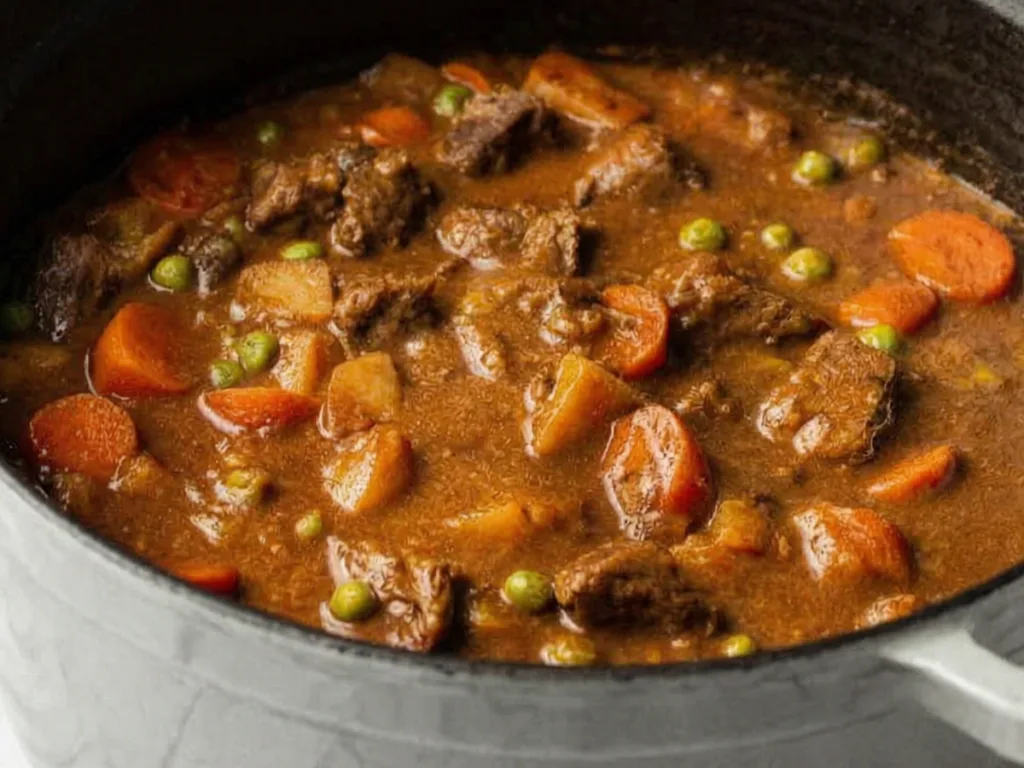
The stew is ready when the beef is fork-tender and the potatoes and carrots can easily be pierced with a knife or fork. Cooking time can vary slightly depending on the size of the beef and vegetables.
Remove and discard all three bay leaves.
Stir in the frozen peas, if using, and allow them to warm through. Taste the stew and add salt and black pepper as needed.
Tips for Tender Beef and a Rich Broth
Patience matters when making a hearty beef stew. These simple techniques will improve both flavor and texture:
- Brown the beef in two batches to avoid overcrowding the Dutch oven.
- Shake off excess flour so the beef has only a light coating.
- Let the meat develop color before turning it instead of continuously moving it.
- Scrape the browned bits from the Dutch oven when adding the broth.
- Maintain a gentle simmer rather than a vigorous boil.
- Stir periodically, particularly as the broth begins to thicken.
- Cut the carrots fairly thick so they remain substantial after cooking.
- Add potatoes and carrots after the first hour rather than at the beginning.
- If the beef remains firm, give it additional simmering time.
- Adjust salt only after tasting the fully cooked stew.
If you enjoy hearty beef-and-potato combinations, these tender sliced beef with roasted baby potatoes make another satisfying dinner. For days when you need something much quicker, this quick and easy Korean ground beef bowl is a practical weeknight option.
How to Keep Beef Stew Meat Tender
The cut of meat makes a difference. Beef chuck is naturally suited to prolonged, moist cooking. Trying to rush it over aggressive heat can leave the meat less pleasant than giving it enough time at a controlled simmer.
If your beef remains tough at the two-hour mark, don’t assume it is overcooked. Chuck often becomes tender only after its connective tissue has had sufficient time to soften.
Continue simmering gently and test individual pieces periodically with a fork.
The size of the cubes also influences cooking time. Keeping them fairly uniform makes it more likely that everything will become tender at roughly the same time.
Ingredient Substitutions and Variations
Yukon Gold potatoes are particularly good here, but red potatoes can be substituted. They also hold their shape nicely during simmering.
Russet potatoes will work, although they are starchier and tend to break apart more readily. That can make your broth slightly thicker.
The peas are entirely optional. You can omit them without changing the cooking method or quantities of the other ingredients.
For a stronger herb note, add a small amount of fresh thyme along with the bay leaves.
You can also increase the carrots if you want a more vegetable-forward stew. Just make sure there is enough liquid surrounding the ingredients for everything to cook evenly.
What to Serve with Beef Stew
A beef stew with potatoes and carrots is substantial enough to serve as a complete meal. It already provides beef, vegetables, and potatoes in each bowl.
Crusty bread is a natural companion because it can soak up the thick, savory broth. Soft dinner rolls or biscuits work equally well.
For a lighter contrast, serve the stew alongside a crisp green salad with a simple vinaigrette. Steamed green vegetables can also add freshness without making dinner overly heavy.
Make-Ahead Tips
Beef stew works particularly well as a make-ahead dinner. Prepare the full recipe, cool it safely, and refrigerate it in a covered container.
The broth often becomes noticeably thicker as it chills. When reheating, simply add a small splash of beef broth if you prefer a looser consistency.
For meal prep, divide the cooled stew among individual airtight containers. That makes it easier to reheat only the number of servings you need.
How to Store and Reheat Beef Stew
Transfer leftovers to covered containers and refrigerate them promptly. According to the USDA guidance for safely storing leftovers, cooked leftovers can generally be kept in the refrigerator for 3 to 4 days.
Reheat individual portions in the microwave or place the stew in a saucepan over medium-low heat, stirring occasionally. Add a splash of broth if necessary.
For food safety, leftovers should reach 165°F when reheated, following the USDA recommendations for reheating leftovers safely.
Can You Freeze Beef Stew?
Yes. Cool the stew before transferring it to freezer-safe containers, leaving a little room for expansion.
One texture consideration is the potatoes. Cooked potatoes may become softer or somewhat grainier after freezing and thawing. The flavor of the stew remains good, but the potato texture may differ from a freshly cooked batch.
Thaw frozen portions safely in the refrigerator and then reheat them thoroughly before serving.
Frequently Asked Questions
What is the best beef for beef stew?
Beef chuck is an excellent option because its connective tissue softens during slow, moist cooking. Pre-cut stewing beef can also be used, although it may contain pieces from different cuts.
Why is my beef stew meat still tough?
It usually needs more time. Keep the stew at a gentle simmer and continue cooking until a piece of beef is easily pierced with a fork. The exact timing varies according to the cut and size of the cubes.
How do you thicken beef stew?
The flour used to coat the beef naturally thickens this classic beef stew recipe as it simmers. For a slightly thicker final consistency, let the stew simmer uncovered briefly so some of the cooking liquid can evaporate.
Do I need to cook the potatoes before adding them?
No. Add the raw diced Yukon Gold potatoes directly to the Dutch oven after the beef has simmered for an hour. They will become tender during the second stage of cooking while absorbing the savory broth.
Can I make beef stew ahead of time?
Yes. Cook and refrigerate the stew properly, then reheat it when needed. It makes a useful make-ahead family dinner because the beef, vegetables, and broth reheat together in one pot.

Classic Beef Stew Recipe with Potatoes and Carrots
Tender beef chuck simmered with Yukon Gold potatoes, carrots, celery, and peas in a rich, savory beef broth.
- Prep Time: 20 minutes
- Cook Time: 2 hours 15 minutes
- Total Time: 2 hours 35 minutes
- Yield: 6 servings
- Category: Dinner
- Method: Stovetop
- Cuisine: American
Ingredients
2 pounds cubed beef chuck or beef stewing meat
Flour, for dredging
2 tablespoons olive oil, plus more as needed
1 medium onion, chopped
3 celery stalks, chopped
6 cloves garlic, minced
1 (6-ounce) can tomato paste
4 cups beef broth
1 tablespoon Worcestershire sauce
1/4 teaspoon Italian seasoning
3 bay leaves
1 pound Yukon Gold potatoes, peeled and diced
4 medium carrots, peeled and thickly sliced
1 cup frozen peas, optional
Salt and black pepper, to taste
Instructions
1. Coat beef lightly in flour and shake off excess.
2. Brown beef in olive oil in two batches; transfer to a plate.
3. Sauté onion and celery for 5 minutes.
4. Add garlic and tomato paste; cook 1–2 minutes.
5. Add beef broth and Worcestershire sauce, scraping up browned bits.
6. Return beef to the pot and add Italian seasoning and bay leaves.
7. Cover and gently simmer for 1 hour, stirring occasionally.
8. Add potatoes and carrots; cover and simmer about 1 hour until tender.
9. Remove bay leaves and stir in peas until heated through.
10. Season with salt and black pepper and serve.
Notes
Keep the stew at a gentle simmer for tender beef.
If the beef is still firm, continue simmering until fork-tender.
Refrigerate leftovers promptly in covered containers.