
Table of Contents
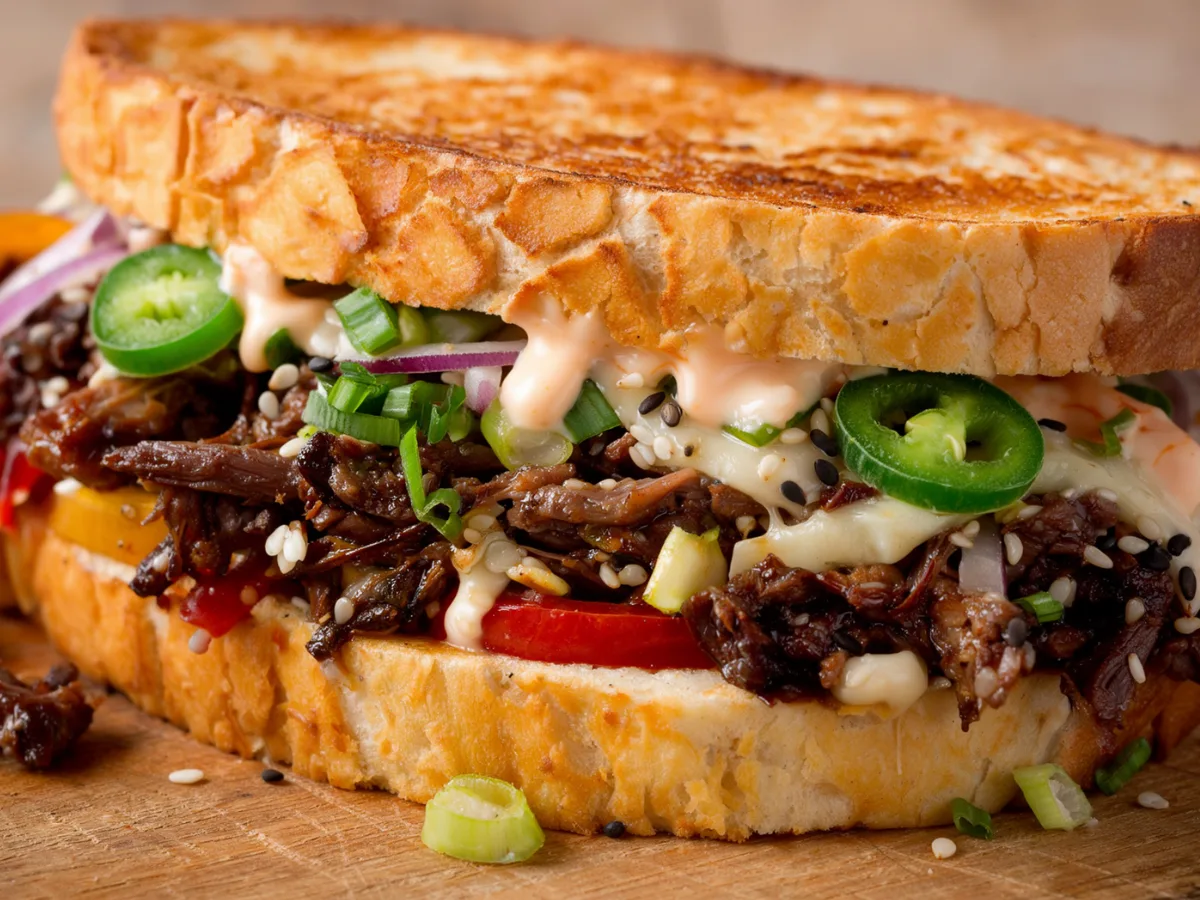
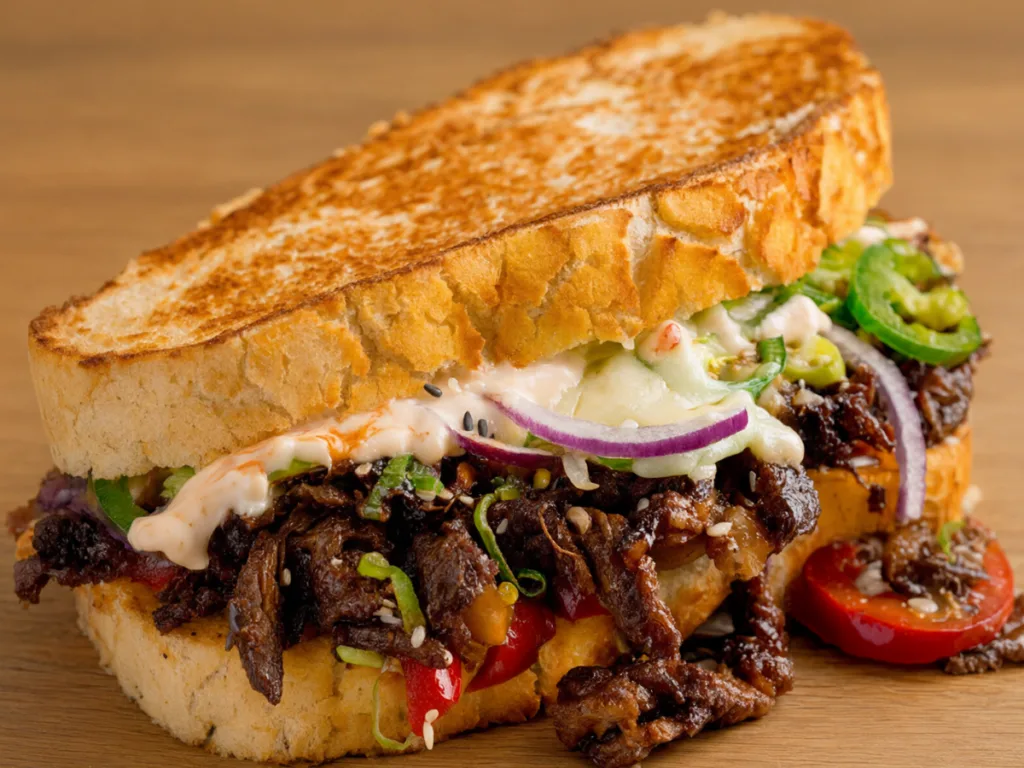
This Korean Steak Sandwich packs thin, caramelized ribeye, spicy-sweet gochujang, colorful peppers, sharp cheddar, and crisp fresh toppings between golden slices of toasted bread. The beef gets plenty of flavor from a Korean-inspired marinade made with soy sauce, ginger, garlic, sesame oil, brown sugar, grated apple, and unsalted beef broth. A quick garlic mayo and sweet chili sauce balance the savory filling with creaminess and a little extra sweetness.
The thinly sliced steak cooks quickly, making this Korean steak sandwich recipe surprisingly manageable for lunch or dinner. Toasting the assembled sandwich in a skillet gives the bread a crisp, buttery exterior while melting the cheddar around the beef and vegetables.
Why This Korean Steak Sandwich Works
The steak is prepared differently from a conventional steak sandwich. Instead of cooking a whole ribeye and slicing it afterward, the raw beef is cut into very thin strips before being marinated.
This gives the marinade plenty of surface area to flavor. It also means the beef cooks in only a few minutes, developing caramelized edges without requiring a long cooking time.
Grated sweet apple brings moisture and natural sweetness to the marinade. Combined with brown sugar, it also helps balance the salty soy sauce and spicy, savory gochujang.
Texture is another important part of the sandwich. Tender beef meets lightly cooked bell peppers, fresh scallions, red onion, and jalapeños. Melted cheddar ties everything together while the buttered bread becomes crisp and golden in the skillet.
Key Ingredients for a Korean Steak Sandwich
Ribeye Steak
Ribeye is particularly well suited to this Korean BBQ steak sandwich because its marbling helps the thin slices remain rich and tender.
Putting the steak in the freezer for about 30 minutes firms it enough to make thin slicing easier. It shouldn’t become completely frozen. Using a sharp knife, aim for strips approximately 2mm thick, slicing across the grain when possible.
Gochujang
Gochujang gives the beef its distinctive spicy-sweet character. This Korean fermented red pepper paste provides chile heat along with savory depth and a subtle sweetness.
Different brands vary in intensity, so you can adjust the amount according to your preferred heat level. Two tablespoons produce a pronounced gochujang flavor without overwhelming the other ingredients.
Grated Sweet Apple
Grated apple might seem unusual in a steak marinade, but it works beautifully with the beef. It contributes natural sweetness, moisture, and a subtle fruitiness that complements ginger and garlic.
There is no need to peel the apple. Grate it finely so it disperses throughout the marinade.
Unsalted Beef Broth
A small amount of unsalted beef broth loosens the marinade while complementing the savory flavor of the ribeye. Unsalted broth is preferable because soy sauce and gochujang already contain plenty of seasoning.
If you don’t have beef broth, low-sodium chicken broth can also work.
Soy Sauce and Sesame Oil
Soy sauce supplies salt and umami, while toasted sesame oil adds a concentrated nutty aroma.
Because sesame oil has a strong flavor, one tablespoon is enough for the entire batch. Make sure you’re using toasted sesame oil rather than a neutral sesame cooking oil if you want the characteristic toasted flavor.
Cheddar Cheese
Mature cheddar adds sharpness and richness while melting nicely around the hot steak.
Although cheddar isn’t a traditional Korean barbecue ingredient, it works especially well in this Korean-inspired fusion sandwich because its assertive flavor stands up to gochujang, garlic, and jalapeños.
How to Make a Korean Steak Sandwich
1. Firm and Thinly Slice the Steak
Place the ribeye in the freezer for 30 minutes. Remove it once firm and use a sharp knife to cut it into approximately 2mm strips.
Thin, relatively even slices will cook more consistently than larger pieces.
2. Marinate the Beef
Place the sliced ribeye in a bowl. Add soy sauce, gochujang, minced ginger, brown sugar, unsalted beef broth, garlic, black pepper, grated apple, and toasted sesame oil.
Mix thoroughly so all the steak is coated. Cover and marinate for about 30 minutes.
If preparing the beef further ahead, keep it covered in the refrigerator. The USDA’s food safety guidance for marinating recommends marinating foods in the refrigerator rather than at room temperature.
3. Sear Until Caramelized
Heat one tablespoon of oil in a large skillet over high heat. Add the marinated steak and cook for approximately 4 to 5 minutes, turning the pieces occasionally.
The goal is tender beef with browned, lightly caramelized edges.
Thin steak and grated apple can release moisture during cooking. If considerable liquid gathers in the pan, carefully remove the excess and continue cooking. This allows the beef to sear instead of simmer.
Avoid overcrowding the skillet. If necessary, cook the steak in two batches.
Transfer the cooked beef to a plate and let it rest for 2 to 3 minutes.
4. Cook the Bell Peppers
Add the sliced red and yellow bell peppers to the same skillet.
Cook for 2 to 3 minutes, just until slightly softened. Keeping a little texture in the peppers provides a welcome contrast to the tender steak and melted cheese.
5. Assemble the Sandwiches
Brush one side of each bread slice with melted salted butter.
Place two slices butter-side down on a board or plate. Divide the cooked peppers and steak between them, then add sesame seeds and grated mature cheddar.
Finish with sliced red onion, jalapeños, and scallions.
Place the remaining bread on top with its buttered side facing outward.
6. Toast Until Golden
Place the assembled sandwiches in a skillet over low to medium heat.
Cook for approximately 2 to 3 minutes on each side, until the bread is crisp and golden and the cheddar has melted.
Don’t turn the heat too high. Moderate heat gives the cheese enough time to melt before the exterior becomes overly dark.
A sandwich press can also be used.
7. Finish With Garlic Mayo
Mix the mayonnaise and minced garlic in a small bowl.
Carefully lift the top bread slices from the toasted sandwiches. Drizzle the filling with garlic mayo and sweet chili sauce, replace the bread, and serve immediately.
Adding these sauces after toasting keeps their texture and flavor fresh.
Tips for Tender, Caramelized Steak
Very thin slices are one of the most important details in this easy steak sandwich recipe. Firming the ribeye first makes achieving those thin slices substantially easier.
Use a large skillet and let it get properly hot before adding the beef. The steak should start sizzling quickly.
Keep an eye on moisture, too. Grated apple and the other marinade ingredients naturally release some liquid. Too much liquid prevents browning, so carefully remove excess if the steak begins simmering.
Don’t overcook the bell peppers. A couple of minutes gives them a slightly tender exterior while preserving some crunch.
Finally, use thick, sturdy bread. A hearty loaf stands up much better to juicy steak, vegetables, melted cheese, and sauces than very soft sandwich bread.
Fans of substantial toasted sandwiches may also enjoy this simple grilled chicken cordon bleu sandwich, which combines chicken and melted cheese. For a crunchier option with a creamy dressing, try the crispy chicken Caesar sandwich.
Easy Variations
For a leaner Korean beef sandwich, use sirloin in place of ribeye. Because sirloin contains less marbling, be particularly careful not to overcook the thin strips.
Monterey Jack can replace cheddar for a milder result, while Pepper Jack adds another layer of heat.
For a spicy Korean steak sandwich, increase the sliced jalapeños or add a little extra gochujang. For a milder version, reduce or omit the jalapeños without eliminating the gochujang, which contributes much more than heat alone.
Tiger bread is sturdy enough for the substantial filling, but sourdough and other thick-cut artisan loaves work equally well.
What to Serve With Korean BBQ Steak Sandwiches
A crisp, acidic side provides a good contrast to the rich ribeye and melted cheddar. Cucumber salad, cabbage slaw, kimchi, or simply dressed greens all work well.
For a heartier dinner, add fries, roasted potatoes, or sweet potato wedges.
Because the sandwich already contains steak, vegetables, cheese, and bread, it can also stand alone as a filling lunch or casual weeknight dinner.
Make Ahead and Storage
For best results, prepare individual components ahead instead of assembling and storing the complete sandwiches.
The vegetables can be sliced in advance, and the garlic mayo can be mixed and refrigerated in a covered container. Keep raw beef separate from ready-to-eat ingredients.
Cooked steak and vegetables can also be stored separately from the bread. This prevents juices from making the bread soggy.
Refrigerate cooked leftovers promptly. The USDA’s leftovers and food safety guidance recommends refrigerating leftovers within two hours and generally using cooked leftovers within 3 to 4 days.
For reheating, a skillet, toaster oven, or air fryer will preserve the toasted texture better than a microwave. Heat until the filling is thoroughly hot and the bread is crisp again.
Frequently Asked Questions
Is this the same as a bulgogi steak sandwich?
It is best described as a Korean-inspired or bulgogi-style steak sandwich. Thinly sliced marinated beef gives it some of the characteristics associated with bulgogi, while gochujang, cheddar, jalapeños, garlic mayo, and butter-toasted bread make this a fusion preparation.
What steak is best for a Korean steak sandwich?
Ribeye is an excellent choice because its marbling produces flavorful, tender strips of beef. Sirloin is a useful alternative if you prefer a leaner cut.
Why is my steak not caramelizing?
Too much moisture or an overcrowded skillet can cause steak to simmer rather than brown. Start with a hot, wide skillet, avoid crowding the meat, and carefully remove excessive liquid when necessary.
Can I make the sandwich less spicy?
Yes. Reduce or omit the jalapeños first. You can also slightly reduce the gochujang, although keeping some in the marinade preserves the savory fermented chile character that defines the beef.
How do I keep the sandwich from getting soggy?
Let excess moisture cook away from the beef, don’t overcook the peppers, and use thick, sturdy bread. Add the garlic mayo and sweet chili sauce immediately before serving rather than letting the dressed sandwich sit.
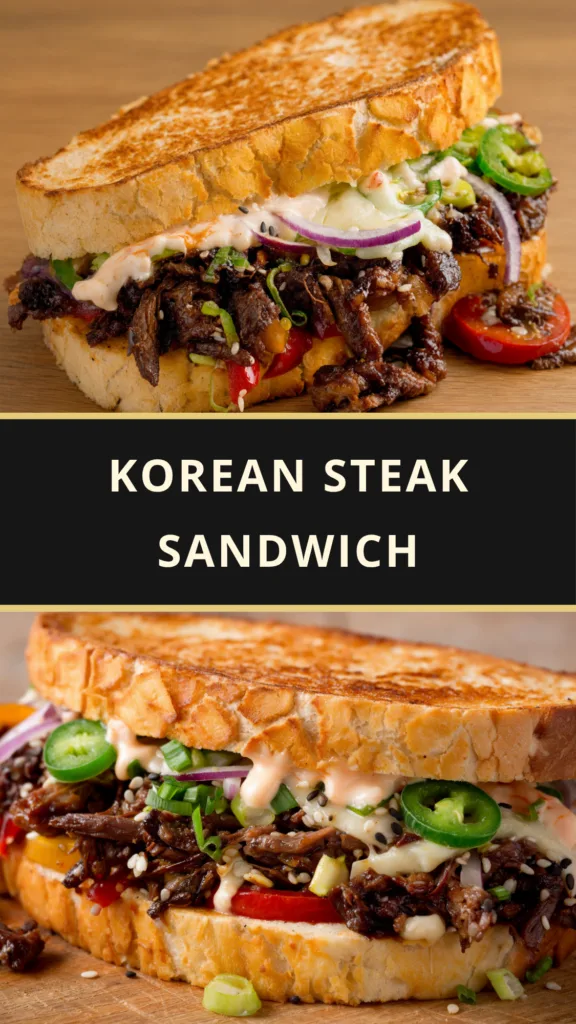
Korean Steak Sandwich with Gochujang, Peppers, and Melted Cheese
A golden toasted sandwich filled with gochujang-marinated ribeye, peppers, melted cheddar, jalapeños, scallions, garlic mayo, and sweet chili sauce.
- Prep Time: 15 minutes
- Cook Time: 15 minutes
- Total Time: 1 hour 30 minutes
- Yield: 2 sandwiches
- Category: Lunch, Dinner
- Method: Stovetop
- Cuisine: Korean-Inspired
Ingredients
Steak and marinade:
320g (0.7 lb) ribeye steak
2 tbsp soy sauce
2 tbsp gochujang paste
1 tsp minced ginger
2 tbsp light brown sugar
2 tbsp unsalted beef broth
2 garlic cloves, minced
1/2 tsp black pepper
1 sweet apple, grated
1 tbsp toasted sesame oil
Sandwich and filling:
1 tbsp oil
1/2 red bell pepper, sliced
1/2 yellow bell pepper, sliced
4 thick slices sturdy bread
2 tbsp salted butter, melted
1/4 tsp sesame seeds
75g (2/3 cup) mature cheddar cheese, grated
1/2 small red onion, sliced
2 small jalapeños, sliced
3 scallions, thinly sliced
Sauce:
3 tbsp mayonnaise
1 small garlic clove, minced
2 tsp sweet chili sauce
Instructions
1. Firm steak in freezer for 30 minutes, then slice thinly.
2. Mix steak with marinade ingredients and marinate for 30 minutes.
3. Heat oil over high heat and cook steak for 4–5 minutes until caramelized.
4. Remove steak and cook peppers for 2–3 minutes.
5. Butter the outside of the bread slices.
6. Layer peppers, steak, sesame seeds, cheddar, onion, jalapeños, and scallions.
7. Toast for 2–3 minutes per side until golden and melted.
8. Mix mayonnaise with garlic.
9. Add garlic mayo and sweet chili sauce, then serve immediately.
Notes
Use unsalted beef broth to keep the marinade balanced.
Firming the steak before slicing makes thin strips easier to cut.
If excess liquid collects during cooking, carefully remove it and continue searing.
Store cooked leftovers refrigerated and use within 3–4 days.