
Table of Contents
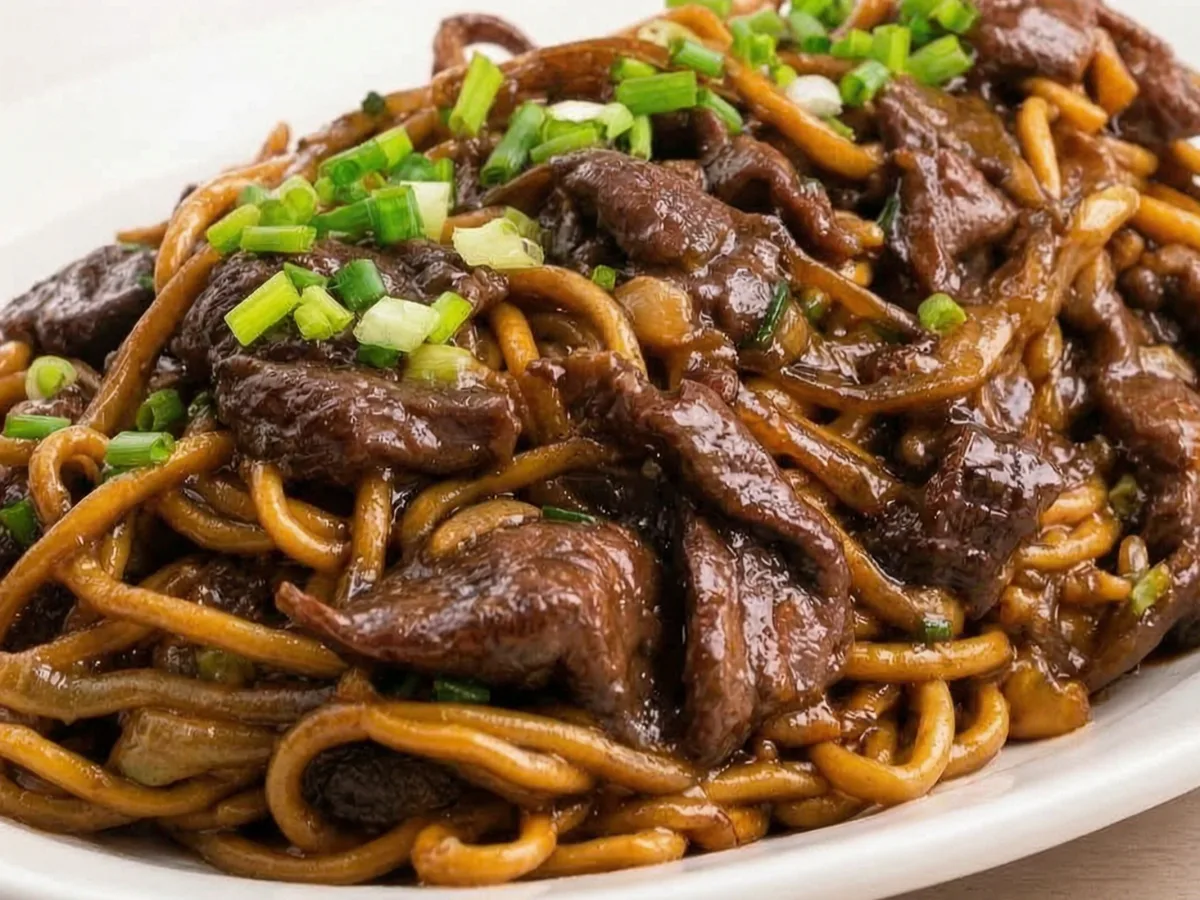
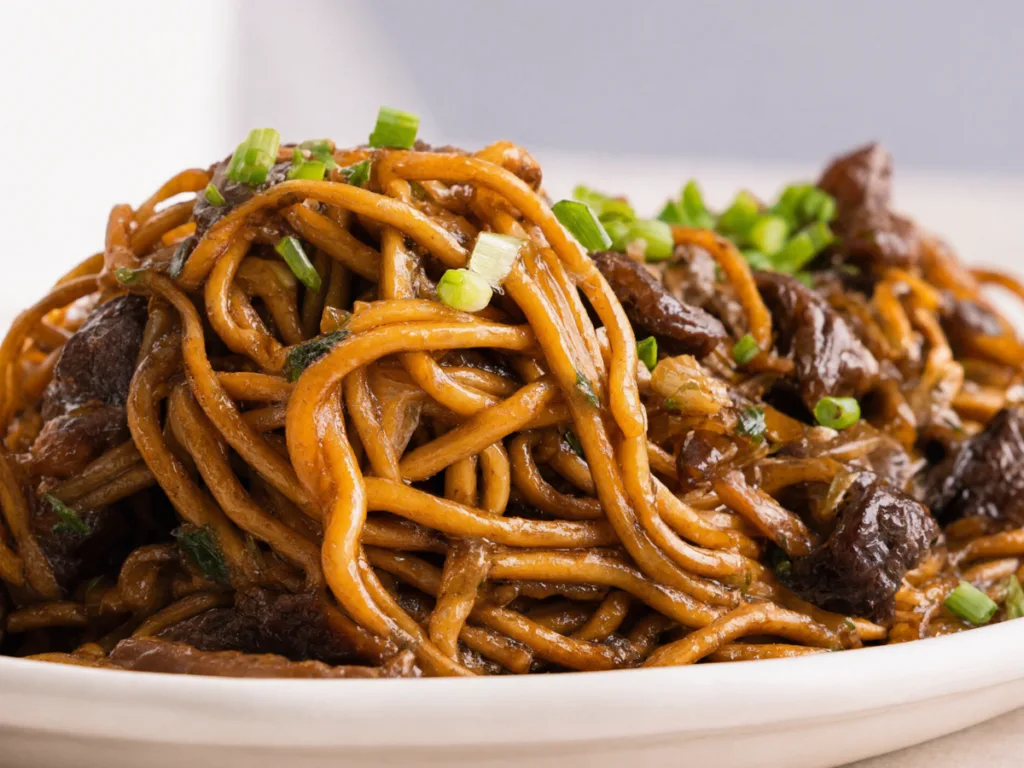
Mongolian Beef Noodles combine tender strips of beef and chewy noodles with a glossy sauce full of savory, slightly sweet flavor. Fresh ginger, garlic, onion, and spring onions keep the dish aromatic, while soy sauce, oyster sauce, chicken stock, and brown sugar form a rich coating that clings to every strand.
This Mongolian Beef Noodles recipe comes together quickly in a hot wok or large skillet, making it especially useful for a weeknight dinner. A short marinade helps the beef stay tender, while high-heat cooking creates good browning without requiring a long cooking time. Hokkien noodles, egg noodles, and udon all work well, so it’s also an easy recipe to adapt to what you already have in the kitchen.
Why This Mongolian Beef Noodle Stir Fry Works
The key to this dish is cooking quickly at high heat. The thin strips of beef need only a short time in the wok, which helps keep them tender instead of chewy.
The marinade combines soy sauce, chicken stock, baking soda, and cornstarch. Baking soda helps tenderize the surface of the beef, while cornstarch creates a light coating that contributes to the glossy consistency of the finished sauce.
The stir-fry sauce balances savory soy and oyster sauces with brown sugar. Chicken stock rounds out the sauce and supplies enough liquid to coat both the beef and noodles without overwhelming them.
Everything comes together in one wok at the end, giving you a Mongolian beef stir fry that’s saucy without becoming soupy.
Ingredients You’ll Need
Beef
Use 400 grams, or about 14 ounces, of sirloin or flank steak. Both cuts work particularly well for quick stir-frying.
Slice the beef thinly, and if you’re using flank steak, cut across the grain. Shortening those long muscle fibers gives the cooked meat a more tender bite.
Partially chilling the beef can make thin slicing easier. It should be firm enough to cut neatly but not frozen solid.
Noodles
You’ll need 400 grams, or 14 ounces, of cooked noodles.
Hokkien noodles have a pleasantly springy texture and work especially well with the thick sauce. Egg noodles are another excellent option. For thicker and chewier Asian beef noodles, use udon.
If you’re starting with dry noodles, cook them according to the package directions first. Drain thoroughly before adding them to the wok.
Aromatics
Onion, fresh ginger, and garlic build flavor at the beginning of cooking. Because they’re briefly exposed to very high heat, have them sliced and ready before you turn on the stove.
Spring onions are added at the end. This preserves their fresh flavor and gives the rich noodles some contrast.
Stir-Fry Sauce
The sauce uses:
- Soy sauce
- Chicken stock
- Oyster sauce
- Brown sugar
- Rice vinegar
Soy sauce and oyster sauce provide the savory foundation, while brown sugar brings the sweetness associated with Mongolian-style beef sauce. A small amount of rice vinegar adds balance so the sauce isn’t excessively sweet.
How to Make Mongolian Beef Noodles
Marinate the Beef
Place the sliced beef in a bowl. Add soy sauce, chicken stock, baking soda, and cornstarch, then mix thoroughly so every strip has a light coating.
Leave it for about 5 minutes while you prepare the sauce.
This short marinating period is useful because the beef has been cut very thinly. There’s no need for hours of preparation before cooking.
Prepare the Sauce
Combine soy sauce, chicken stock, oyster sauce, brown sugar, and rice vinegar in a small bowl.
Stir until the brown sugar is well incorporated. Keep the sauce beside your stove because the cooking process moves quickly once the wok is hot.
Sear the Beef
Heat vegetable oil in a large wok or skillet over high heat.
Add the sliced onion, ginger, and garlic and stir-fry for approximately 30 seconds. They should become aromatic without allowing the garlic to burn.
Add the beef and spread the strips over as much of the hot surface as possible. Leave them to sear for roughly 1 minute before turning.
Cook for about another minute, or until the beef has developed some color.
High heat and enough cooking space are important here. If the pan is small and crowded, the released moisture can steam the beef instead of allowing it to brown.
Add the Noodles
Add the cooked, well-drained noodles directly to the beef.
Pour in the prepared stir-fry sauce and toss everything together. Continue stir-frying just until the sauce thickens slightly and forms a shiny coating around the beef and noodles.
Add the sliced spring onions, toss briefly, and remove the pan from the heat.
For safe handling and cooking of beef, consult the USDA safe minimum internal temperature guidelines.
Tips for Tender Beef and Glossy Noodles
Slice the beef as evenly as possible. When some pieces are considerably thicker than others, the thin pieces can overcook before the larger ones are ready.
A properly heated pan also makes a noticeable difference. Preheat the wok before adding your ingredients so the beef starts searing immediately.
Give the beef a little space. If your skillet is too small to accommodate it comfortably, searing the meat in batches can produce better browning than overcrowding the pan.
Drain the noodles thoroughly. Water left on their surface dilutes the sauce and can prevent it from forming that glossy coating.
It’s equally important not to reduce the sauce for too long. Once it clings to the noodles and beef, the stir-fry is ready. Continuing to cook can make the sauce overly concentrated.
Choosing the Right Noodles
One advantage of an easy beef noodle recipe like this is that several types of noodles work.
Hokkien noodles are a strong choice when you want a classic stir-fry texture. Their thickness stands up well to tossing in a wok and holds the sauce nicely.
Egg noodles produce a slightly lighter result, while udon gives the dish a substantial, chewy texture.
Whichever variety you choose, pay attention to whether the package weight refers to fresh, pre-cooked, or dry noodles. This recipe requires 14 ounces of cooked noodles rather than 14 ounces of dried noodles.
Easy Variations
You can add vegetables without changing the overall character of the dish. Thinly sliced bell pepper, mushrooms, snow peas, or broccoli are all good choices.
Firm vegetables should be partially cooked before the noodles go into the wok. Quick-cooking vegetables can be stir-fried alongside the onion.
For extra heat, add a pinch of crushed red pepper flakes or sliced fresh chili. This isn’t necessary for the original sweet and savory beef noodles, but it provides a pleasant contrast to the brown sugar.
You can also reduce the amount of brown sugar slightly if you prefer a more savory sauce. Keep in mind that changing the quantities of soy sauce or oyster sauce will affect both saltiness and consistency.
What to Serve with Mongolian Beef Noodles
Since the recipe already contains beef and noodles, it can stand on its own as a complete dinner. A simple green vegetable makes the most natural accompaniment. Try steamed broccoli, bok choy, green beans, or quickly stir-fried snow peas.
If you’re planning future beef dinners, these garlic butter bowtie pasta with ground beef offer another satisfying combination of beef and pasta.
For nights when keeping cleanup to a minimum matters most, this one-pot spaghetti is another practical dinner to keep on hand.
How to Store and Reheat Leftovers
Transfer leftovers to a covered container and refrigerate promptly. The USDA guidance on leftovers and food safety recommends keeping cooked leftovers refrigerated at 40°F or below and generally using them within 3 to 4 days.
A wok or skillet is particularly useful for reheating these noodles. Place the leftovers over medium heat and add a small splash of chicken stock or water if the sauce has thickened considerably in the refrigerator. Toss gently until everything is thoroughly heated.
You can also reheat individual portions in the microwave, stirring partway through to promote even heating.
Freezing is possible, but it’s not the first choice for this particular meal. Cooked noodles can become softer after freezing and thawing, so the dish has its best texture when freshly prepared or refrigerated for a few days.
Frequently Asked Questions
What cut of beef is best for Mongolian Beef Noodles?
Sirloin and flank steak are both good choices for this recipe. Slice either one thinly. When using flank steak, slicing across the grain will help produce tender pieces.
Can I use udon for Mongolian Beef Noodles?
Yes. Cooked udon works very well and gives the dish a thicker, chewier texture. Separate the noodles before adding them to the wok so they’re easier to coat evenly.
Why is baking soda used in the beef marinade?
A small quantity of baking soda helps keep thinly sliced beef tender during fast, high-temperature cooking. Stick to the specified 1/2 teaspoon because adding more isn’t necessary.
How do I prevent watery stir-fry sauce?
Thoroughly drain your cooked noodles, make sure the wok is hot, and avoid overcrowding it. Once the sauce is added, let it bubble briefly while tossing until it coats the noodles.
Can I add vegetables?
Yes. Bell peppers, mushrooms, broccoli, snow peas, and similar stir-fry vegetables are all suitable additions. Avoid adding so many vegetables that the amount of sauce becomes insufficient to coat everything.
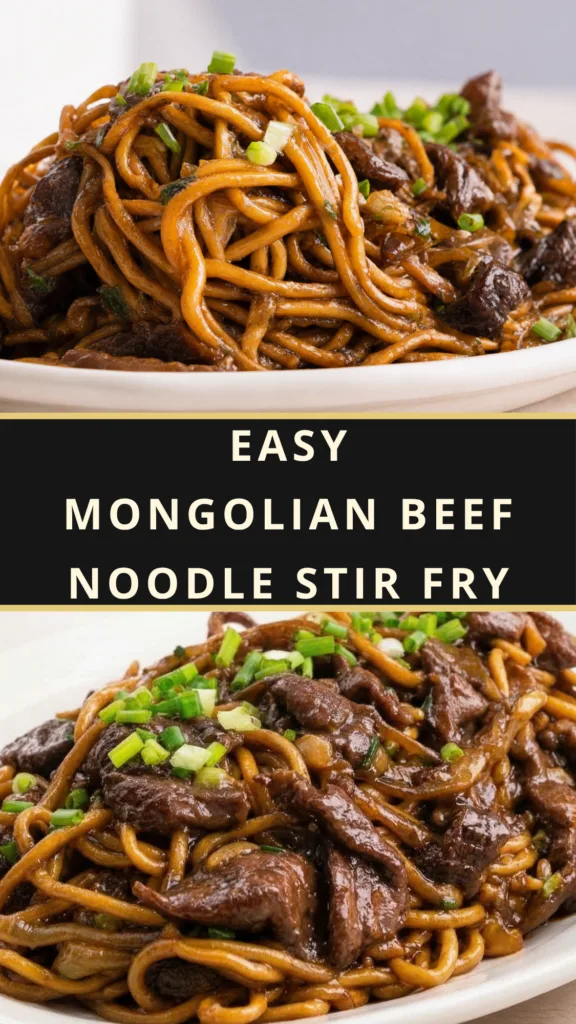
Mongolian Beef Noodles with a Sweet and Savory Sauce
Tender strips of beef and chewy noodles tossed with ginger, garlic, spring onions, and a glossy sweet and savory sauce.
- Prep Time: 15 minutes
- Cook Time: 5 minutes
- Total Time: 20 minutes
- Yield: 4 servings
- Category: Dinner
- Method: Stir-Fry
- Cuisine: Asian-Inspired
Ingredients
400g (14 oz) beef sirloin or flank steak, thinly sliced
2 tbsp vegetable oil
1 onion, sliced
4 cm piece fresh ginger, peeled and finely julienned
2 garlic cloves, roughly chopped
400g (14 oz) cooked hokkien, egg, or udon noodles
3 spring onions, finely sliced
Stir-Fry Sauce:
1/4 cup soy sauce
1/4 cup chicken stock
3 tbsp oyster sauce
3 tbsp brown sugar
1 tbsp rice vinegar
Marinade:
1 tbsp soy sauce
1 tbsp chicken stock
1/2 tsp baking soda
2 tsp cornstarch
Instructions
1. Mix beef with marinade ingredients and rest for 5 minutes.
2. Combine all stir-fry sauce ingredients in a separate bowl.
3. Heat oil over high heat and stir-fry onion, ginger, and garlic for 30 seconds.
4. Add beef, sear for 1 minute, turn, and cook for about 1 minute more.
5. Add noodles and sauce and toss until thick and glossy.
6. Add spring onions, toss briefly, and serve.
Notes
Slice flank steak thinly across the grain for tenderness.
Drain the cooked noodles thoroughly before stir-frying.
Bell peppers, broccoli, mushrooms, or snow peas can be added if desired.