
Table of Contents
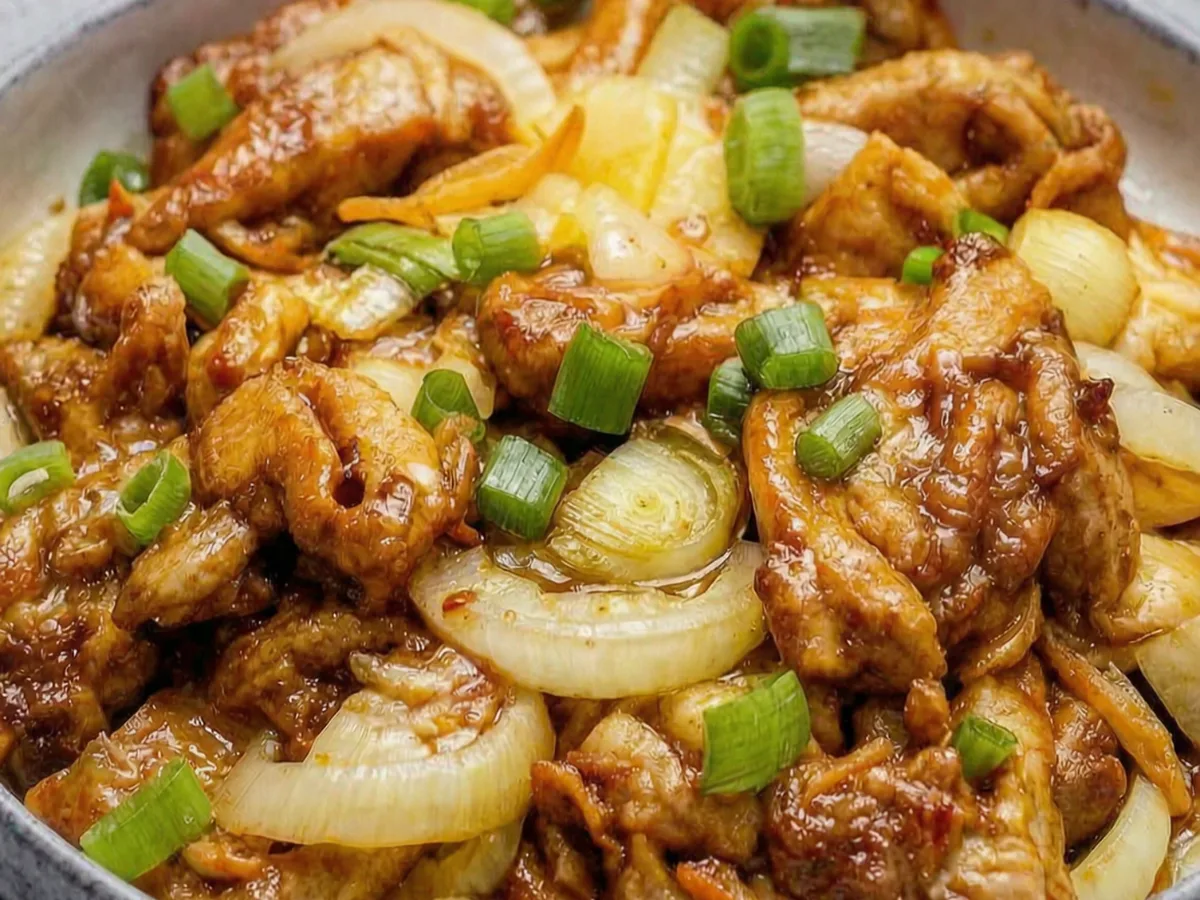
Tender strips of chicken, savory soy sauce, fresh garlic, and crisp-tender vegetables come together in this Chinese chicken thigh recipe made without rice wine. Instead, a small amount of unsalted chicken broth adds moisture to the marinade and helps bring the flavors together without introducing extra sweetness or acidity.
Cornstarch gives the chicken a delicate coating and helps the boneless thighs stay juicy as they cook. Sliced onion and shredded carrot provide natural sweetness, while spring onion adds a fresh finish right before serving. The actual cooking takes only about 10 minutes after a short marinade, making these Chinese chicken thighs particularly useful for a quick weeknight dinner. Serve them over steamed rice or alongside noodles for a simple, satisfying meal.
Why This Chinese Chicken Stir-Fry Works
This is a straightforward stir-fry rather than a heavily sauced dish. The chicken gets most of its flavor before it ever reaches the skillet.
Soy sauce supplies saltiness and umami, garlic provides the aromatic base, and cornstarch creates a light coating around the chicken. Unsalted chicken broth replaces the rice wine from the original version, providing enough liquid to distribute the marinade without substantially changing its flavor.
Cooking the components in stages also helps with texture. First, the chicken has enough room to make direct contact with the hot pan. Once it’s cooked, the onion and carrot are stir-fried separately so you can soften them without continuing to cook the meat.
Everything comes back together for only 20 to 30 seconds at high heat.
For another soy-forward chicken dinner, these sticky honey soy chicken thighs take the flavor in a sweeter, stickier direction. If you’re craving something creamy and spicy instead, try these skillet Bang Bang chicken thighs.
Ingredients You’ll Need
Boneless chicken thighs
Boneless, skinless thighs work particularly well for quick stir-frying. Their slightly higher fat content helps the meat remain juicy during high-heat cooking.
Cut 300 grams, or approximately 10 1/2 ounces, of chicken into 2-centimeter (about 3/4-inch) strips. Keeping the pieces similar in size promotes even cooking.
Soy sauce and dark soy sauce
Regular soy sauce provides the primary seasoning. One tablespoon is enough for this relatively small amount of chicken.
Dark soy sauce is optional. Its main purpose here is to deepen the color and add another layer of savory flavor. Since brands vary considerably in saltiness, there’s no need to replace it with additional regular soy sauce if you don’t have it.
Unsalted chicken broth
Unsalted chicken broth is the alcohol-free replacement for rice wine.
Two tablespoons go into the marinade, while another tablespoon is added during the final high-heat toss. Choosing unsalted broth matters because the soy sauces already contribute plenty of sodium.
Low-sodium chicken broth will also work when unsalted isn’t available.
Cornstarch
Two tablespoons of cornstarch create a thin coating around the chicken. This is useful for retaining moisture and giving the exterior a smoother texture.
This isn’t a breading, so the chicken shouldn’t have a thick or floury coating.
Garlic, onion, carrot, and spring onion
Fresh minced garlic goes directly into the marinade so its flavor reaches every piece of chicken.
Onion and carrot contribute mild sweetness and texture. Spring onion is added at the very end, preserving more of its fresh flavor and color.
How to Make Chinese Chicken Thighs
Marinate the chicken
Place the chicken strips in a medium bowl.
Add 1 tablespoon soy sauce, 1 teaspoon dark soy sauce, 2 minced garlic cloves, 2 tablespoons cornstarch, and 2 tablespoons unsalted chicken broth.
Mix thoroughly so every strip gets a light, even coating.
Allow the chicken to marinate for 15 minutes. Because the broth already adds moisture, you generally won’t need the teaspoon of water called for in the original preparation. Add only a tiny splash if the mixture is unusually dry.
Cook the chicken
Heat 1 tablespoon oil in a large nonstick skillet over medium heat.
Add the chicken, separating the strips as they hit the pan instead of leaving them clumped together. Cook for approximately 5 minutes, turning the pieces so they cook evenly.
Cooking time is an estimate, not the final test for doneness. Chicken should reach 165°F internally according to the USDA safe minimum internal temperature guidelines.
Once cooked through, transfer the chicken to a clean plate.
Stir-fry the vegetables
Add the remaining 2 tablespoons oil to the same skillet.
Add 3/4 cup sliced onion and 1/4 cup shredded carrot. Stir-fry for approximately 5 minutes, or until the onion has softened and the vegetables are cooked to your preferred texture.
Stir them regularly to prevent scorching.
Bring everything together
Return the cooked chicken to the skillet and add 2 tablespoons chopped spring onion.
Increase the heat to high and toss for 20 to 30 seconds.
Add the remaining tablespoon of unsalted chicken broth around the hot pan and toss once more. Turn off the heat and serve immediately.
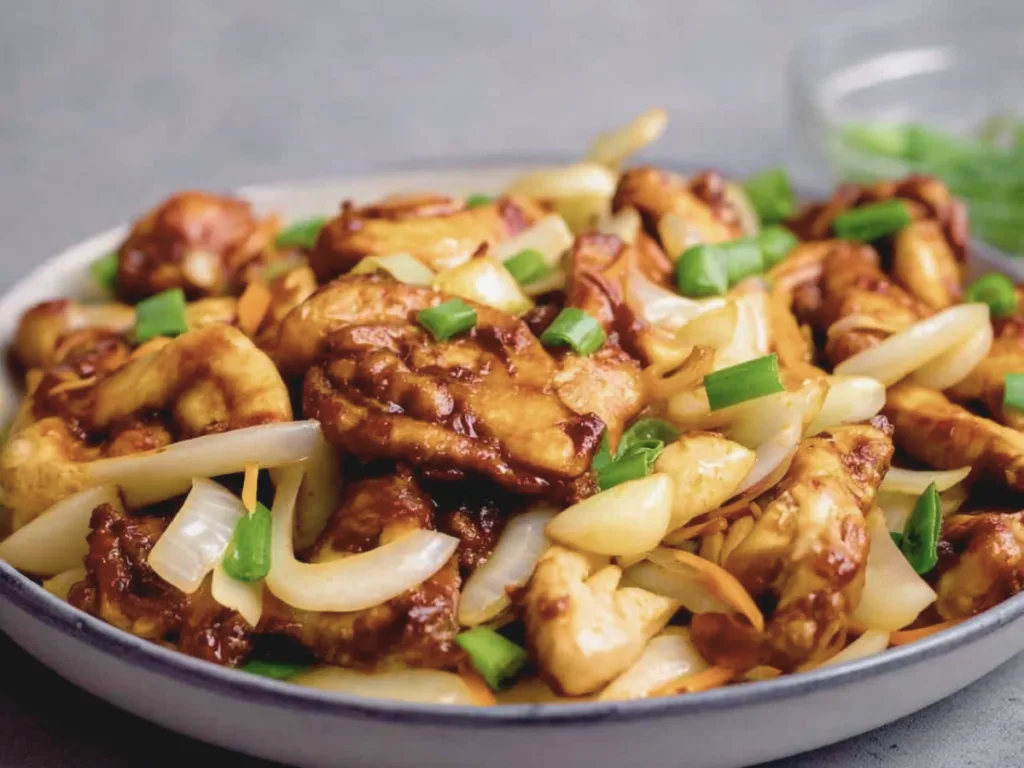
Tips for Tender, Flavorful Chicken
Cutting the chicken uniformly is one of the easiest ways to improve this dish. If some strips are twice as thick as others, the smaller pieces can become dry before the largest pieces are safely cooked.
Give the chicken enough room in the skillet as well. A crowded pan traps steam and makes browning more difficult. With a small skillet, cooking the chicken in two batches is preferable to packing everything together.
Don’t skip the short marinade. Fifteen minutes gives the soy, garlic, broth, and cornstarch time to form an even coating.
The final high-heat stage should truly be brief. At this point the chicken is already cooked and only needs to be combined with the vegetables and spring onion. Prolonged cooking can make the chicken less tender.
Variations and Ingredient Substitutions
Boneless chicken breast can replace the thighs. Slice it into similarly sized strips and watch it carefully because lean breast meat can dry out sooner.
Vegetables are also easy to adapt. Thinly sliced bell pepper, mushrooms, snow peas, bok choy, or finely shredded cabbage can complement the soy and garlic. Harder vegetables need more cooking time than delicate greens, so adjust accordingly.
For some heat, add red pepper flakes or sliced fresh chile. A small amount of fresh ginger can also be minced or grated into the marinade with the garlic.
This recipe should not be confused with sticky Chinese chicken thighs. The ingredient list doesn’t contain honey, brown sugar, or another sweetener, so the finished dish is savory rather than syrupy or sweet.
If you’re specifically after that glossy sweet-and-savory profile, the sticky honey soy chicken thighs are a better match.
What to Serve With Chinese Chicken Thighs
Steamed jasmine rice makes a natural base for this Chinese-inspired chicken stir-fry. Start the rice first so it’s ready as soon as the chicken comes out of the skillet.
Rice noodles or wheat noodles are another option. Since the chicken itself isn’t heavily sauced, simply seasoned noodles work particularly well.
For more vegetables, add steamed or stir-fried broccoli, green beans, bok choy, or snap peas on the side. A cool cucumber salad also provides a refreshing contrast to the warm soy garlic chicken.
Storage and Reheating
Store leftovers in a covered container in the refrigerator rather than leaving cooked chicken at room temperature for an extended period. The USDA’s guidance for leftovers and food safety recommends refrigerating leftovers within two hours and using cooked leftovers within 3 to 4 days.
To reheat the chicken on the stovetop, place it in a skillet over medium heat with a small splash of broth or water. Heat until thoroughly hot, stirring occasionally. Leftovers should be reheated to 165°F.
The vegetables can also be sliced ahead of time and refrigerated. If preparing the raw chicken in advance, keep it refrigerated and separate from ready-to-eat ingredients.
Frequently Asked Questions
Can I make Chinese chicken thighs without rice wine?
Yes. This version is specifically designed without rice wine. Unsalted chicken broth replaces it, adding the necessary moisture without alcohol. The result isn’t an exact flavor replica of a rice-wine marinade, but the broth works well with soy sauce and garlic.
Can I use water instead of chicken broth?
Yes. Water is a practical alternative when chicken broth isn’t available. The flavor will be slightly less savory, but the soy sauce and garlic will still provide plenty of seasoning. Don’t add extra soy sauce merely to replace the broth, since that could make the chicken overly salty.
Can I substitute chicken breast for chicken thighs?
Yes. Boneless, skinless chicken breast works with the same basic method. Cut it into even strips and cook only until it reaches a safe internal temperature of 165°F.
How can I make the chicken spicy?
Add red pepper flakes, sliced fresh chile, or your preferred chile sauce. Start conservatively because heat levels vary substantially between chile products.
Why isn’t the sauce thick and sticky?
The cornstarch in this Chinese chicken thigh recipe coats the chicken rather than creating a large quantity of sauce. There is also no added sugar or honey. The finished dish is a lightly coated savory stir-fry, not a sticky chicken recipe.

Easy Chinese Chicken Thigh Recipe with Garlic and Soy
Tender chicken thigh strips with savory soy sauce, garlic, onion, carrot, and spring onion, made without rice wine.
- Prep Time: 15 minutes
- Cook Time: 10 minutes
- Total Time: 25 minutes
- Yield: 2–3 servings
- Category: Dinner
- Method: Stir-Fry
- Cuisine: Chinese-inspired
Ingredients
300 g boneless skinless chicken thighs, cut into 2 cm strips
3/4 cup sliced onion
1/4 cup shredded carrot
1 tbsp soy sauce
1 tsp dark soy sauce, optional
3 tbsp unsalted chicken broth, divided
3 tbsp cooking oil, divided
2 tbsp chopped spring onion
2 tbsp cornstarch
2 cloves garlic, minced
Instructions
1. Marinate chicken with soy sauces, garlic, cornstarch, and 2 tbsp broth for 15 minutes.
2. Heat 1 tbsp oil and cook chicken about 5 minutes, until it reaches 165°F; remove.
3. Add remaining oil and stir-fry onion and carrot about 5 minutes.
4. Return chicken with spring onion and stir-fry 20–30 seconds.
5. Add remaining broth, toss briefly, and serve.
Notes
Use unsalted chicken broth to control sodium.
Low-sodium broth or water can also be used.
Serve immediately with rice or noodles.