

Table of Contents
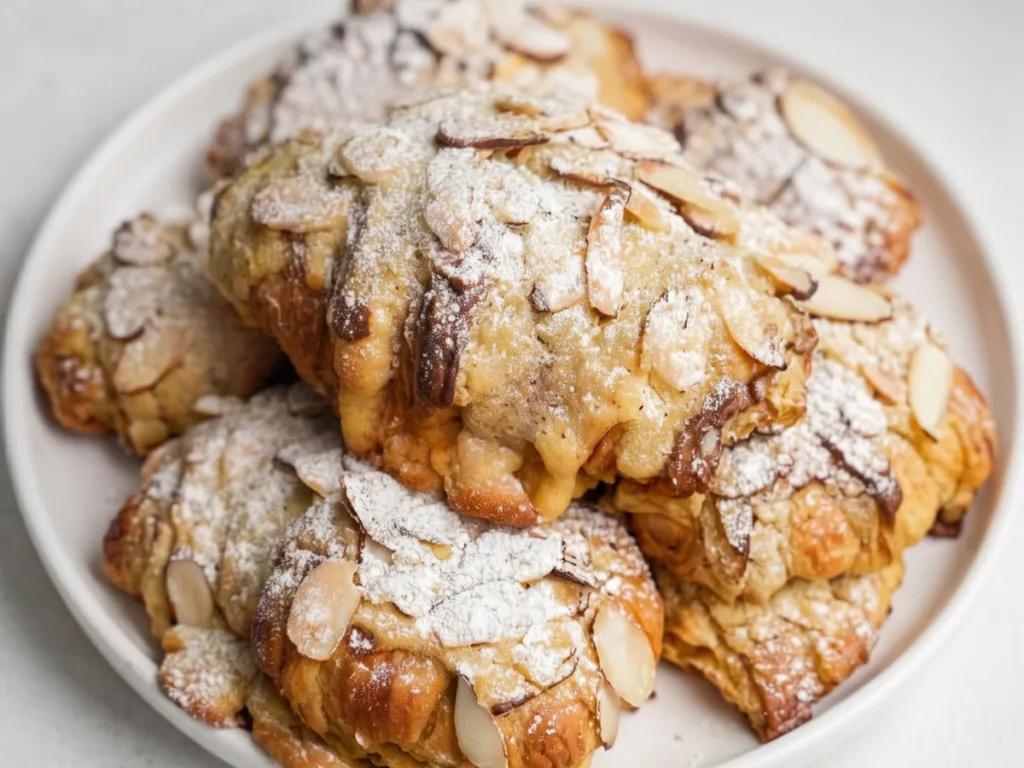
This Almond Croissant Recipe turns day-old croissants into golden pastries with crisp edges, a soft almond center, and plenty of toasted almonds on top. Each croissant gets a quick touch of lightly sweetened vanilla syrup before being filled with a buttery almond cream made from almond flour, sugar, egg, butter, and almond extract. A second layer of filling and sliced almonds creates the beautifully browned bakery-style finish.
Starting with prepared croissants also means there’s no laminated dough to make from scratch. The entire transformation takes about 40 minutes once the croissants have dried overnight. It’s an especially practical way to use leftover croissants and produces the contrast that makes a bakery-style almond croissant so satisfying: flaky pastry outside, rich almond filling inside, and a delicate dusting of powdered sugar over the top.
Why Day-Old Croissants Work So Well
Fresh croissants are wonderful on their own, but slightly dry croissants make a better foundation for this preparation.
The pastry needs to hold both syrup and almond filling. A very fresh, soft croissant absorbs moisture quickly and can lose its delicate texture. Allowing the croissants to sit uncovered overnight dries them just enough to handle those additions while maintaining their structure.
It’s also a clever use for pastries that are no longer at their freshest.
If you only have fresh croissants, split them horizontally and place them in a 175°F oven for approximately 30–40 minutes, turning them halfway through. You’re looking for dry pastry rather than toasted pastry, so don’t let the croissants become dark or rock hard.
Cool them before assembling.
Ingredients That Make the Difference
Large Croissants
You’ll need six large plain croissants. Bakery or grocery-store croissants can both work, making this an approachable Easy Almond Croissant Recipe without requiring pastry-making experience.
Size matters because it determines how much filling each croissant can comfortably hold. Two to three tablespoons works well for a large croissant, but smaller pastries need less.
Almond Flour
One cup of almond flour provides the base for the filling.
Finely ground blanched almond flour creates a smooth texture and a light-colored center. Almond meal also works, although its coarser texture and almond skins can produce a more rustic filling.
For another dessert that makes ground almonds the star, try this lemon almond flourless cake.
Butter, Sugar, and Egg
Softened salted butter gives the almond filling its rich, creamy consistency. Granulated sugar provides sweetness, while an egg helps bind the ingredients and allows the filling to set during baking.
Use softened rather than melted butter. Melted butter produces a much looser mixture that can be difficult to spread and may run excessively during baking.
Almond Extract
A teaspoon of almond extract reinforces the nutty flavor without requiring additional almond flour.
A little goes a long way, so there’s no need to increase the quantity.
Vanilla Simple Syrup
The simple syrup combines 3/4 cup water, 2 tablespoons granulated sugar, and 1 teaspoon vanilla extract.
The syrup isn’t intended to soak the pastry. A quick touch on the cut surfaces provides a little sweetness and moisture while still allowing the croissants to become crisp and golden in the oven.
Sliced Almonds and Powdered Sugar
Sliced almonds create the recognizable crunchy topping. Use approximately 1 tablespoon for each croissant.
Powdered sugar goes on after baking and cooling slightly. Besides adding sweetness, it gives the pastries their classic bakery-case appearance.
How to Make This Almond Croissant Recipe
Prepare the Croissants
Leave six large croissants uncovered at room temperature overnight.
When you’re ready to assemble the pastries, cut each croissant horizontally through the center. Separate the top and bottom halves carefully so you don’t crush their flaky structure.
If your croissants are fresh, use the low-temperature drying method described above and let them cool first.
Make the Vanilla Syrup
Add 3/4 cup water and 2 tablespoons granulated sugar to a small saucepan.
Warm over medium heat, stirring until the sugar has completely dissolved. Remove from the heat and stir in 1 teaspoon vanilla extract.
Set the syrup aside to cool while you prepare the filling.
There’s no need to simmer the mixture until it becomes thick. You want a light syrup that can be applied sparingly to the pastry.
Prepare the Almond Filling
Combine 1 cup almond flour, 1/2 cup granulated sugar, and 8 tablespoons softened salted butter in a large mixing bowl.
Use a hand mixer to beat the ingredients until smooth and evenly combined.
Add one large egg and 1 teaspoon almond extract. Continue beating until the mixture becomes creamy and fluffy, similar to a thick frosting.
Scrape down the sides and bottom of your bowl during mixing to make sure there aren’t any pockets of butter or almond flour.
When handling raw eggs, follow appropriate kitchen hygiene practices. The FDA’s egg safety guidance provides useful information on safe handling and storage.
Fill the Croissants
Preheat your oven to 350°F and cover a baking sheet with parchment paper.
Quickly touch the cut surfaces of each croissant to the cooled syrup, then immediately lift them out and let any excess drip away.
Avoid soaking them. More syrup doesn’t mean more flavor—it can simply make the finished pastry too soft.
Spread approximately 2–3 tablespoons of almond filling over each bottom half.
Replace the tops and gently press them into place. Spread a thin layer of the remaining almond filling over the surface of each croissant.
Add the Almond Topping
Sprinkle approximately 1 tablespoon sliced almonds over each croissant.
The thin layer of filling on top acts as an adhesive and helps keep the almonds in place during baking.
Arrange the pastries on the prepared baking sheet with a little room around each one.
Bake Until Golden
Bake at 350°F for 15–20 minutes.
The tops should become golden and the almond filling should look set. The sliced almonds will also toast as the croissants bake, adding another layer of nutty flavor and crunch.
Let the homemade almond croissants cool slightly before adding powdered sugar.
Serve warm or at room temperature.
How to Get Bakery-Style Croissants at Home
The biggest difference between a crisp almond croissant and a soggy one comes down to controlling moisture.
Start with genuinely dry croissants. They shouldn’t be stale to the point of hardness, but they should feel noticeably drier than a freshly baked pastry.
Be restrained with the syrup, too. A quick dip or light contact is enough. Leaving the croissants submerged gives them more liquid than their delicate layers can comfortably absorb.
The amount of almond filling also matters. Two to three tablespoons gives a large croissant a generous center without overwhelming the pastry.
Finally, look at the pastry rather than relying exclusively on the clock. Ovens vary, so the croissants may need slightly more or less than the suggested 15–20 minutes. A golden surface and set filling are the best visual cues.
Getting the Almond Filling Right
The butter should be soft enough to beat smoothly but not melted. If it’s excessively warm, the filling can become loose.
Beat the butter, sugar, and almond flour before adding the egg. This makes it easier to create an evenly blended base.
Once the egg and almond extract go in, continue mixing until the filling looks light and creamy.
This almond mixture gives the pastries the rich center associated with a French Almond Croissant while remaining straightforward enough for home baking.
If you have extra almond flour in your pantry, these simple almond biscotti are another coffee-friendly almond bake to try.
Useful Substitutions
Almond meal can replace almond flour in equal quantities. Expect the finished filling to have a slightly coarser appearance and texture.
Unsalted butter can also be used. Add a small pinch of salt to the filling to balance the sweetness.
For the syrup, vanilla extract creates a gentle aromatic background that complements the almond filling. You could instead use a small amount of additional almond extract for a more pronounced almond flavor, but keep the quantity restrained because almond extract is concentrated.
Either sliced or slivered almonds can work as a topping. Thin sliced almonds generally adhere more easily and toast quickly.
Make-Ahead Tips
These Bakery Style Croissants are particularly convenient because drying the pastry is already an overnight step.
Leave the croissants uncovered the evening before you intend to bake them. The next day, preparing the syrup and almond filling takes only a few minutes.
The almond filling can also be prepared ahead and stored covered in the refrigerator. Before assembling the pastries, allow it to soften enough to become spreadable.
For the best contrast between flaky pastry and creamy filling, assemble and bake the croissants shortly before serving rather than leaving assembled, unbaked pastries sitting for an extended period.
Serving Almond Croissants
A freshly baked almond croissant needs little accompaniment. Coffee, espresso, or hot tea cuts pleasantly through the buttery, nutty filling.
For brunch, serve the croissants with fresh berries, orange slices, or another fresh fruit. The acidity and freshness contrast nicely with the rich pastry.
Let the croissants stand briefly after baking before eating them. The filling becomes very hot in the oven, and a short cooling period also helps it settle.
Add powdered sugar shortly before serving for the cleanest appearance.
How to Store and Reheat Almond Croissants
Because the baked almond filling contains egg, refrigerate leftovers in a covered container once they’ve cooled. According to the USDA’s leftovers and food safety guidance, perishable cooked leftovers should be refrigerated promptly and generally used within 3–4 days.
For the best texture, reheat refrigerated almond croissants in the oven. A moderate oven helps warm the center while restoring some crispness to the outside. A microwave will warm them more quickly, but it tends to soften flaky pastry.
Baked almond croissants can also be frozen. Let them cool completely, wrap them securely, and place them in an airtight freezer container. Thaw in the refrigerator and warm them in the oven before serving. Add powdered sugar after reheating rather than before freezing.
Frequently Asked Questions
Can I make almond croissants with store-bought croissants?
Yes. Store-bought croissants make this recipe particularly convenient because the laminated pastry has already been prepared. Large plain croissants work best, and slightly dry ones are preferable to very fresh pastries.
Why does this recipe use day-old croissants?
Drier pastry can handle the added syrup and filling while retaining more of its structure. Very soft, fresh croissants are more likely to become soggy after filling.
Is almond flour the same as almond meal?
They’re similar but can differ in texture. Almond flour is generally finely ground and often made from blanched almonds, while almond meal may be coarser and contain almond skins. Either can work here, but almond flour produces a smoother filling.
How do I keep Homemade Almond Croissants from getting soggy?
Start with dried croissants, use the syrup sparingly, and avoid overfilling them. The croissants only need brief contact with the syrup rather than a prolonged soak.
How do I know when almond croissants are finished baking?
Look for a golden-brown topping and almond filling that appears set rather than wet. This generally takes 15–20 minutes in a 350°F oven.

Irresistible Almond Croissant Recipe with Bakery-Style Almond Filling

Golden bakery-style croissants filled with rich almond cream, topped with sliced almonds, and finished with powdered sugar.
- Prep Time: 20 minutes
- Cook Time: 20 minutes
- Total Time: 40 minutes
- Yield: 6 almond croissants
- Category: Breakfast
- Method: Baking
- Cuisine: French-Inspired
Ingredients
6 one-day-old large croissants
6 tbsp sliced almonds
Powdered sugar, for dusting
Vanilla Simple Syrup:
3/4 cup water
2 tbsp granulated sugar
1 tsp vanilla extract
Almond Filling:
1 cup almond flour or almond meal
1/2 cup granulated sugar
8 tbsp salted butter, softened
1 large egg
1 tsp almond extract
Instructions
1. Dry croissants overnight and slice horizontally.
2. Heat water and sugar until dissolved. Remove from heat, add vanilla, and cool.
3. Beat almond flour, sugar, and butter until smooth. Beat in egg and almond extract.
4. Preheat oven to 350°F and line a baking sheet with parchment.
5. Briefly dip croissant surfaces in syrup.
6. Spread 2–3 tbsp filling inside each croissant and a thin layer on top.
7. Top with sliced almonds and bake 15–20 minutes until golden.
8. Cool slightly and dust with powdered sugar.
Notes
Use slightly dry croissants for the best texture.
Dip croissants quickly rather than soaking them.
Finely ground almond flour creates a smoother filling.
Store cooled leftovers covered in the refrigerator.