
Table of Contents
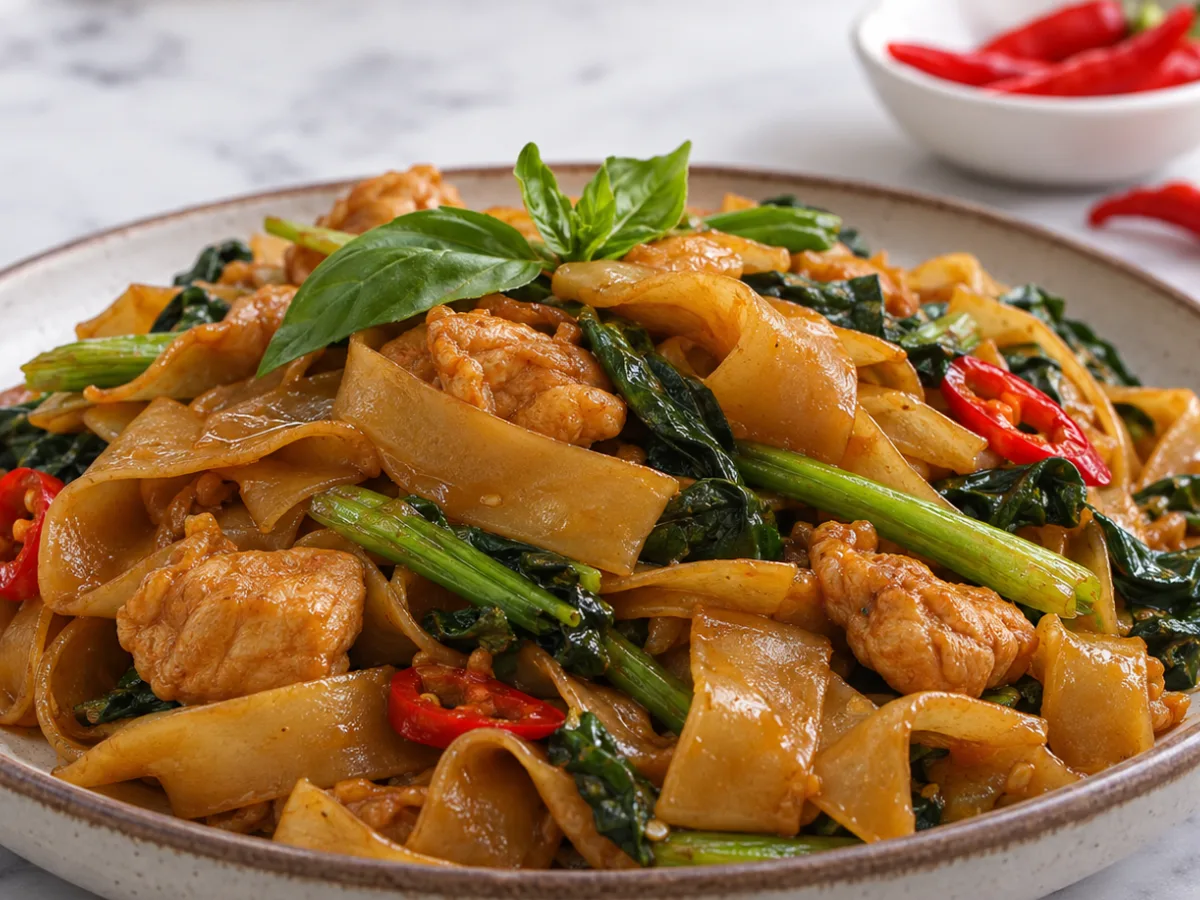
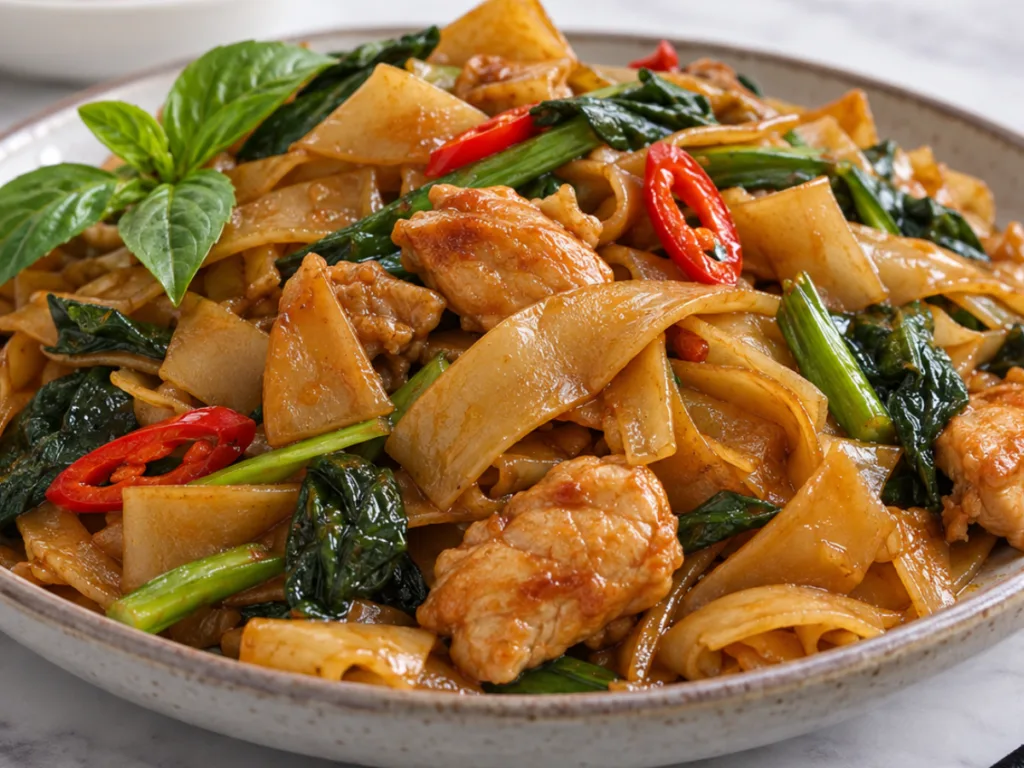
Drunken Noodles bring the bold flavors of Thai street food straight to your kitchen. Tender chicken, chewy rice noodles, crisp Chinese broccoli, and fragrant basil come together in a rich, savory sauce with just the right amount of heat. Every bite delivers a satisfying combination of spicy, salty, slightly sweet, and aromatic flavors.
Also known as Pad Kee Mao, these spicy Thai noodles are stir-fried over high heat, giving them their signature glossy texture and deeply seasoned flavor.
This homemade Drunken Noodles Recipe uses simple ingredients and takes about 35 minutes from start to finish. It’s a practical option for a weeknight dinner when you’re craving something more exciting than ordinary chicken and noodles.
What Are Drunken Noodles?
Drunken Noodles, or Pad Kee Mao, are a popular Thai stir-fried noodle dish traditionally prepared with wide rice noodles, fresh chilies, garlic, vegetables, and Thai holy basil.
The noodles are tossed in a savory sauce that typically combines soy sauce, oyster sauce, and fish sauce. High-heat cooking helps the noodles absorb the seasonings while developing a lightly smoky flavor.
Despite the unusual name, Thai Drunken Noodles don’t traditionally contain alcohol.
There are several explanations for the name. One popular theory suggests that the dish’s bold, spicy flavors make it a favorite late-night meal after drinking. Another suggests that the intense heat encourages diners to reach for a cold beverage.
Regardless of its origins, Pad Kee Mao has become a favorite among people who enjoy spicy Thai food.
Pad Kee Mao vs. Pad Thai
Although both dishes use rice noodles, their flavors are noticeably different.
Pad Thai generally features a sweet, tangy sauce often made with tamarind, along with ingredients such as eggs, bean sprouts, and peanuts.
Pad Kee Mao focuses on savory, spicy flavors with plenty of garlic, fresh chilies, and aromatic basil.
Drunken Noodles are usually less sweet and considerably spicier than Pad Thai.
If you enjoy bold seasonings and fresh herbs, Thai basil noodles are an excellent choice.
Why This Thai Drunken Noodles Recipe Works
Making restaurant-style Pad Kee Mao at home doesn’t require complicated techniques or difficult-to-find equipment.
The key is preparing the ingredients before heating the wok and cooking everything quickly over high heat.
Here’s what makes this recipe particularly satisfying:
- Bold Thai-inspired flavors: Soy sauce, oyster sauce, fish sauce, garlic, and chilies create a deeply savory sauce.
- Tender chicken: Boneless chicken thighs stay juicy during the quick stir-frying process.
- Chewy rice noodles: Properly soaked noodles absorb the sauce without becoming overly soft.
- Fresh vegetables: Chinese broccoli adds color, texture, and a pleasant earthy flavor.
- Fragrant basil: Fresh basil brings a distinctive herbal aroma that balances the spicy sauce.
- Customizable heat: Adjust the number of bird’s eye chilies to suit your preference.
It’s also an easy Thai noodle recipe to adapt with different proteins and vegetables.
Ingredients for Drunken Noodles
The best homemade Drunken Noodles start with a combination of fresh ingredients and a well-balanced stir-fry sauce.
Chicken and Rice Noodles
Chicken thighs — 250 g (about ½ pound)
Boneless, skinless chicken thighs are particularly good for stir-frying because they remain tender and juicy during high-heat cooking.
Chicken breast also works, although it can dry out more quickly if overcooked.
Dried rice noodles — 100 g
Wide rice noodles are traditionally used for Pad Kee Mao.
Choose wide rice sticks when available. Fresh wide rice noodles are another excellent option and provide a wonderfully soft, chewy texture.
For this recipe, you can substitute 250–300 g of fresh rice noodles for the dried noodles.
Fresh Vegetables and Aromatics
Chinese broccoli — 3 stalks
Chinese broccoli, also called gai lan or kai lan, adds a slightly bitter flavor that balances the savory sauce.
Separate the stems from the leaves because the stems need a little longer to cook.
Bok choy, pak choy, or tenderstem broccoli can be used instead.
Garlic — 2 cloves
Freshly chopped garlic creates an aromatic base for the stir-fry.
Shallot — 1
Shallots provide a delicate sweetness that complements the garlic and chilies.
Bird’s eye chilies — 3–4
These small Thai chilies are responsible for much of the dish’s heat.
They’re quite spicy, so adjust the quantity according to your preference.
Red chili pepper — 1
Fresh red chili adds color and additional heat.
For a milder version, substitute red bell pepper.
Fresh basil — 1 handful
Thai holy basil is traditionally associated with Pad Kee Mao, although Thai sweet basil is commonly used in home-style versions.
Regular sweet basil can also work when specialty varieties aren’t available, but the flavor will be different.
Drunken Noodles Sauce
The sauce brings all the ingredients together.
You’ll need:
- 2 tablespoons light soy sauce
- 3 tablespoons oyster sauce
- 2 teaspoons dark soy sauce
- 1 tablespoon fish sauce
- 1 tablespoon sugar
Light soy sauce provides saltiness, while dark soy sauce adds color and a slightly richer flavor.
Oyster sauce contributes savory depth and helps coat the noodles.
Fish sauce adds the distinctive umami flavor found in many Thai dishes.
Sugar balances the salty and spicy ingredients without making the sauce noticeably sweet.
Oil and Garnishes
Use 2–3 tablespoons of vegetable oil or another neutral-flavored cooking oil suitable for high-heat stir-frying.
Finish the dish with lime wedges and thinly sliced red chilies.
A squeeze of fresh lime adds brightness just before serving.
How to Make Drunken Noodles
Making Thai Drunken Noodles is straightforward once your ingredients are prepared.
Because stir-frying happens quickly, have everything chopped, measured, and ready before turning on the heat.
Step 1: Prepare the Rice Noodles
Place the dried rice noodles in a large bowl and cover them with warm water.
Let them soak for approximately 15–20 minutes, or until they become flexible but remain slightly firm.
Drain thoroughly and set aside.
Avoid soaking the noodles until completely soft. They will continue cooking when added to the wok.
If using fresh rice noodles, gently separate them before cooking and follow the package directions for preparation.
Step 2: Prepare the Chicken and Vegetables
Cut the chicken thighs into small, bite-sized pieces.
Trim the Chinese broccoli and cut the stems into approximately 1-inch pieces.
Cut the leaves into larger 2-inch sections.
Keep the stems and leaves separate so they can be added at different stages.
Finely chop the garlic and shallot.
Slice the bird’s eye chilies and red chili pepper.
Step 3: Mix the Sauce
In a small bowl, combine the light soy sauce, dark soy sauce, oyster sauce, fish sauce, and sugar.
Stir until the sugar dissolves.
Add 1 tablespoon of the prepared sauce to the chicken and toss to coat.
Set the remaining sauce aside for the noodles.
Step 4: Stir-Fry the Aromatics
Heat a large wok or skillet over medium-high heat.
Add 2–3 tablespoons of vegetable oil.
When the oil is hot, add the chopped shallot.
Stir-fry briefly until softened and translucent.
Add the garlic and cook for a few seconds, stirring continuously to prevent burning.
Add the bird’s eye chilies and stir-fry for approximately 1 minute, until fragrant.
Step 5: Cook the Chicken and Vegetables
Add the seasoned chicken pieces to the wok.
Stir-fry for approximately 2–3 minutes, allowing the chicken to begin cooking through.
Add the Chinese broccoli stems and cook for another minute.
Next, add the leaves and toss everything together.
Continue cooking until the chicken is fully cooked. For food safety, chicken should reach an internal temperature of 165°F (74°C), according to the USDA’s safe minimum internal temperature guidelines.
Step 6: Add the Noodles and Sauce
Push the ingredients slightly toward the sides of the wok.
Add the drained rice noodles to the center.
Pour the remaining sauce over the noodles.
Increase the heat to high and stir-fry for approximately 2 minutes.
Use tongs or a spatula to gently toss the noodles with the chicken and vegetables.
The noodles should become tender and evenly coated with sauce.
Add the sliced red chili pepper and continue stir-frying for another 1–2 minutes.
If the noodles begin sticking before they’re fully cooked, add a small splash of water.
Step 7: Finish With Fresh Basil
Turn off the heat.
Add the fresh basil leaves and gently toss them through the hot noodles.
The residual heat will soften the basil while preserving its fragrance.
Transfer the Drunken Noodles to serving plates.
Garnish with lime wedges and additional red chili slices.
Serve immediately while the noodles are hot and glossy.
Tips for Restaurant-Style Pad Kee Mao
A few simple techniques can make a noticeable difference when preparing homemade Pad Kee Mao.
Use High Heat
High heat is essential for developing the characteristic flavor of stir-fried Thai noodles.
A properly heated wok allows ingredients to cook quickly without releasing excessive moisture.
However, avoid overcrowding the pan.
If you’re doubling the recipe, cook it in batches to maintain enough heat for proper stir-frying.
Don’t Overcook the Rice Noodles
One of the most common mistakes is soaking the noodles for too long.
Overly soft noodles can break apart and become sticky when stir-fried.
For the best texture, soak dried noodles until flexible but still slightly firm.
They should finish cooking in the sauce.
Prepare Everything Before Cooking
Thai stir-frying moves quickly.
Once the aromatics enter the hot wok, there may be little time to chop vegetables or measure sauce ingredients.
Prepare the chicken, noodles, vegetables, and sauce in advance.
This simple habit makes the cooking process smoother and helps prevent burned garlic or overcooked chicken.
Add Basil at the End
Fresh basil loses some of its aroma when cooked for too long.
Adding it after turning off the heat preserves more of its herbal flavor.
The leaves only need a brief toss to wilt.
Balance the Sauce
Taste the finished noodles before serving.
If the flavor seems too salty, a squeeze of lime can add brightness.
If the noodles taste too mild, add a little extra fresh chili.
For a stronger savory flavor, a small amount of additional sauce can help, but add it gradually to avoid oversalting.
Easy Substitutions and Variations
One advantage of this Drunken Noodles Recipe is how easily it can be customized.
Chicken Drunken Noodles With Different Vegetables
Chinese broccoli is a traditional choice, but other vegetables can work well.
Try bok choy, broccolini, bell peppers, or snap peas.
Choose vegetables that cook quickly and retain some texture.
Avoid adding too many watery vegetables, which can dilute the sauce.
Shrimp Drunken Noodles
Replace the chicken with peeled and deveined shrimp.
Shrimp cook quickly, so adjust the cooking time accordingly.
Cook until the shrimp are opaque and reach a safe internal temperature of 145°F.
Vegetarian Drunken Noodles
For a vegetarian variation, replace the chicken with firm tofu.
Use vegetarian oyster-style sauce instead of traditional oyster sauce, and substitute a suitable vegetarian alternative for fish sauce.
These changes create a flavorful meat-free version while preserving the dish’s savory character.
Mild Thai Basil Noodles
If you’re sensitive to spicy food, reduce the bird’s eye chilies to one or omit them entirely.
Use red bell pepper instead of fresh red chili.
The garlic, basil, and savory sauce will still provide plenty of flavor.
Extra-Spicy Pad Kee Mao
For a hotter version, increase the bird’s eye chilies or add extra sliced Thai chilies before serving.
You can also lightly crush the chilies with the garlic to release more of their heat.
Remember that Thai bird’s eye chilies are significantly hotter than many common chili varieties.
What to Serve With Thai Drunken Noodles
Drunken Noodles are satisfying enough to serve as a complete meal.
The chicken provides protein, the rice noodles add carbohydrates, and the Chinese broccoli brings freshness and texture.
For a lighter side dish, serve the noodles with a simple cucumber salad or steamed vegetables.
A fresh salad with lime dressing can also balance the richness of the sauce.
If you’re planning a dinner featuring Asian-inspired dishes, consider pairing these noodles with another chicken stir-fry.
For another satisfying noodle dinner, try these noodles with chicken and broccoli.
You might also enjoy these chicken stir-fry noodles with vegetables when you want a colorful, vegetable-packed meal.
For drinks, iced tea, sparkling water with lime, or a refreshing cucumber drink complement the spicy flavors.
How to Store and Reheat Drunken Noodles
Although Drunken Noodles taste best immediately after cooking, leftovers can be stored and reheated successfully.
Refrigerating Leftovers
Allow the noodles to cool briefly, then transfer them to an airtight container.
Refrigerate within 2 hours of cooking, or within 1 hour if the surrounding temperature is above 90°F.
Properly refrigerated leftovers can generally be kept for 3–4 days.
For additional food-safety guidance, consult the FDA’s safe food handling recommendations.
Reheating Drunken Noodles
The best way to reheat leftover Pad Kee Mao is in a skillet.
Heat a small amount of oil over medium heat.
Add the noodles with a tablespoon or two of water.
Toss gently until heated through.
The water helps loosen the sauce and prevents the rice noodles from becoming excessively dry.
You can also reheat the noodles in the microwave.
Cover loosely and heat in short intervals, stirring between each interval, until the leftovers reach 165°F.
Can You Freeze Drunken Noodles?
Freezing is possible, but it isn’t ideal.
Rice noodles can become softer and more fragile after thawing.
Fresh basil and cooked vegetables may also lose some of their original texture.
For the best eating experience, refrigerate leftovers rather than freezing them.
If you want to prepare ingredients ahead, store the uncooked vegetables, sauce, and noodles separately until you’re ready to stir-fry.
Frequently Asked Questions
Why Are They Called Drunken Noodles?
The exact origin of the name isn’t certain.
One popular explanation is that the dish became associated with late-night meals enjoyed after drinking.
Another suggests that the spicy flavors encourage diners to enjoy a cold drink alongside the noodles.
Despite the name, traditional Pad Kee Mao doesn’t require alcohol.
What Is the Difference Between Drunken Noodles and Pad Kee Mao?
There is no difference.
Pad Kee Mao is the Thai name for the dish commonly called Drunken Noodles in English.
Both names refer to spicy stir-fried rice noodles prepared with chilies, garlic, vegetables, basil, and savory sauce.
What Type of Basil Is Best for Drunken Noodles?
Thai holy basil is traditionally associated with Pad Kee Mao.
It has a distinctive peppery, aromatic flavor.
Thai sweet basil is a common substitute and offers a slightly different, anise-like fragrance.
Regular sweet basil can be used when neither variety is available.
Can I Make Drunken Noodles Without a Wok?
Yes. A large skillet works well for this recipe.
Choose a pan with enough surface area to allow the noodles, chicken, and vegetables to move freely.
Preheat the skillet properly and avoid overcrowding it.
Cooking in smaller batches can help produce better results.
Are Drunken Noodles Very Spicy?
Traditional Thai Drunken Noodles are often quite spicy because they contain fresh Thai chilies.
However, the heat level is easy to adjust at home.
For a milder dish, use fewer bird’s eye chilies.
For extra heat, increase the chilies or serve additional sliced chilies on the side.
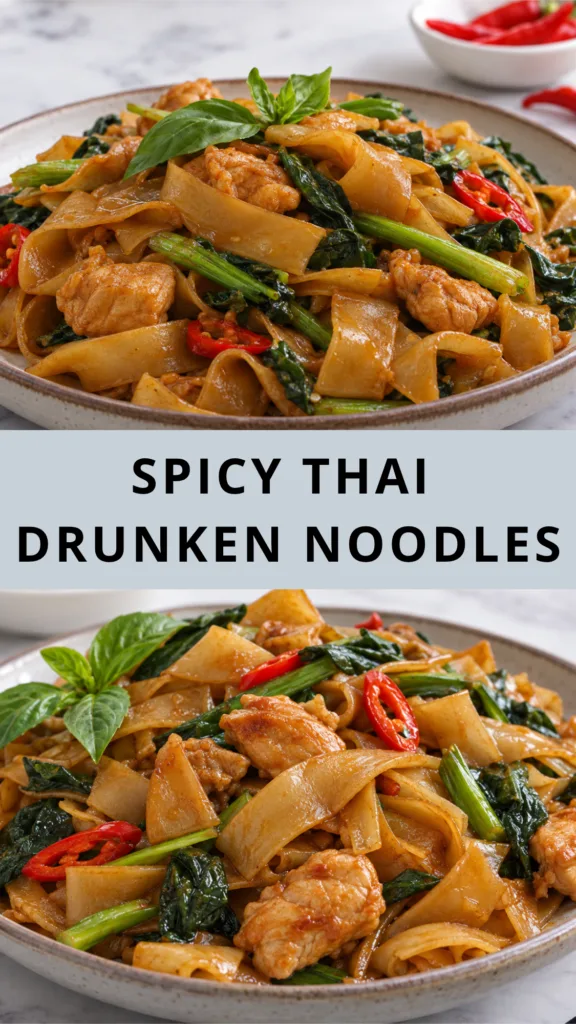
Drunken Noodles Recipe (Easy Thai Pad Kee Mao)
Spicy Thai Drunken Noodles with tender chicken, chewy rice noodles, Chinese broccoli, fresh basil, and a rich savory stir-fry sauce. A flavorful homemade Pad Kee Mao recipe ready in about 35 minutes.
- Prep Time: 20 minutes
- Cook Time: 15 minutes
- Total Time: 35 minutes
- Yield: 2 servings
- Category: Dinner
- Method: Stir-Fry
- Cuisine: Thai
Ingredients
250 g boneless skinless chicken thighs, cut into bite-sized pieces
100 g dried wide rice noodles (or 250–300 g fresh rice noodles)
3 stalks Chinese broccoli, stems and leaves separated
2 cloves garlic, finely chopped
1 shallot, finely chopped
3–4 bird’s eye chilies, chopped
1 red chili pepper, sliced
1 handful fresh Thai basil leaves
2–3 tbsp vegetable oil
Sauce:
2 tbsp light soy sauce
3 tbsp oyster sauce
2 tsp dark soy sauce
1 tbsp fish sauce
1 tbsp sugar
Garnish:
Lime wedges
Fresh red chili slices
Instructions
1. Soak dried rice noodles in warm water for 15–20 minutes. Drain and set aside.
2. Mix all sauce ingredients in a bowl. Toss chicken with 1 tablespoon of the sauce.
3. Heat oil in a wok over medium-high heat. Stir-fry shallot, garlic, and bird’s eye chilies until fragrant.
4. Add chicken and stir-fry for 2–3 minutes. Add Chinese broccoli stems, then leaves, and cook until chicken reaches 165°F.
5. Add noodles and remaining sauce. Stir-fry over high heat for about 2 minutes.
6. Add sliced red chili and stir-fry another 1–2 minutes until noodles are tender.
7. Turn off heat and toss in fresh basil.
8. Serve immediately with lime wedges and chili slices.
Notes
Use wide rice noodles for the best texture.
Do not oversoak dried noodles; they should remain slightly firm before stir-frying.
Thai holy basil is traditional, but Thai sweet basil or regular basil can be substituted.
Adjust bird’s eye chilies according to your preferred spice level.
Chicken breast, shrimp, or firm tofu can replace chicken thighs. Adjust cooking times accordingly.
For a vegetarian version, use vegetarian oyster-style sauce and a vegetarian fish sauce alternative.
Store leftovers in an airtight container in the refrigerator for 3–4 days.
Reheat in a skillet with a splash of water until thoroughly heated to 165°F.
Nutrition information is not included because accurate values depend on the specific sauces, noodles, and serving sizes used.