
Table of Contents
Glazed Donut Bread Pudding with Creamy Vanilla Glaze
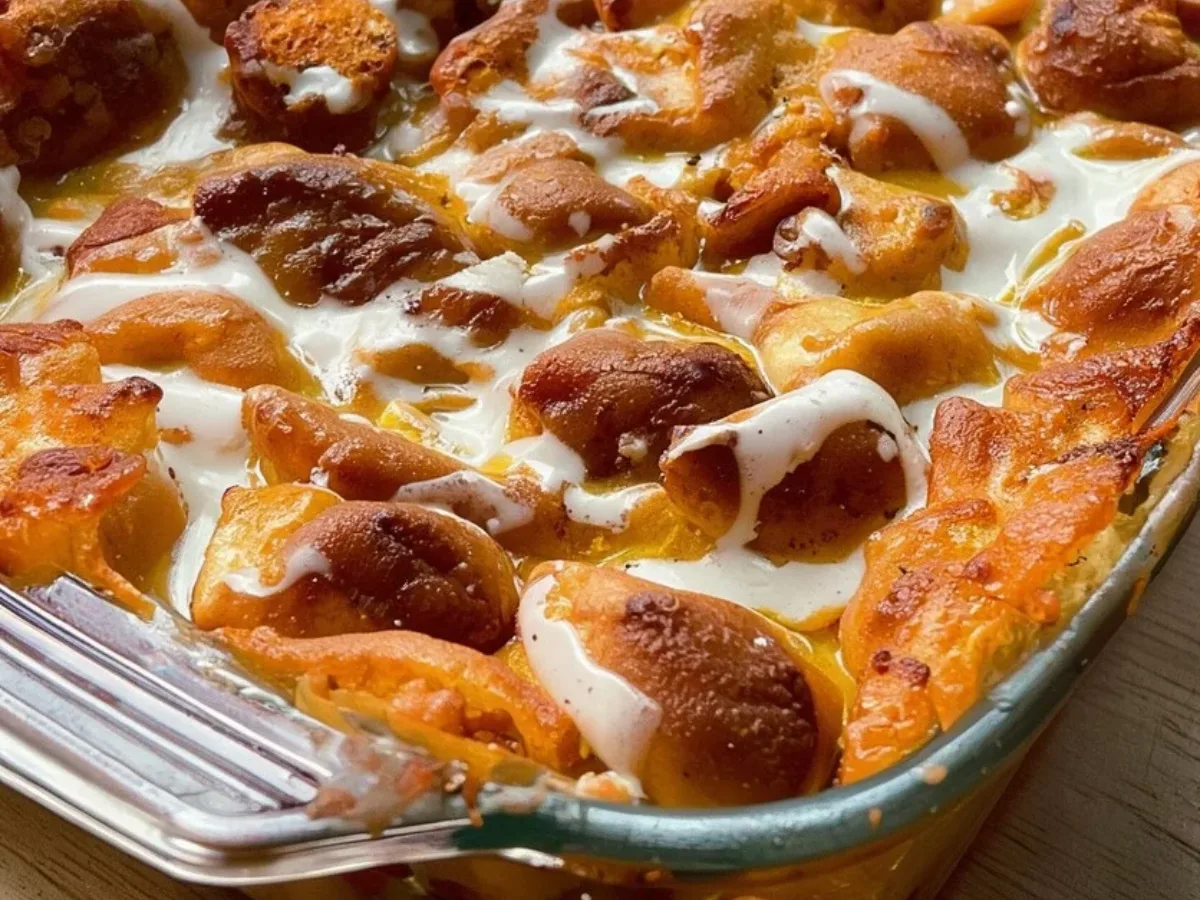
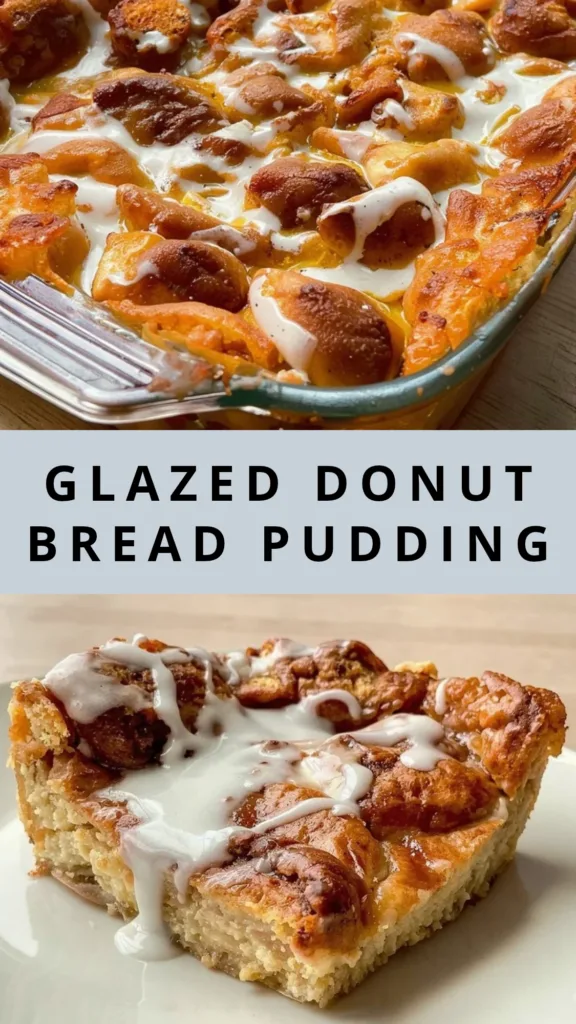
Glazed Donut Bread Pudding turns leftover glazed donuts into a warm, comforting dessert with a soft, custardy center and lightly golden edges. Made with simple ingredients like eggs, whole milk, heavy cream, brown sugar, and vanilla, this baked treat delivers rich flavor without complicated preparation.
Instead of traditional bread cubes, glazed donuts absorb a creamy vanilla custard before baking into a tender, indulgent pudding. A homemade vanilla glaze adds an extra layer of sweetness and a smooth finishing touch.
Serve this easy donut bread pudding warm for a cozy family dessert, weekend brunch, or holiday gathering.
Why You’ll Love This Glazed Donut Bread Pudding
Traditional bread pudding is a comforting baked dessert, but replacing ordinary bread with glazed donuts creates a deliciously different texture.
The donuts already have a sweet coating, which combines beautifully with the homemade vanilla custard.
Here’s why this recipe works so well:
- Great for leftover donuts: Slightly stale donuts absorb the custard while holding their shape.
- Rich and creamy: Eggs, milk, and heavy cream create a soft, tender center.
- Simple ingredients: Everything comes together with familiar pantry and refrigerator staples.
- Easy preparation: The pudding bakes in a single 9-by-13-inch dish.
- Homemade vanilla glaze: A smooth powdered sugar glaze adds a sweet finishing touch.
The contrast between the golden surface and custardy interior makes every serving especially satisfying.
Ingredients You’ll Need
This homemade glazed donut bread pudding requires just a handful of ingredients divided between the custard and vanilla glaze.
Glazed Donuts
You’ll need 12 stale glazed donuts, cut into approximately 1-inch pieces.
Plain glazed yeast donuts are an excellent choice because their light, airy texture allows them to absorb the custard.
Slightly stale donuts work better than very fresh ones since they are less likely to fall apart when coated with the liquid mixture.
Avoid heavily filled donuts, which can change the consistency of the finished pudding.
Eggs, Milk, and Heavy Cream
Three large eggs help the custard set during baking.
Whole milk provides moisture, while heavy whipping cream adds richness and creates a smooth, creamy texture.
Using both dairy ingredients gives the pudding a tender consistency without making the custard excessively heavy.
Brown Sugar, Vanilla, and Salt
Packed brown sugar contributes sweetness and subtle caramel notes.
Vanilla extract enhances the custard’s warm flavor, while salt balances the sweetness of the glazed donuts.
Together, these ingredients create a rich but well-rounded dessert.
Homemade Vanilla Glaze
The glaze combines powdered sugar, vanilla extract, and milk.
Whisking these ingredients together produces a thick, smooth topping that can be drizzled over the warm pudding.
How to Make Glazed Donut Bread Pudding
This easy baked donut bread pudding comes together in a few straightforward steps.
Step 1: Prepare the Baking Dish
Preheat your oven to 350°F.
Lightly coat a 9-by-13-inch baking dish with nonstick cooking spray.
Cut the glazed donuts into approximately 1-inch pieces and arrange them evenly across the bottom of the dish.
Step 2: Make the Vanilla Custard
In a large mixing bowl, combine the eggs, whole milk, heavy whipping cream, packed brown sugar, vanilla extract, and salt.
Whisk until the mixture is smooth and thoroughly combined.
Make sure the brown sugar is evenly incorporated throughout the custard.
Step 3: Coat the Donut Pieces
Slowly pour the custard mixture over the prepared donuts.
Distribute the liquid evenly so every piece is coated.
This helps the donuts absorb the custard and prevents dry areas in the finished pudding.
Step 4: Bake Until Golden
Transfer the baking dish to the preheated oven.
Bake uncovered for approximately 45 minutes, until the top is lightly golden and the center is set.
The pudding should remain moist and tender without having a liquid center.
For food safety, egg-based dishes should reach an internal temperature of 160°F, according to the USDA’s safe minimum temperature guidelines.
Step 5: Prepare the Vanilla Glaze
In a small bowl, whisk together the powdered sugar, vanilla extract, and milk.
Continue mixing until the glaze becomes smooth and thick enough to drizzle.
Step 6: Glaze and Serve
Drizzle the homemade vanilla glaze over the bread pudding while it is still warm.
Serve with additional glaze, fresh berries, or whipped cream.
Tips for Perfect Donut Bread Pudding
A few simple techniques can make a noticeable difference in the finished dessert.
Choose slightly stale donuts. Their firmer texture helps them absorb the custard without becoming overly soft.
Cut uniform pieces. Keeping the donuts close to the same size encourages even custard absorption.
Coat every piece. Pour the custard evenly across the baking dish rather than concentrating it in one area.
Watch the center. The top may become golden before the custard is completely set, so check the middle before removing the dish.
Add glaze while warm. The warmth allows the glaze to spread gently over the surface.
These details help create a pudding with a tender interior and lightly golden top.
Delicious Variations and Serving Suggestions
Although plain glazed donuts provide the classic flavor, this dessert can be adapted with a few optional changes.
For extra warmth, add a small pinch of cinnamon to the custard.
A little ground nutmeg can also complement the vanilla and brown sugar.
For a chocolate variation, scatter a few chocolate chips between the donut pieces before baking.
These additions are optional and are not included in the original recipe.
When serving, fresh strawberries, raspberries, or blueberries provide a refreshing contrast to the rich custard.
Whipped cream is another delicious topping, especially when the pudding is served warm.
How to Store and Reheat Leftovers
Because glazed donut bread pudding contains eggs and dairy, leftovers should be refrigerated promptly.
Allow the pudding to cool briefly, then cover the baking dish tightly or transfer individual portions to airtight containers.
Refrigerate within two hours of baking.
According to the USDA’s leftovers and food safety recommendations, refrigerated leftovers generally remain safe for three to four days.
Reheat individual portions in the microwave until thoroughly heated.
For larger portions, reheat in an oven-safe dish until the center reaches 165°F.
Store any additional vanilla glaze separately when possible.
Frequently Asked Questions
Can I use fresh donuts instead of stale donuts?
Yes. Fresh glazed donuts will work, but slightly stale donuts generally absorb the custard more effectively while maintaining their structure.
Can I prepare glazed donut bread pudding ahead of time?
Yes. Bake the pudding, refrigerate it promptly, and reheat before serving. Add the vanilla glaze after reheating for a freshly finished appearance.
How do I know when donut bread pudding is fully baked?
The surface should be lightly golden, and the custard should be set in the center. Use a food thermometer to confirm an internal temperature of 160°F.
Can glazed donut bread pudding be frozen?
Yes. Wrap cooled portions securely and freeze. Thaw in the refrigerator before reheating. The texture may become slightly softer after freezing.
Why is my donut bread pudding soggy?
Excessively fresh donuts, uneven custard distribution, or underbaking can cause a soggy texture. Using slightly stale donuts and baking until the center is set helps prevent this problem.
Glazed Donut Bread Pudding with Homemade Vanilla Glaze
This homemade Glazed Donut Bread Pudding transforms leftover glazed donuts into a rich, creamy dessert with golden edges and a tender vanilla custard center. Finished with a sweet homemade vanilla glaze, it is a comforting baked dessert for family gatherings, weekend brunches, and special occasions.
- Cook Time: 45 minutes
- Total Time: 45 minutes
- Category: Dessert
- Method: Baking
- Cuisine: American
Ingredients
Bread Pudding Ingredients
1 dozen glazed donuts, stale
3 large eggs
1 ½ cups whole milk
½ cup heavy whipping cream
½ cup packed brown sugar
2 teaspoons vanilla extract
½ teaspoon salt
Vanilla Glaze Ingredients
1 cup powdered sugar
1 teaspoon vanilla extract
3 tablespoons milk
Instructions
1. Preheat the oven to 350°F. Spray a 9-by-13-inch baking dish with nonstick cooking spray.
2. Cut the stale glazed donuts into approximately 1-inch pieces and spread them evenly across the bottom of the prepared baking dish.
3. In a large mixing bowl, whisk together the eggs, whole milk, heavy whipping cream, packed brown sugar, salt, and vanilla extract until thoroughly combined.
4. Pour the custard mixture evenly over the donut pieces, making sure every piece is coated.
5. Bake uncovered for approximately 45 minutes, until the top is lightly golden and the custard is set. The center should reach an internal temperature of 160°F.
6. In a small bowl, whisk together the powdered sugar, vanilla extract, and milk until a thick, smooth glaze forms.
7. Drizzle the vanilla glaze over the bread pudding while it is still warm. Serve with additional glaze, fresh berries, or whipped cream, if desired.
Notes
Use slightly stale plain glazed yeast donuts for the best texture. They absorb the custard while maintaining their shape.
Cut the donuts into evenly sized pieces to help the custard distribute consistently.
Make sure every donut piece is coated with the custard mixture before baking.
Check the center before removing the bread pudding from the oven. It should be set rather than liquid.
For food safety, the egg-based custard should reach 160°F.
Drizzle the homemade vanilla glaze over the pudding while it is still warm.
Optional serving suggestions include fresh strawberries, raspberries, blueberries, and whipped cream.
Optional variations include adding a pinch of cinnamon, a little nutmeg, or chocolate chips.
Refrigerate leftovers in an airtight container for up to 3–4 days.
Reheat leftovers thoroughly to an internal temperature of 165°F.
Leftover portions can be frozen, although the texture may soften after thawing.