
Table of Contents
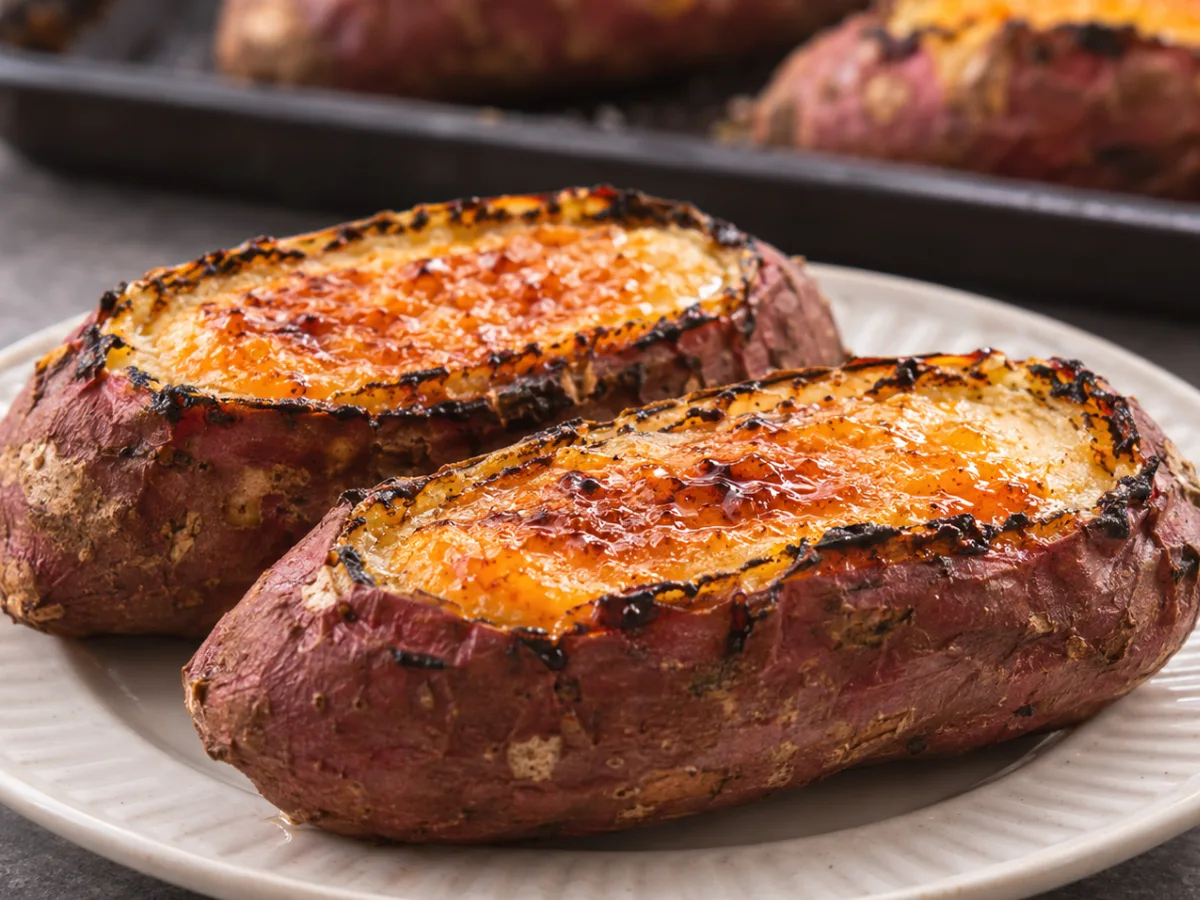
Japanese sweet potatoes become exceptionally sweet and creamy after a long roast, and this Japanese sweet potato recipe turns them into something a little more special. Each potato is roasted in foil until tender, partially hollowed out, and filled with smooth homemade vanilla custard. A thin layer of sugar is then torched until crisp and deeply caramelized, giving the dessert a crème brûlée-inspired finish.
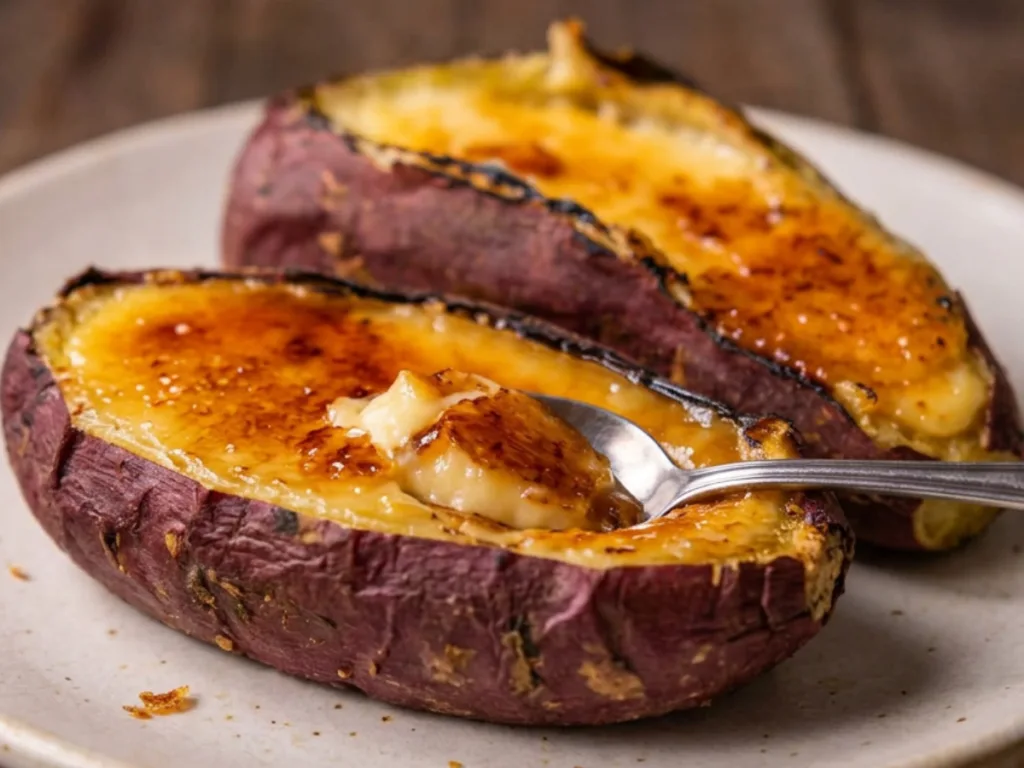
Underneath that brittle sugar shell, you get three distinct textures: caramelized sugar, silky custard, and dense, naturally sweet potato. It makes an impressive fall or winter dessert without requiring pastry dough or complicated decorating. If you’ve been wondering how to cook Japanese sweet potato beyond a basic baked version, this is a rich, dessert-style approach worth trying.
Why Japanese Sweet Potatoes Work So Well Here
Japanese sweet potatoes typically have reddish-purple skin and pale flesh that turns yellow as it cooks. Their texture is noticeably different from the moist orange sweet potatoes commonly sold in U.S. supermarkets. Once roasted, the flesh becomes dense, smooth, and pleasantly sweet.
That texture is especially useful in this recipe. The cooked potato remains firm enough to act as an edible shell after some of the center is removed, while its sweetness complements the vanilla custard.
Slow roasting is important, too. Giving the potatoes a little over an hour in the oven allows them to soften thoroughly before they’re filled. For a simpler preparation, a baked Japanese sweet potato is already satisfying on its own; the custard and brûléed sugar transform it into a plated dessert.
Looking for other ways to bake with sweet potatoes? These fluffy sweet potato biscuits are a savory-friendly option, while this quick sweet potato pecan bread works especially well for breakfast or snacking.
Ingredients You’ll Need
Japanese sweet potatoes form the base. Choose seven medium potatoes of roughly similar size so they’ll finish roasting at about the same time. Avoid potatoes with deep cuts or badly damaged skin because the skins need to hold the filling.
The custard uses sugar, egg yolks, cornstarch, milk, unsalted butter, vanilla extract, and a small amount of salt. Cornstarch thickens the mixture enough to keep the custard from running out of the potatoes, while egg yolks supply richness and a silky texture.
Unsalted butter is whisked in after cooking for additional richness. Vanilla complements both the milk custard and the earthy sweetness of the potatoes.
Finally, granulated or caster sugar creates the brûléed top. Caster sugar’s fine crystals make it particularly easy to distribute in a thin, even layer before torching.
How to Make This Japanese Sweet Potato Recipe
Roast the Japanese sweet potatoes
Preheat the oven to 392°F (200°C). Wrap each Japanese sweet potato in aluminum foil and place the potatoes in the oven. Roast for about 1 hour 10 minutes.
Check the potatoes with a thin knife or skewer. It should slide readily into the center. Very large potatoes may need additional time, so use tenderness rather than the timer alone to determine when they’re done.
After roasting, allow them to cool for about 10 minutes. They should still be warm but manageable enough to handle.
Make the vanilla custard
While the potatoes roast, combine 2/3 cup sugar, cornstarch, and salt in a saucepan. Gradually whisk in the milk, making sure there are no visible lumps of cornstarch.
Set the pan over medium heat and cook while whisking continuously. Pay special attention to the bottom and corners of the saucepan, where thickening custard can stick. Continue until the mixture noticeably thickens.
Temper the egg yolks
Lightly beat the three egg yolks in a separate small bowl.
Rather than adding the yolks directly to the hot milk mixture, slowly whisk about 1/4 cup of the hot mixture into them. This gradually increases their temperature and reduces the chance of producing pieces of scrambled egg.
Whisk the warmed yolk mixture back into the saucepan. Cook over medium heat for about 2 more minutes, whisking continuously, until the custard is thick.
Remove the saucepan from the heat and whisk in the unsalted butter and vanilla extract.
Because this custard contains eggs and milk, handle it as a perishable food. The USDA guidance for egg-containing dishes provides additional information about safely preparing and storing egg dishes.
Transfer the finished custard to a bowl. Press plastic wrap directly against its surface so a skin cannot develop as it cools.
Fill the roasted potatoes
Cut open the top of each roasted potato. Carefully scrape out roughly one-third of the flesh while preserving enough around the sides and bottom for the potato to hold its shape.
Divide the custard among the seven potatoes, spooning it into the hollowed-out centers.
You don’t have to discard the sweet potato you remove. Save it for another meal, mash it with butter, or incorporate it into other sweet potato recipes.
Brûlée the tops
Sprinkle approximately 1 teaspoon of sugar evenly over each custard-filled potato.
Use a culinary blowtorch to caramelize the sugar. Keep the flame moving rather than holding it in one place. The sugar will first melt, then bubble and develop a deep amber color.
Allow the caramel to cool and harden before serving. That short wait is what produces the thin sugar shell that cracks under a spoon.
Tips for the Best Texture
The contrast between crisp caramel, custard, and tender sweet potato is the main attraction, so a few details make a significant difference.
Choose uniformly sized potatoes and roast until completely tender. An undercooked Japanese sweet potato can have a firm, starchy center that clashes with the soft custard.
Whisk the custard continuously while it thickens. Cornstarch works quickly once the mixture becomes hot, and consistent whisking helps prevent lumps and scorching.
Don’t skip tempering the yolks. Adding hot liquid gradually is an important part of achieving a smooth custard.
For the brûlée layer, less sugar is generally better than a heavy coating. An even, relatively thin layer melts faster and creates a crisp shell rather than a thick piece of hard caramel.
Torch the sugar shortly before serving whenever possible. Refrigeration introduces moisture that eventually softens caramelized sugar.
Useful Variations
If you’d rather enjoy the potatoes without the rich topping, you can stop after roasting. The same basic method produces a simple roasted Japanese sweet potato that can be eaten as-is.
For a warmer spice profile, add a small pinch of cinnamon to the custard. Avoid adding too much because vanilla and the potato’s natural flavor should remain noticeable.
You can also garnish finished potatoes with a light dusting of toasted sesame seeds after caramelizing the sugar. Their nuttiness pairs naturally with Japanese sweet potatoes while providing a subtle textural contrast.
Because this version includes substantial sugar, butter, custard, and a caramelized topping, it is better described as a dessert than a healthy sweet potato side dish. For a lighter side dish, roast the potatoes without the custard and added sugar.
Serving Ideas
Serve these custard-filled potatoes once the caramel has hardened but while the potato can still retain some warmth. The difference between the warm roasted flesh and creamy filling is particularly enjoyable.
One medium potato makes a generous individual dessert. For larger potatoes or a dessert spread, cut each finished potato into portions after the sugar has hardened.
The recipe works especially well during cooler months, when roasted sweet potato recipes are naturally at home on the table.
Make Ahead and Storage
You can roast the potatoes and prepare the custard ahead of time, but keep them separate until you’re ready to assemble the dessert. Refrigerate the custard promptly in a covered container once cooled rather than leaving it at room temperature for extended periods.
After the potatoes have been filled with custard, refrigerate leftovers in a covered container. USDA guidance recommends refrigerating perishable foods within two hours and keeping the refrigerator at 40°F or below; see the agency’s food safety guidance for leftovers.
For the best texture, caramelize the sugar just before serving. A brûléed topping will gradually absorb moisture in the refrigerator and lose its characteristic crackle.
Freezing isn’t recommended for the assembled dessert. Custard thickened with cornstarch may change texture after freezing and thawing, and the brûléed sugar won’t remain crisp.
Frequently Asked Questions
What is a Japanese sweet potato?
Japanese sweet potatoes are a variety commonly characterized by reddish-purple skin and pale flesh. Once cooked, their flesh becomes yellow, sweet, and relatively dense compared with many orange-fleshed sweet potatoes.
How do I know when Japanese sweet potatoes are done roasting?
Insert a thin knife or skewer into the thickest part. It should enter with very little resistance. Since potatoes vary in diameter, some may require more than the recipe’s 70-minute roasting time.
Can I make the custard ahead?
Yes. Prepare it in advance, cover its surface directly with plastic wrap, and refrigerate it. Assemble the potatoes later and caramelize their sugar topping as close to serving time as practical.
Do I need a blowtorch?
A culinary torch gives you the most control because it caramelizes the surface rapidly without substantially reheating the custard. It is also easier to direct the flame onto the curved surface of a filled potato.
Can I use regular orange sweet potatoes?
They can work, but expect a different result. Orange sweet potatoes are generally moister, so the filling and potato will have a softer overall texture. Japanese sweet potatoes provide the dense, sweet base intended for this version.
Japanese Sweet Potato Recipe with Creamy Custard Brûlée
Roasted Japanese sweet potatoes filled with silky vanilla custard and finished with a crisp caramelized sugar topping.
- Prep Time: 20 minutes
- Cook Time: 1 hour 10 minutes
- Total Time: 1 hour 40 minutes
- Yield: 7 servings
- Category: Dessert
- Method: Roasting
- Cuisine: Japanese-Inspired
- Diet: Vegetarian
Ingredients
7 medium Japanese sweet potatoes
2/3 cup sugar
3 egg yolks
1/4 cup cornstarch
1/4 tsp salt
3 cups milk
2 tbsp unsalted butter
1 tsp vanilla extract
1/4 cup sugar, for topping
Instructions
1. Preheat oven to 392°F (200°C). Wrap the sweet potatoes in foil and roast for about 1 hour 10 minutes, until tender.
2. Whisk 2/3 cup sugar, cornstarch, salt, and milk in a saucepan. Cook over medium heat, whisking continuously, until thickened.
3. Lightly beat the egg yolks. Slowly whisk about 1/4 cup of the hot milk mixture into the yolks, then whisk the yolk mixture back into the saucepan.
4. Cook for about 2 minutes, whisking continuously. Remove from heat and whisk in the butter and vanilla.
5. Transfer custard to a bowl, press plastic wrap directly onto the surface, and cool.
6. Cool roasted potatoes for 10 minutes. Open the tops and scoop out about one-third of the flesh.
7. Divide custard among the potatoes and sprinkle each with about 1 tsp sugar.
8. Caramelize the sugar with a culinary torch until bubbling and deep amber. Let harden before serving.
Notes
Choose similarly sized potatoes for even roasting.
Keep the torch moving for an evenly caramelized sugar crust.
For the crispest topping, brûlée the sugar shortly before serving.