
Table of Contents
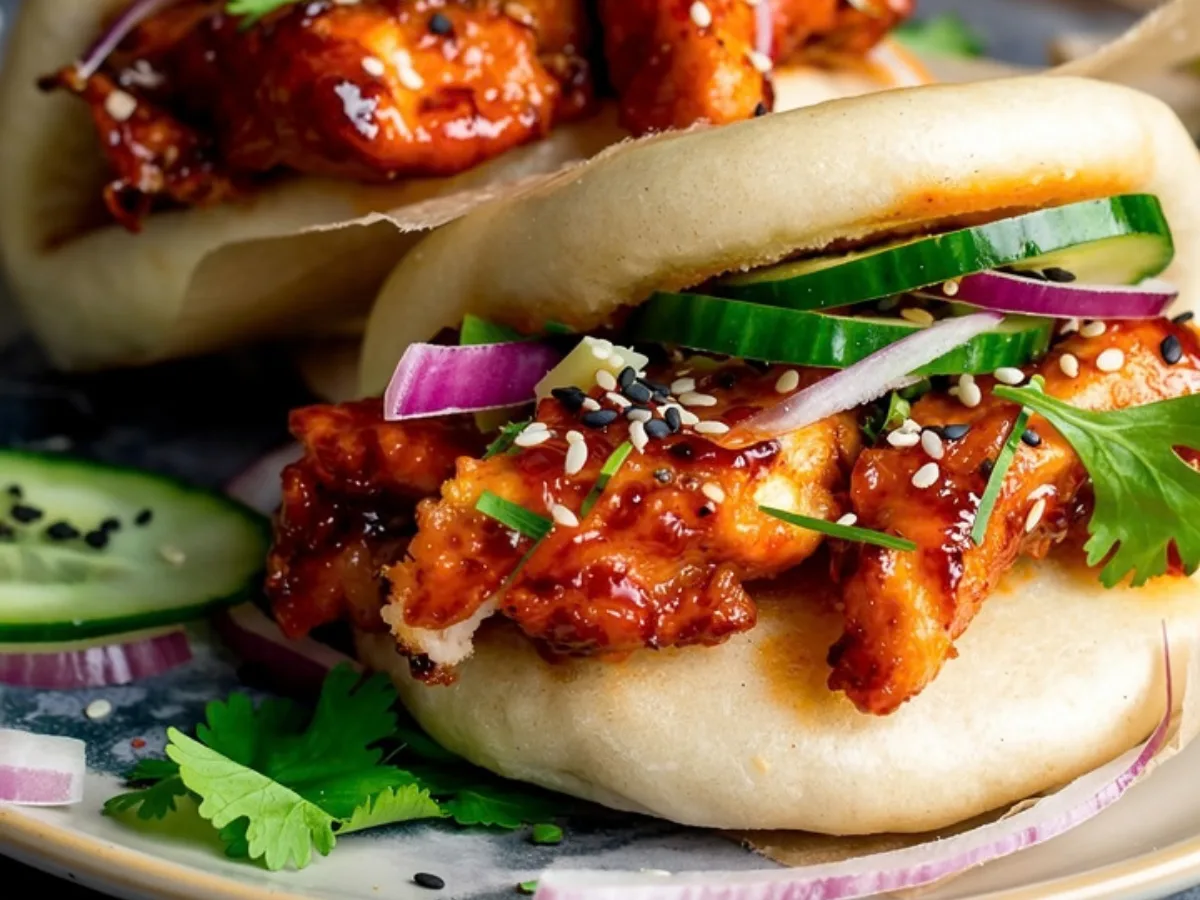
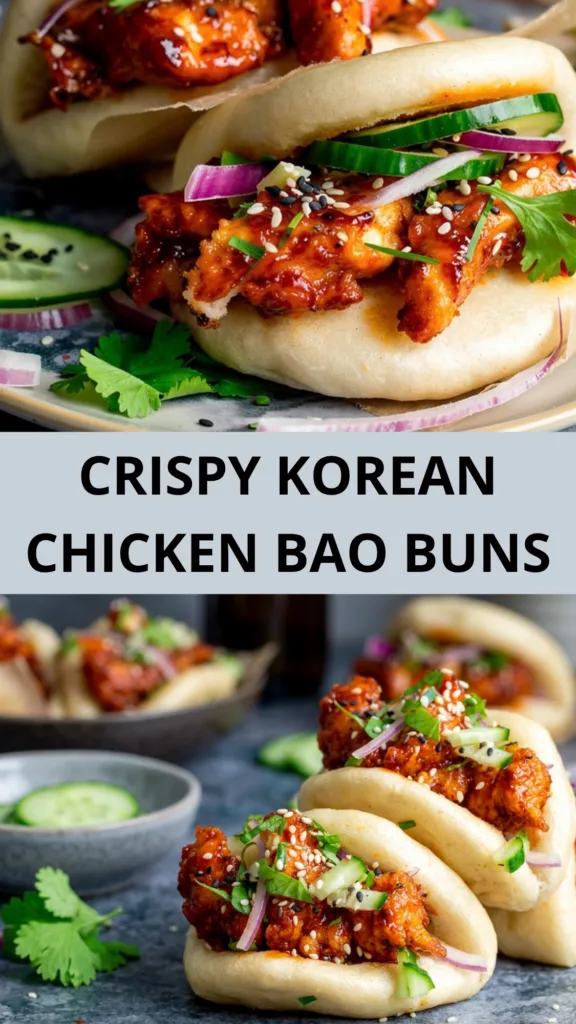
Korean Chicken Bao Buns bring together three textures that are especially good in one bite: pillowy steamed bread, crunchy fried chicken, and a thick, sticky gochujang glaze. Buttermilk-marinated chicken stays tender underneath its seasoned crust, while honey and brown sugar balance the savory heat of gochujang and soy sauce. Cool cucumber, crisp red onion, cilantro, and sesame seeds finish each bun with freshness and crunch.
These homemade bao require a little planning because the dough rises twice and the chicken benefits from at least an hour in the marinade. Most of that time is hands-off, though. Once everything comes together, you get 20 generous Korean chicken bao that work particularly well for a family dinner, party spread, or casual weekend meal.
Why These Korean Chicken Bao Buns Work
The contrast is the main attraction. Steamed bao should be light and soft rather than crusty, which makes them an ideal wrapper for fried chicken. The chicken is soaked in seasoned buttermilk before being dredged in a flour coating flavored with paprika, thyme, chili flakes, garlic salt, and black pepper.
Then comes the gochujang sauce. It combines fermented chile paste with soy sauce, ginger, garlic, sesame oil, honey, and brown sugar. Simmering it briefly concentrates the flavors and creates a glaze thick enough to cling to the crispy chicken.
Finally, cucumber and red onion provide a fresh counterpoint to all those rich, sweet, spicy flavors.
Ingredients That Make a Difference
Bao Dough
All-purpose flour gives these homemade buns enough structure while still producing a tender crumb. Instant yeast makes the dough straightforward to prepare, and a small amount of sugar helps with flavor and fermentation.
Whole milk and butter add richness. The dough is also brushed lightly with olive oil before each oval is folded. Besides adding a little tenderness, the oil keeps the two sides from sealing together while the buns steam.
Give the dough enough time during both rises. The first rise develops the dough, while the second allows the individually shaped buns to become noticeably puffy before steaming.
Chicken and Crispy Coating
Chicken breast is cut into bite-size chunks so it cooks quickly and fits comfortably inside the buns. A seasoned buttermilk marinade helps keep the meat tender while giving the flour mixture something to adhere to.
Baking powder in the coating contributes to a lighter, craggier exterior. When dredging the chicken, cover every surface without pressing the flour into an excessively thick layer.
For safety, don’t rely solely on the color of the meat to determine doneness. Chicken should reach 165°F internally, as specified in the USDA safe minimum internal temperature guidance.
Gochujang Sauce
Gochujang supplies chile heat along with savory, fermented depth. Honey and brown sugar make this sauce decidedly sweet and sticky, while soy sauce provides saltiness and umami. Fresh ginger, garlic, and sesame oil round it out.
Because gochujang brands vary in heat and saltiness, taste yours before adjusting the sauce. For hotter gochujang chicken bao, increase the gochujang slightly or add extra chili flakes.
How to Make Korean Chicken Bao Buns
Prepare and Proof the Bao Dough
Combine the flour, sugar, salt, and instant yeast. Separately, stir the milk, warm water, and very soft butter together, then add the liquid to the dry ingredients.
Bring the mixture into a dough and knead for about 10 minutes, either by hand or with a stand mixer and dough hook. The finished dough should feel smooth and elastic.
Transfer it to an oiled bowl, cover, and allow it to rise until doubled in size, about 90 minutes to 2 hours depending on room temperature.
While the dough rises, combine the chicken with buttermilk, salt, white pepper, and garlic salt. Cover and refrigerate for at least 1 hour.
Shape the Steamed Buns
Once doubled, turn out the dough, knead it briefly, and divide it into 20 balls.
Roll each into an oval measuring roughly 2 1/2 by 3 1/2 inches (6 by 9 cm). Brush with olive oil. Lay a chopstick across the middle and fold the dough over it, then carefully pull out the chopstick. This creates the familiar pocket shape.
Put each bun on its own small parchment square. Cover without allowing the covering to stick to the dough and proof for another hour, or until visibly puffy.
Fry the Chicken Until Crisp
Combine all the crispy coating ingredients. Remove one piece of chicken at a time from the buttermilk, let the excess drip away, and completely coat it in the seasoned flour.
Heat the frying oil in a deep, sturdy pan or deep fryer. Fry in small batches rather than crowding the pan. Depending on their size, the chicken pieces should take roughly 3–5 minutes to become deeply golden and cook through.
Maintain a steady oil temperature between batches. Adding too much cold chicken at once lowers the temperature and can leave the coating oily rather than crisp.
Keep finished batches warm in a low oven while frying the remainder.
Steam the Bao and Make the Gochujang Sauce
Bring the water in your steamer to a boil. Arrange the risen buns with enough space around them to expand, leaving them on their parchment squares. Steam in batches for approximately 10 minutes.
Meanwhile, combine gochujang, honey, brown sugar, soy sauce, garlic, ginger, vegetable oil, and sesame oil in a saucepan. Bring to a boil, then reduce the heat and simmer for about 5 minutes until the mixture becomes glossy and slightly thickened.
Pour the warm sauce over the cooked chicken and toss until evenly coated.
For the crispest Korean fried chicken bao, don’t sauce the chicken far in advance. The coating naturally softens as it sits under the glaze.
Assemble the Gochujang Chicken Bao
Gently open each warm steamed bun and add a portion of glazed chicken. Leave larger chunks whole or slice them into smaller pieces if that makes the buns easier to eat.
Top with thin red onion, diced cucumber, fresh cilantro, and black and white sesame seeds.
The toppings aren’t merely decorative. Cucumber adds cool crunch, onion gives the rich chicken some sharpness, and cilantro contributes freshness. If you don’t enjoy cilantro, simply omit it rather than replacing it with another strongly flavored herb.
Tips for Better Homemade Bao
Yeast dough and fried chicken both benefit more from good technique than shortcuts.
- Use warm, not hot, water for the dough. Excessive heat can damage yeast.
- Judge the first proof primarily by volume rather than the clock; room temperature changes rising time considerably.
- Make the 20 dough portions as even as possible so the Korean chicken steamed buns cook at the same rate.
- Don’t overcrowd either the frying pan or steamer.
- Keep water below the steamer basket so the bao steam rather than sit in boiling water.
- Toss fried chicken with sauce shortly before assembling to preserve as much crunch as possible.
When handling raw poultry, keep it and its marinade separate from foods that won’t be cooked, such as the cucumber and onion. The USDA guidance for handling chicken safely provides additional preparation and storage recommendations.
What to Serve with Korean Chicken Bao
These Korean chicken sliders are substantial enough to anchor a casual meal. A crisp Asian-style slaw, quick-pickled vegetables, edamame, or a simple cucumber salad can provide a fresh contrast.
For a larger Korean-inspired dinner, pair them with this quick and easy Korean ground beef bowl. If you’re planning party food and want another bite-size option, these easy Korean BBQ meatballs complement the sweet-savory flavors nicely.
Make Ahead, Storage, and Reheating
Several components can be prepared separately, but assembled bao are at their best fresh. The chicken can marinate while the bao dough rises, and the vegetables can be chopped before you begin frying.
Refrigerate leftover cooked chicken promptly in an airtight container. Store steamed bao separately so they don’t absorb sauce and become soggy. The sauce can also be refrigerated separately if you haven’t already tossed it with all the chicken.
For reheating, gently re-steam the bao until hot and soft. Reheat unsauced fried chicken in an oven or air fryer to restore some of its crispness. Already glazed chicken won’t become quite as crunchy, but reheating it separately from the buns still gives a better result than warming assembled bao.
Steamed buns also freeze well when individually wrapped after cooling completely. Thaw them in the refrigerator or steam them from frozen until thoroughly hot.
Frequently Asked Questions
Are Korean chicken bao buns very spicy?
They have moderate heat from the gochujang and chili flakes, balanced by honey and brown sugar. Actual heat varies substantially between gochujang brands. Reduce the chili flakes if you prefer a milder result.
Can I use store-bought bao buns?
Yes. Premade frozen bao can considerably reduce preparation time. Steam them according to their package directions, then fill them with the fried gochujang chicken and toppings.
Why aren’t my bao buns fluffy?
Under-proofing is a common reason. Let the first batch of dough genuinely double and wait until shaped buns look puffy before steaming them. Old or inactive yeast can also prevent a good rise.
Can I prepare the Korean fried chicken ahead?
You can cook it ahead, but freshly fried chicken has the best texture. If necessary, store cooked chicken separately from the sauce and reheat it until thoroughly hot and crisp before glazing.
Can I make these without a bamboo steamer?
Yes. A metal multi-level steamer or another stovetop steaming setup works. Keep each bun on parchment and leave enough room for expansion during steaming.
Korean Chicken Bao Buns with Crispy Gochujang Chicken
Soft homemade steamed bao filled with crispy buttermilk chicken, sticky gochujang sauce, cucumber, red onion, cilantro, and sesame seeds.
- Prep Time: 45 minutes
- Cook Time: 35 minutes
- Total Time: 3 hours 35 minutes
- Yield: 20 bao buns
- Category: Dinner
- Method: Steamed and Fried
- Cuisine: Korean-Inspired
Ingredients
Bao Buns:
450 g (3 3/4 cups) all-purpose flour
2 tbsp caster sugar
1/2 tsp salt
2 tsp (7 g) instant dried yeast
3 tbsp whole milk
210 ml (3/4 cup + 2 tbsp) warm water
3 tbsp unsalted butter, very soft
1 tbsp olive oil
Chicken:
4 chicken breasts, cut into bite-size chunks
1 cup buttermilk
1/2 tsp salt
1/4 tsp white pepper
1/4 tsp garlic salt
Crispy Coating:
1 1/2 cups all-purpose flour
1 tsp salt
1 tsp ground black pepper
1/2 tsp garlic salt
1/2 tsp celery salt
1 tsp dried thyme
1 tsp paprika
1 tsp baking powder
1 tsp chili flakes
Vegetable oil for deep frying
Korean Sauce:
2 tbsp gochujang paste
2 tbsp honey
4 tbsp brown sugar
4 tbsp soy sauce
2 cloves garlic, minced
2 tsp minced ginger
1 tbsp vegetable oil
1 tbsp sesame oil
To Serve:
1 small red onion, thinly sliced
1/4 cucumber, chopped
Small bunch fresh cilantro, roughly chopped
2 tsp black and white sesame seeds
Instructions
1. Mix flour, sugar, salt, and yeast.
2. Stir milk, warm water, and butter together; add to dry ingredients.
3. Knead 10 minutes, cover, and proof until doubled, 90–120 minutes.
4. Marinate chicken with buttermilk and seasonings for at least 1 hour.
5. Divide dough into 20 balls and roll into ovals.
6. Brush with olive oil, fold over a chopstick, and remove chopstick.
7. Place on parchment, cover, and proof 1 hour.
8. Combine crispy coating ingredients and thoroughly coat marinated chicken.
9. Fry chicken in batches for 3–5 minutes until golden and 165°F internally.
10. Steam bao on parchment for about 10 minutes.
11. Simmer sauce ingredients for 5 minutes until slightly thickened.
12. Toss fried chicken with gochujang sauce.
13. Fill bao with chicken, onion, cucumber, cilantro, and sesame seeds.
Notes
Do not overcrowd the fryer or steamer.
Sauce chicken shortly before serving for a crispier coating.
Store leftover bao and chicken separately.