
Table of Contents
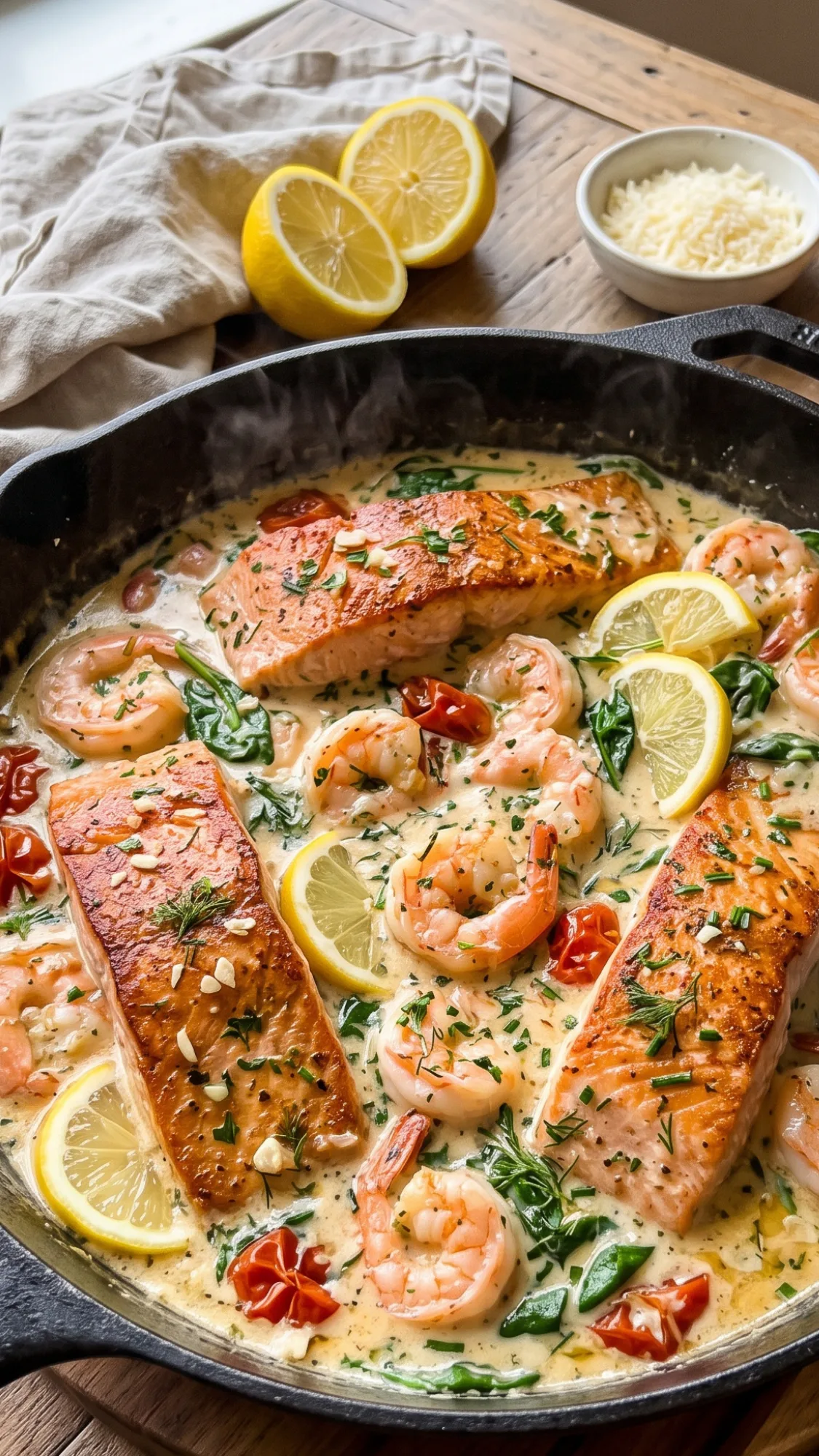
Creamy Garlic Butter Salmon & Shrimp is a delicious one-pan seafood dinner featuring tender, golden-seared salmon, juicy shrimp, fresh herbs, and a rich garlic butter cream sauce. Cherry tomatoes, fresh spinach, and a touch of lemon bring color, freshness, and balanced flavor to every bite. This restaurant-style meal is perfect for busy weeknights, cozy family dinners, or special occasions when you want something impressive without spending hours in the kitchen.
The best part about this creamy garlic butter salmon and shrimp recipe is how easily the ingredients come together in one skillet. The salmon develops a beautiful golden crust, while the shrimp cook quickly in the same pan. A silky sauce made with garlic, cream, butter, and Parmesan ties everything together, creating a comforting seafood dinner that tastes like something from your favorite restaurant.
Serve this flavorful skillet with crusty bread, fluffy rice, mashed potatoes, or your favorite pasta to soak up every drop of the creamy sauce. Whether you’re preparing a quick weeknight dinner or planning a relaxed weekend meal, this recipe delivers plenty of flavor with simple ingredients.
Why You’ll Love This Creamy Garlic Butter Salmon & Shrimp
This creamy garlic butter salmon and shrimp skillet combines two popular seafood favorites in one easy recipe. The salmon provides rich, buttery flavor, while the shrimp add a tender, slightly sweet bite. Together, they create a satisfying main dish that feels special enough for guests but remains simple enough for everyday cooking.
One of the biggest advantages is the one-pan cooking method. Searing the seafood first builds flavor in the skillet, and those flavorful browned bits become part of the creamy garlic sauce. Using the same pan also reduces cleanup, making this recipe especially convenient for busy households.
The sauce is another reason to love this dish. Butter and garlic provide a savory foundation, heavy cream creates a smooth texture, and Parmesan adds a deliciously cheesy finish. Fresh lemon brightens the richness, while spinach, cherry tomatoes, and herbs add freshness and color.
You can also customize the recipe to suit your preferences. Add extra spinach, adjust the garlic, increase the lemon juice, or serve the seafood over pasta for a heartier dinner. With a few everyday ingredients, you can create an elegant meal that looks beautiful straight from the skillet.
Ingredients for Creamy Garlic Butter Salmon & Shrimp
The ingredients in this creamy garlic butter salmon and shrimp recipe are simple, accessible, and easy to find at most American grocery stores. Fresh seafood is ideal, but properly thawed frozen salmon and shrimp can also work well.
- Salmon fillets: Use four salmon portions, approximately 5 to 6 ounces each. Choose evenly sized pieces so they cook at a similar rate.
- Large shrimp: Use about 1 pound of peeled and deveined shrimp. Tail-on or tail-off shrimp both work.
- Unsalted butter: Four tablespoons provide a rich base for searing and building the sauce.
- Olive oil: One tablespoon helps the salmon brown evenly without relying entirely on butter.
- Garlic: Six minced garlic cloves deliver the signature savory flavor.
- Heavy cream: One cup creates a rich, smooth sauce that coats the seafood beautifully.
- Grated Parmesan cheese: Half a cup adds salty, nutty flavor and helps thicken the sauce.
- Cherry tomatoes: One cup, halved, contributes sweetness and a little acidity.
- Fresh spinach: Two cups add color and balance the richness of the cream.
- Chicken broth or seafood stock: Half a cup loosens the sauce and adds flavor.
- Lemon: Use one lemon for fresh juice and several wedges for serving.
- Fresh parsley: Two tablespoons of chopped parsley provide a bright, fresh finish.
- Fresh dill: One tablespoon of chopped dill complements the salmon and shrimp.
- Italian seasoning: One teaspoon adds a balanced blend of herbs.
- Salt and black pepper: Season the salmon, shrimp, and sauce to taste.
- Red pepper flakes: Add a small pinch if you enjoy a gentle touch of heat.
For the best flavor, use freshly minced garlic, freshly grated Parmesan, and fresh lemon juice. Pre-grated Parmesan can sometimes produce a less smooth sauce, while bottled lemon juice may lack the brightness of fresh citrus.
How to Make Creamy Garlic Butter Salmon & Shrimp
Making creamy garlic butter salmon and shrimp is straightforward when you prepare the ingredients before heating the skillet. The seafood cooks in stages, allowing each ingredient to develop its best texture without becoming overcooked.
Step 1: Prepare the Salmon and Shrimp
Pat the salmon fillets and shrimp dry with paper towels. Removing excess moisture helps the seafood sear properly instead of steaming in the pan.
Season both with salt, black pepper, and Italian seasoning. If the salmon fillets have skin, leave it on during cooking if you prefer extra protection against overcooking. Keep the shrimp refrigerated until you’re ready to add them to the skillet.
Step 2: Sear the Salmon
Heat the olive oil and two tablespoons of butter in a large skillet over medium-high heat. When the butter melts and the pan is hot, add the salmon fillets.
Sear the salmon for approximately four to five minutes on the first side, depending on thickness. Carefully flip and cook for another three to five minutes, or until the salmon reaches a safe internal temperature of 145°F at its thickest point.
Transfer the salmon to a clean plate. It will finish warming in the sauce later, so avoid leaving it in the skillet longer than necessary.
Step 3: Cook the Shrimp
Add one tablespoon of butter to the same skillet. Arrange the shrimp in a single layer and cook for approximately one to two minutes per side, depending on their size.
The shrimp should turn pink and opaque when cooked. Transfer them to the plate with the salmon. Avoid overcooking because shrimp can become firm and rubbery when exposed to heat for too long.
Step 4: Make the Garlic Butter Sauce
Reduce the heat to medium and add the remaining tablespoon of butter. Stir in the minced garlic and cook for about 30 seconds, just until fragrant.
Pour in the chicken broth or seafood stock, scraping the bottom of the skillet to release the flavorful browned bits. Let the liquid simmer briefly, then add the heavy cream and stir gently until the sauce begins to warm and thicken.
Keep the heat moderate to prevent the cream from boiling aggressively. A gentle simmer produces a smoother sauce and helps the ingredients combine evenly.
Step 5: Add Parmesan, Tomatoes, and Spinach
Stir the grated Parmesan into the cream sauce a little at a time. Continue stirring until the cheese melts and the sauce becomes creamy.
Add the halved cherry tomatoes and cook for two to three minutes, allowing them to soften slightly while retaining some texture. Stir in the fresh spinach and cook until the leaves wilt.
Add lemon juice, chopped parsley, and fresh dill. Taste the sauce and adjust the salt, black pepper, and red pepper flakes as desired.
Step 6: Return the Seafood to the Skillet
Carefully return the salmon fillets and shrimp to the skillet. Spoon the creamy garlic butter sauce over the seafood so every portion receives plenty of flavor.
Let everything warm gently for one to two minutes, or until the seafood is heated through. Avoid vigorous stirring, which could break the salmon into small pieces.
Garnish with additional fresh herbs and lemon wedges. Serve immediately while the sauce is creamy and the seafood remains tender.
Tips for the Best Creamy Garlic Butter Salmon & Shrimp
A few simple techniques can make a noticeable difference in the final dish. Start by drying the seafood thoroughly before seasoning it. Moisture on the surface prevents proper browning, and a golden crust contributes extra flavor to the finished sauce.
Choose salmon fillets with a similar thickness whenever possible. This helps the portions cook more evenly and makes it easier to serve dinner at the same time. If your fillets vary significantly in thickness, check the thinner pieces earlier.
For the shrimp, medium-large or large varieties are convenient because they remain juicy while developing a pleasant texture. If you’re using frozen shrimp, thaw them completely and pat them dry before cooking.
Keep the sauce at a gentle simmer rather than allowing it to boil rapidly. High heat can cause cream sauces to separate, especially after cheese is added. If the sauce becomes too thick, stir in a small splash of broth until it reaches your preferred consistency.
Freshly grated Parmesan generally melts more smoothly than many packaged varieties. Add it gradually and stir continuously to reduce clumping. For extra brightness, finish with lemon juice a little at a time, tasting as you go.
Finally, avoid leaving the salmon and shrimp in the sauce for too long. Both types of seafood can become dry or tough when overcooked. Return them to the skillet only when the sauce is nearly ready.
What to Serve with Creamy Garlic Butter Salmon & Shrimp
This creamy seafood skillet pairs beautifully with simple side dishes that complement the rich sauce. Crusty French bread or garlic bread is an excellent choice because it helps you enjoy every spoonful of the garlic butter cream sauce.
For a more filling meal, serve the salmon and shrimp over cooked fettuccine, linguine, or angel hair pasta. The creamy sauce coats the noodles, transforming the skillet into a satisfying seafood pasta dinner.
Steamed white rice, jasmine rice, or rice pilaf also works well. The mild flavor of rice balances the garlic, Parmesan, and herbs without competing with the seafood.
If you prefer potatoes, try roasted baby potatoes or creamy mashed potatoes. Their soft texture pairs naturally with the sauce. For a lighter side, serve roasted asparagus, sautéed green beans, or a crisp green salad with a lemon vinaigrette.
You can also keep the meal simple by serving the skillet with steamed broccoli and a few lemon wedges. Since the recipe already contains spinach and tomatoes, a fresh vegetable side completes the plate without adding unnecessary complexity.
Easy Variations to Try
This recipe is flexible enough to accommodate different tastes and ingredients. For a lemon-forward version, add a little extra lemon zest and finish with freshly squeezed lemon juice. The citrus cuts through the richness of the cream and highlights the natural sweetness of the shrimp.
For a Tuscan-inspired variation, increase the amount of sun-dried tomatoes and use Italian herbs. You can also add a small amount of crushed red pepper for a gentle kick.
If you love cheesy sauces, add a little extra Parmesan, adjusting the broth if the sauce becomes too thick. For a lighter texture, replace a small portion of the heavy cream with additional broth, although the sauce will be less rich.
You can substitute kale for spinach, but allow extra cooking time so the leaves become tender. If you don’t have fresh dill, use additional parsley or a small amount of dried dill.
For a complete pasta dinner, stir cooked pasta into the finished sauce before returning the seafood to the skillet. Add a splash of reserved pasta water if needed to help the sauce coat the noodles evenly.
How to Store and Reheat Leftovers
Store leftover creamy garlic butter salmon and shrimp in an airtight container in the refrigerator within two hours of cooking. For the best quality and food safety, consume the leftovers within three to four days.
Reheat the seafood gently in a covered skillet over low heat. Add a tablespoon or two of broth or cream to loosen the sauce, stirring carefully around the salmon fillets.
Avoid high heat and prolonged reheating because both salmon and shrimp can become dry or rubbery. If using a microwave, heat in short intervals at reduced power, checking frequently until the food is heated through.
Freezing is possible, but cream-based sauces may separate after thawing, and the seafood texture can change. For the best results, prepare this recipe fresh or enjoy refrigerated leftovers within the recommended period.
Frequently Asked Questions
Can I use frozen salmon and shrimp?
Yes. Frozen salmon and shrimp are convenient alternatives to fresh seafood. Thaw them safely in the refrigerator before cooking, then pat them dry to encourage browning.
Can I make this recipe without heavy cream?
You can use half-and-half, but the sauce will be thinner and may be less stable. Avoid boiling it vigorously, and use Parmesan gradually to help create a creamy consistency.
How do I know when salmon and shrimp are cooked?
Salmon should reach an internal temperature of 145°F at its thickest point. Shrimp should be opaque and pearly white inside, with a pink exterior. A food thermometer is the most reliable way to check safe doneness.
Can I make creamy garlic butter salmon and shrimp ahead of time?
This dish is best served immediately because the seafood is most tender when freshly cooked. You can save time by preparing the garlic, chopping the herbs, halving the tomatoes, and measuring the sauce ingredients in advance.
Is this recipe good for a special dinner?
Absolutely. The combination of golden salmon, tender shrimp, fresh herbs, and creamy garlic butter sauce looks elegant without requiring complicated cooking techniques. Serve it with pasta, roasted vegetables, and crusty bread for a restaurant-inspired dinner at home.
Final Thoughts
Creamy Garlic Butter Salmon & Shrimp is an easy way to bring restaurant-style seafood to your home kitchen. Tender salmon, juicy shrimp, fresh spinach, sweet cherry tomatoes, and a rich garlic Parmesan sauce create a flavorful meal that feels both comforting and elegant.
With its simple ingredients, one-pan preparation, and flexible serving options, this creamy garlic butter salmon and shrimp recipe deserves a place in your regular dinner rotation. Serve it over pasta, pair it with rice, or add crusty bread to enjoy every last bit of sauce.
Save this recipe to your Pinterest dinner board so you can find it whenever you’re craving an easy seafood dinner. It’s a delicious option for busy weeknights, relaxed weekends, and special meals shared with family and friends.
PrintCreamy Garlic Butter Salmon & Shrimp
Tender seared salmon and juicy shrimp simmered in a creamy garlic butter Parmesan sauce with spinach, cherry tomatoes, lemon, and fresh herbs. An easy one-pan seafood dinner perfect for busy weeknights or special occasions.
- Prep Time: 15 minutes
- Cook Time: 25 minutes
- Total Time: 40 minutes
- Yield: 4 servings
- Category: Dinner
- Method: Stovetop
- Cuisine: American
Ingredients
4 salmon fillets (5–6 oz each)
1 lb large shrimp, peeled and deveined
4 tbsp unsalted butter, divided
1 tbsp olive oil
6 cloves garlic, minced
1 cup heavy cream
1/2 cup freshly grated Parmesan cheese
1 cup cherry tomatoes, halved
2 cups fresh spinach
1/2 cup chicken broth or seafood stock
1 lemon, juiced, plus wedges for serving
2 tbsp fresh parsley, chopped
1 tbsp fresh dill, chopped
1 tsp Italian seasoning
Salt and black pepper, to taste
Pinch of red pepper flakes (optional)
Instructions
1. Pat salmon and shrimp dry. Season with salt, pepper, and Italian seasoning.
2. Heat olive oil and 2 tbsp butter in a large skillet over medium-high heat.
3. Sear salmon for 4–5 minutes per side, until cooked through. Transfer to a plate.
4. Add 1 tbsp butter and cook shrimp for 1–2 minutes per side until pink and opaque. Remove.
5. Melt remaining butter. Sauté garlic for 30 seconds.
6. Add broth and scrape up browned bits. Stir in heavy cream and simmer gently.
7. Add Parmesan, tomatoes, and spinach. Cook until creamy and spinach wilts.
8. Stir in lemon juice, parsley, and dill. Adjust seasoning.
9. Return salmon and shrimp to the skillet. Spoon sauce over seafood and warm gently for 1–2 minutes.
10. Garnish with fresh herbs and lemon wedges. Serve immediately.
Notes
Avoid boiling the cream sauce to prevent separation.
Use freshly grated Parmesan for a smoother sauce.
Do not overcook the salmon or shrimp.
Serve with pasta, rice, mashed potatoes, or crusty bread.
Refrigerate leftovers in an airtight container for 3–4 days.
Reheat gently over low heat with a splash of broth or cream.
Salmon should reach an internal temperature of 145°F.