
Table of Contents
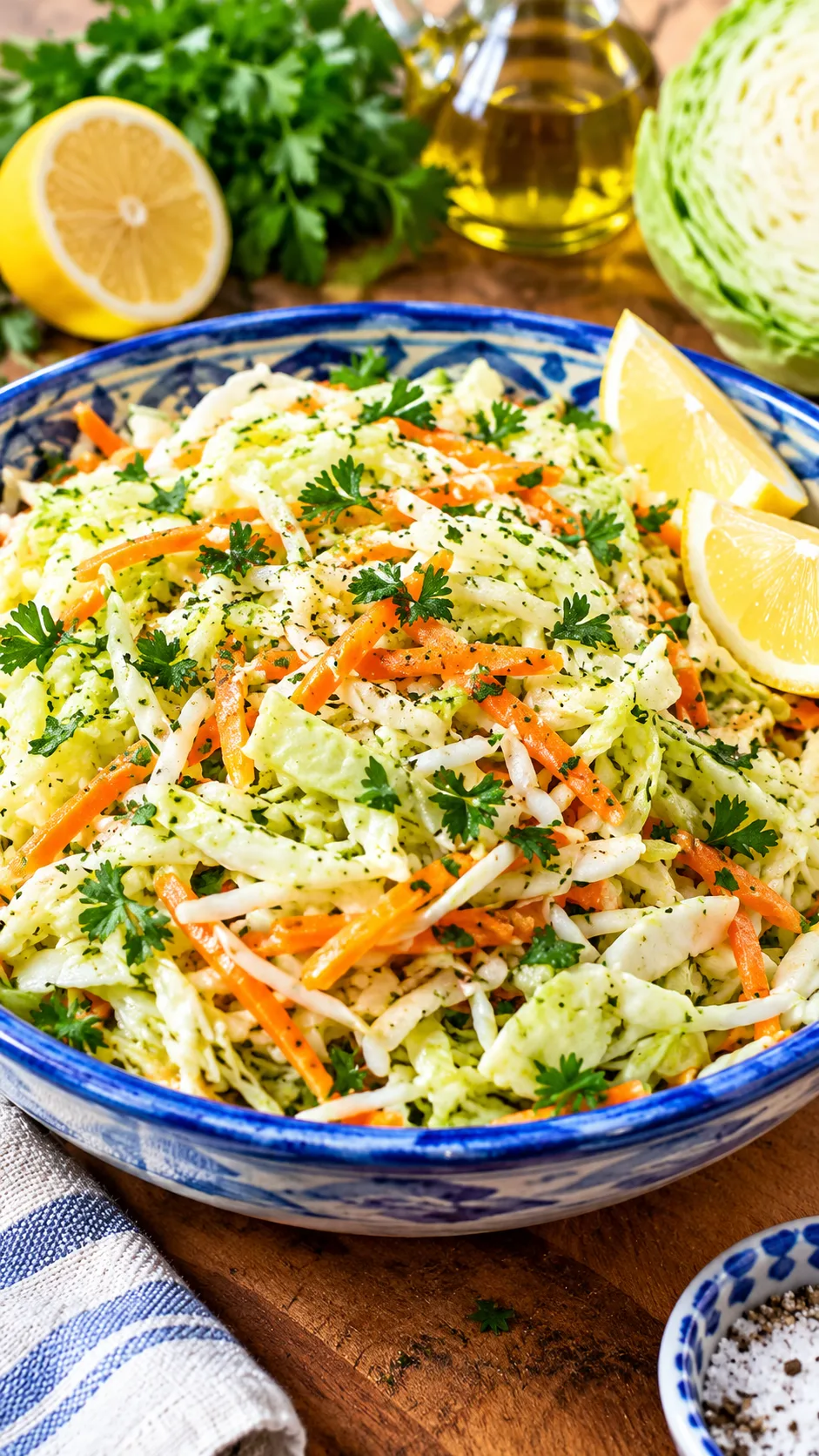
Greek Cabbage Salad, also known as Lahanosalata, is a fresh, crunchy Mediterranean side dish made with finely shredded cabbage, carrots, fresh herbs, lemon juice, and extra virgin olive oil. This simple Greek cabbage salad recipe brings bright flavors and crisp textures to your table with just a handful of everyday ingredients. It is easy to prepare, naturally vegetarian, and perfect for family dinners, summer gatherings, picnics, and healthy lunches. Serve it alongside grilled chicken, roasted vegetables, fish, or your favorite Mediterranean-inspired meals for a refreshing and colorful addition.
Ingredients
This easy Greek cabbage salad uses fresh ingredients that work together to create a light, flavorful dressing and a satisfying crunch.
- 1 small head green cabbage, finely shredded
- 2 medium carrots, peeled and grated
- 1/4 cup fresh parsley, finely chopped
- 3 tablespoons extra virgin olive oil
- 3 tablespoons freshly squeezed lemon juice
- 1 tablespoon apple cider vinegar, optional
- 1 small garlic clove, finely minced, optional
- 1/2 teaspoon dried oregano
- 1/2 teaspoon salt, or to taste
- 1/4 teaspoon freshly ground black pepper
- 1 teaspoon honey, optional, to balance the acidity
- Lemon wedges and additional parsley for serving
Instructions
Step 1: Prepare the Cabbage
Remove any damaged outer leaves from the cabbage and rinse the head under cool running water. Pat it dry and cut it into quarters. Remove the firm core from each section, then slice the cabbage into very thin strips using a sharp knife or a mandoline.
Place the shredded cabbage in a large mixing bowl. Thinly sliced cabbage creates a pleasant crunch and allows the lemon dressing to coat each piece evenly. If the strips are particularly long, cut them into shorter, bite-sized pieces.
Step 2: Prepare the Carrots and Herbs
Peel the carrots and grate them using the large holes of a box grater. Add the grated carrots to the bowl with the cabbage.
Finely chop the fresh parsley and add it to the vegetables. The carrots contribute a natural sweetness, while the parsley provides a fresh, herbaceous flavor that complements the bright citrus dressing.
Step 3: Make the Lemon Olive Oil Dressing
In a small bowl, whisk together the extra virgin olive oil, freshly squeezed lemon juice, and apple cider vinegar if using. Add the minced garlic, dried oregano, salt, and black pepper.
If you prefer a slightly milder, more balanced dressing, whisk in the optional honey. Taste the mixture and adjust the lemon juice, salt, or pepper according to your preference.
Fresh lemon juice gives this Mediterranean cabbage salad its characteristic brightness, while olive oil softens the acidity and helps distribute the herbs throughout the vegetables.
Step 4: Toss the Salad
Pour the dressing over the shredded cabbage, carrots, and parsley. Use clean salad tongs or two large spoons to toss everything thoroughly.
Continue mixing until the vegetables are evenly coated. Pay special attention to the cabbage at the bottom of the bowl, where the dressing can collect.
For a more tender texture, gently massage the cabbage with clean hands for about 30 seconds before serving. This helps soften the leaves slightly while preserving their natural crunch.
Step 5: Let the Flavors Develop
Allow the salad to rest for 10 to 15 minutes before serving. During this time, the cabbage begins to absorb the lemon, olive oil, and oregano flavors.
If you enjoy an especially crisp salad, serve it shortly after tossing. For a softer texture and a more developed dressing flavor, refrigerate it for about 20 to 30 minutes.
Taste once more before serving and add a little extra lemon juice or a pinch of salt if needed.
Step 6: Garnish and Serve
Transfer the Greek cabbage salad to a serving bowl or platter. Sprinkle with additional chopped parsley and arrange fresh lemon wedges around the edges.
Serve chilled or slightly cool as a refreshing side dish. Its bright citrus flavor and crunchy texture make it a delicious accompaniment to Mediterranean meals, grilled meats, roasted chicken, baked fish, and vegetable dishes.
Tips for the Best Greek Cabbage Salad
Slice the cabbage thinly. Fine, even strips are easier to eat and absorb the dressing more effectively than thick pieces.
Use fresh lemon juice. Freshly squeezed lemon provides a clean, lively flavor that makes this simple salad especially refreshing.
Choose good-quality olive oil. Extra virgin olive oil adds fruity notes and gives the dressing a classic Mediterranean character.
Adjust the acidity. Start with the recommended amount of lemon juice, then add more if you prefer a sharper flavor. A small amount of honey can soften the overall taste.
Let the salad rest briefly. A short resting period allows the dressing to season the vegetables without making them excessively soft.
Keep the herbs fresh. Fresh parsley adds color and flavor. You can also experiment with a small amount of fresh dill for a different herbal note.
What to Serve with Greek Cabbage Salad
Greek cabbage salad pairs beautifully with a wide variety of everyday meals. Serve it with grilled chicken skewers, lemon-roasted chicken, baked fish, grilled shrimp, or roasted potatoes.
For a vegetarian meal, combine it with warm pita bread, hummus, roasted chickpeas, or a bowl of lentil soup. It also works well alongside Mediterranean rice dishes and grilled vegetables.
Because the salad has a light, tangy dressing, it balances richer main dishes and adds freshness to a family dinner. It is equally suitable for potlucks, backyard gatherings, lunch bowls, and simple weeknight meals.
Variations to Try
Greek Cabbage and Carrot Salad: Keep the classic combination of green cabbage and carrots for a simple, colorful side dish.
Cabbage Salad with Fresh Dill: Add one or two tablespoons of chopped dill for a fragrant herbal variation.
Mediterranean Cabbage Salad with Cucumber: Add thinly sliced cucumber just before serving for extra freshness and crunch.
Red and Green Cabbage Salad: Replace part of the green cabbage with finely shredded red cabbage to create a more colorful presentation.
Lemon Garlic Cabbage Salad: Increase the garlic slightly if you enjoy a stronger savory flavor. Allow the dressing to rest for a few minutes before tossing it with the vegetables.
These variations make it easy to adapt the salad to your family’s tastes while keeping the preparation simple.
How to Store Greek Cabbage Salad
Store leftover Greek cabbage salad in an airtight container in the refrigerator for up to 3 days for the best quality. The cabbage will gradually soften as it absorbs the dressing, so the salad is generally crunchiest on the day it is prepared.
If you plan to make it ahead, shred the cabbage and carrots and store them separately from the dressing. Combine everything shortly before serving for a fresher texture.
Avoid leaving the salad at room temperature for extended periods, especially during warm weather. Refrigerate leftovers promptly and use clean utensils when serving.
Frequently Asked Questions
Is Greek cabbage salad healthy?
Greek cabbage salad is made primarily with fresh vegetables, olive oil, lemon juice, and herbs. Cabbage and carrots provide fiber and several essential nutrients, while olive oil contributes unsaturated fats. Its nutritional profile depends on the quantities and ingredients used.
Can I make this salad ahead of time?
Yes. You can prepare the vegetables and dressing separately up to a day in advance. Store both in the refrigerator and toss them together shortly before serving for the best crunch.
Can I make Greek cabbage salad without vinegar?
Absolutely. Lemon juice alone creates a bright, refreshing dressing. Simply omit the optional vinegar and adjust the lemon juice to taste.
Is Lahanosalata traditionally made with carrots?
Greek cabbage salad has many regional and household variations. Cabbage, olive oil, and an acidic ingredient such as lemon juice or vinegar are common elements. Carrots are a popular addition that provides sweetness and color.
How can I keep the cabbage crunchy?
Use fresh cabbage, slice it thinly, and avoid dressing it too far in advance. Refrigerating the prepared vegetables separately and adding the dressing just before serving helps preserve their crisp texture.
Conclusion
Greek Cabbage Salad, or Lahanosalata, is an easy Mediterranean recipe that transforms simple vegetables into a bright, crunchy, and flavorful side dish. With shredded cabbage, sweet carrots, fresh parsley, lemon juice, and extra virgin olive oil, it offers a delicious balance of freshness and acidity. Whether you serve it with grilled chicken, fish, roasted vegetables, or a vegetarian meal, this Greek cabbage salad is a practical addition to your weekly menu. Save this easy recipe for your next family dinner, summer cookout, or Mediterranean-inspired meal.
PrintGreek Cabbage Salad (Lahanosalata) – Easy Mediterranean Cabbage Salad Recipe

A fresh and crunchy Greek cabbage salad made with shredded cabbage, carrots, parsley, lemon juice, and extra virgin olive oil.
- Prep Time: 15 minutes
- Cook Time: 0 minutes
- Total Time: 15 minutes
- Yield: 6 servings
- Category: Salad
- Method: No-Cook
- Cuisine: Greek
Ingredients
1 small head green cabbage, finely shredded
2 medium carrots, grated
1/4 cup fresh parsley, chopped
3 tbsp extra virgin olive oil
3 tbsp fresh lemon juice
1 tbsp apple cider vinegar (optional)
1 small garlic clove, minced (optional)
1/2 tsp dried oregano
1/2 tsp salt
1/4 tsp black pepper
1 tsp honey (optional)
Lemon wedges for serving
Instructions
1. Thinly slice the cabbage.
2. Grate the carrots and chop the parsley.
3. Whisk olive oil, lemon juice, vinegar, garlic, oregano, salt, and pepper.
4. Add honey if desired.
5. Toss vegetables with dressing.
6. Rest 10–15 minutes.
7. Garnish with parsley and lemon wedges. Serve.
Notes
Use fresh lemon juice for the best flavor.
Add dressing just before serving for extra crunch.
Refrigerate leftovers in an airtight container for up to 3 days.
Omit honey for a vegan version.